



What winter here does to a heat pump
Kennebec County winters average 13°F overnight across December, January and February, and the heat runs nine months a year, September through May. A standard heat pump starts losing heating capacity below 40°F and often needs backup heat below about 35°F. Here, every single night that drops to freezing or below, about 160 of them a year, falls under both marks. That's not a cold snap a few times a winter. That's most of the heating season.
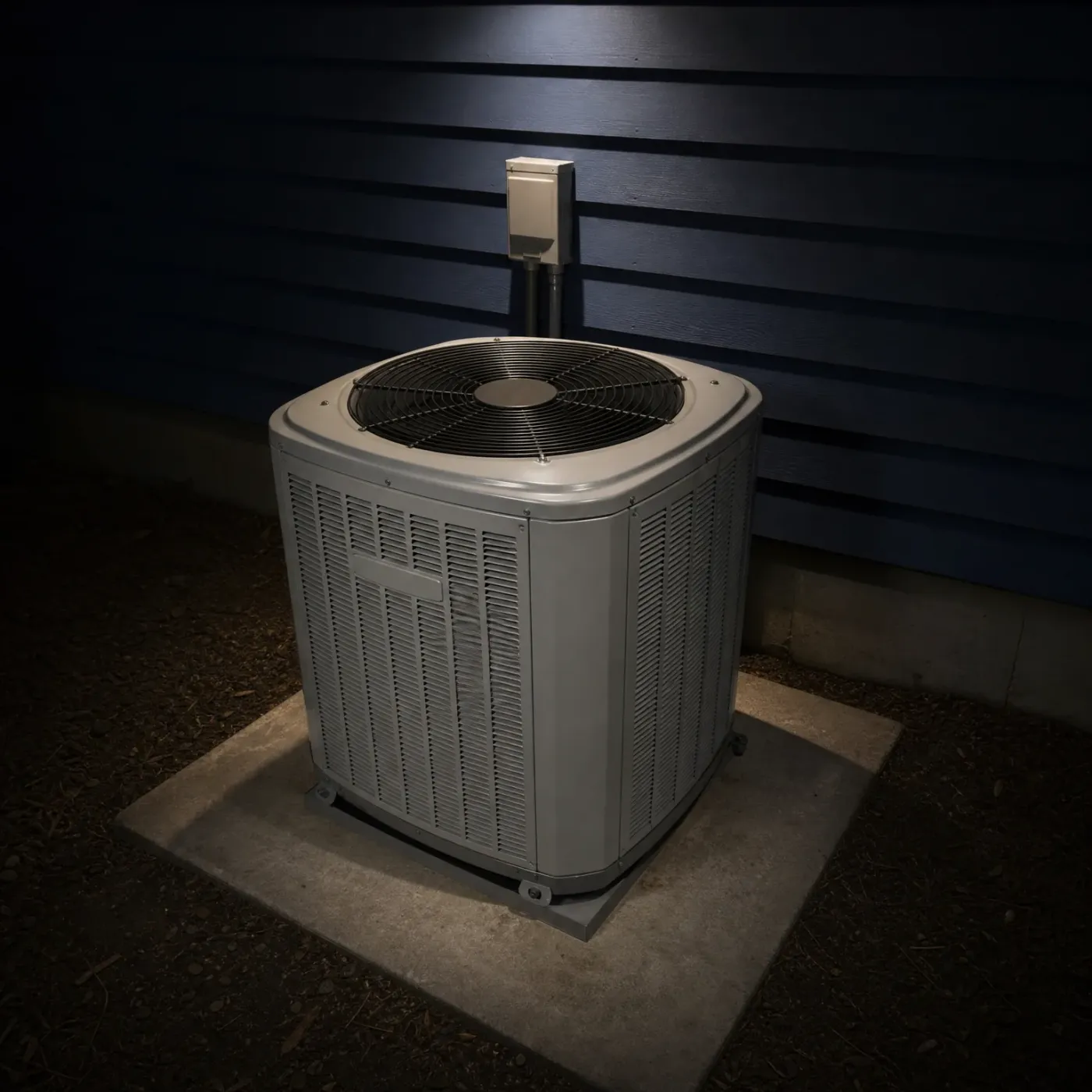
This doesn't mean a heat pump won't heat your house. It means it's working at a disadvantage for more of the year here than in most places, and it leans on backup heat to make up the difference. About 17 nights a year reach 0°F or below, where even a cold-climate model is working hard. A heat pump certified as ENERGY STAR Cold Climate has to prove it still makes real heat at 5°F, at least 1.75 units of heat per unit of electricity, and hold onto 70 percent of its warm-weather capacity. A heat pump built only to the federal minimum carries no such guarantee.
Field testing on prototype cold-climate heat pumps found that backup heat covered only a small share of the load between 0°F and 35°F, and running on backup alone was rare even above 0°F. So a good cold-climate heat pump can carry a Kennebec County winter without leaning on backup heat for most of it. A standard heat pump, which is what the running-cost figures on this page assume, doesn't come with that proof.