



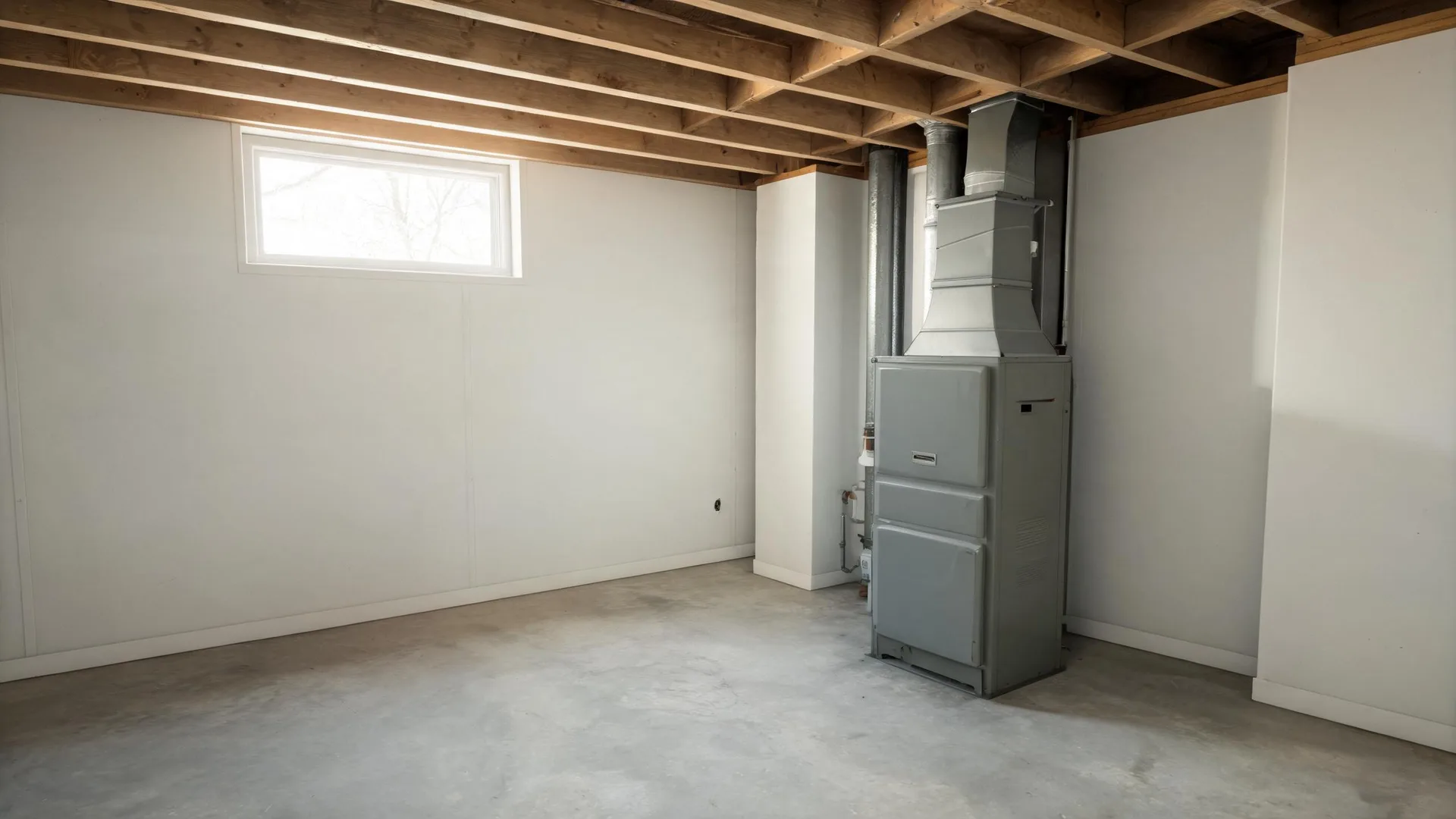
An unfinished basement featuring a forced-air furnace, exposed wooden ceiling joists, bare concrete walls, and miscellaneous items including cardboard boxes and coiled cables on the floor.

Furnace Installation in Augusta, ME

Tell us about the job

Takes about a minute. No obligation.

New system or replacementFurnace or heatingKennebec County, ME
Step 1 of 2

What ZIP code is the job in?

Furnace fuel costs more in Maine than in most of the country. Fuel oil ran $23.73 per million Btu in 2024, and if your furnace runs on oil, that price shows up on every tank fill. A new furnace that burns less fuel for the same heat keeps that cost down year after year. When you're comparing models, ask what each one is rated to use, not just what it costs to install.

9 months
September through May, your furnace is on duty
13°F
the average winter night it heats against
80% AFUE
the federal minimum any new unit must meet
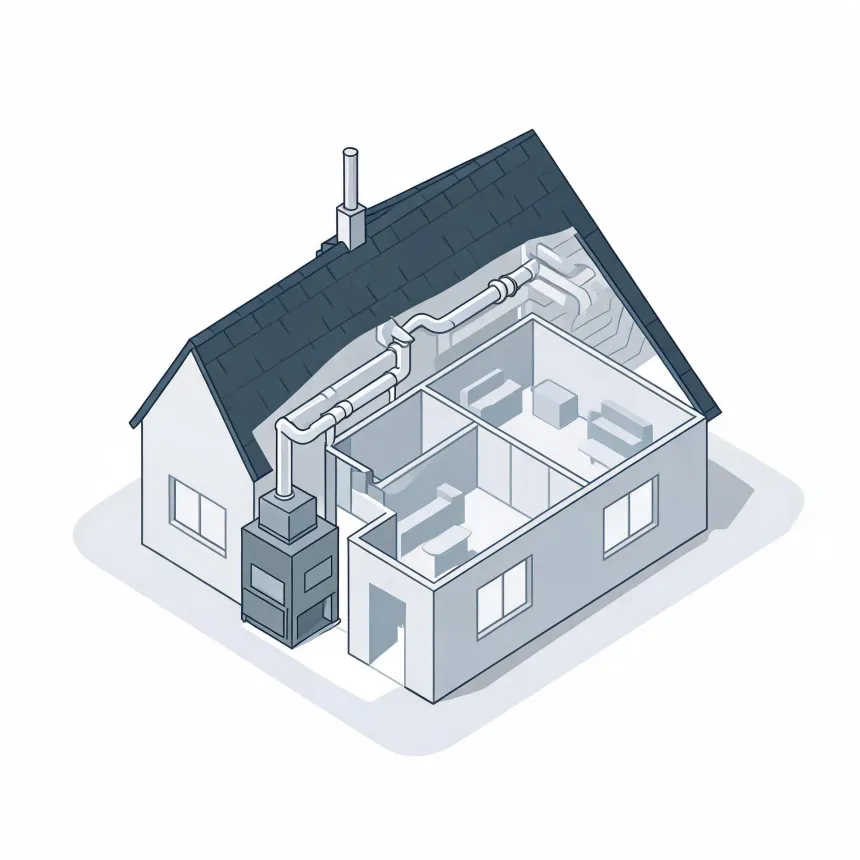
Isometric line illustration of a cutaway single-story house with a dark shingled roof, showing interior rooms and ductwork connected to a gray furnace unit with a flue pipe.
Your furnace works hardest from November through March.

NOAA nClimDiv, 1991–2020 normals

Furnaces in Kennebec County start running in September.

Get a new furnace in before August ends and it's installed on your timeline, not during the first cold snap.

Nine months of heat, nights near 13°F. This furnace doesn't get an easy season.

Heat runs September through May
Winter nights average 13°F
40 winter storms from 2015 to 2024

Kennebec County sits in climate zone 6A, a cold zone with winter that runs long. Any furnace going in here has to meet the federal minimum for non-weatherized gas furnaces, 80.0 percent AFUE. That floor holds until December 2028, when new units have to hit 95.0 percent instead. Buying now means the lower minimum still applies, but nothing stops you from installing above it. A furnace rated higher than the floor burns less fuel for the same heat, all winter long.

Most furnaces here already burn oil. Yours can too.

Fuel oil or kerosene heats 61.7% of the homes in Kennebec County. If that's what your old furnace used, staying with it means no new tank, no new line, no new delivery setup. Replacing like for like is the straightforward path.

Find a contractor
A gas furnace with attached ductwork, gas piping, and condensate lines installed in a concrete-block basement.

The age of the house doesn't change the furnace

Half the homes in Kennebec County were built in 1975 or earlier, half in 1975 or later. That split doesn't change what furnace goes in. An older house and a newer one both need a furnace sized to the space and the heat it loses, not to the year it was built. There's no reason here to size up or to pay for more efficiency than you'd choose anywhere else in this zone. Get the heat loss right and the rest follows from that.

What AFUE actually counts

The AFUE number on the label tells you how much of the fuel burned turns into heat in your house versus what escapes out the flue. A furnace rated higher wastes less fuel doing the same job. It says nothing about how big a furnace you need or how fast it heats the place, only how efficiently it converts fuel once it's running.
Where the rating stops mattering

A high AFUE furnace sized wrong for the house still runs poorly. Too big and it short cycles, turning on and off before the house evens out. Too small and it runs constantly, straining to keep up on the coldest nights. The rating only pays off once the sizing is right, so get the heat loss calculated before you pick a model off the efficiency number alone.

Whoever installs the new furnace will disconnect the old one from the gas line or oil line, the ducts and the flue before it comes out. If it runs on oil, the old tank gets drained, and depending on its condition it may need to come out too rather than stay buried or sit unused. A furnace that's been running for years still holds a good amount of weight between the heat exchanger and the cabinet, so it takes more than one person to carry out. Once it's clear of the mechanical room, the space gets prepped for the new unit, matching up the venting and the line sizes to what the new furnace actually needs rather than just setting it where the old one stood.

Installation starts with the new furnace getting set in place and leveled, because a unit that sits crooked won't drain condensate right if it's a condensing model. From there the gas line or oil line gets connected and checked for leaks before anything is fired up. The vent pipe or flue connects next, sized and routed to match what the new furnace calls for, not just hooked to whatever was there before. Ductwork gets sealed to the plenum so conditioned air isn't leaking out at the connection. Once everything is tied in, the furnace gets fired up and run through its cycles while static pressure, temperature rise, and gas pressure all get checked against what the manufacturer specifies. A furnace that passes those checks on install day is one that's been set up to run the way it's supposed to for years, not just the first winter.