You're paying a lot to heat an oil boiler, and you've heard a heat pump might cost less to run. That depends on your home, your boiler's age and condition, and what you'd want the heat pump to cover. This page gets into how Maine's electric rates and winters factor in, then matches you with a contractor who can look at your setup and tell you what makes sense.
Most Maine homes keep the oil boiler and add a heat pump rather than replace one with the other. A heat pump handles the mild months cheaply, since it moves heat instead of burning fuel for it, but its output drops as the outdoor temperature falls, and on the coldest nights it can't keep up with a Maine house on its own. The oil boiler stays in as backup for those nights, or for whenever electric rates make running the heat pump cost more than burning oil. Replacing the boiler outright with a heat pump sized for a Maine winter means a bigger, more expensive unit, and still leaves you without heat if the power goes out. Pairing the two gives you a system that burns oil only when it's worth it and runs on electricity the rest of the year. Which setup makes sense for your house depends on your boiler's age, your ductwork or radiators, and how much of the house you want the heat pump to cover.
Before you get your boiler installationAfter you get your boiler installation
A heat pump doesn't burn anything. It pulls heat out of the outside air and moves it inside, which is why it costs less to run than the boiler whenever the temperature is above freezing. A cold climate model keeps doing that down to around 5 below zero, which covers most of a Maine winter. Below that point, the unit's output drops off and the boiler takes over, usually through a thermostat or control set up to switch between the two. That's why the oil tank still gets used through January and February, even with a heat pump installed. If the heat pump runs as a ductless system, it's heating and cooling the rooms it's installed in, not the whole house. The boiler keeps the baseboard or radiators going in every other room, the same as before. Nothing about the boiler's circulator pump or zone valves changes when a heat pump goes in. The two systems don't connect to each other. They just take turns, each one carrying the load it's better suited for.
How the two systems split the work
A cold climate heat pump pulls heat from outside air down to around 5°F below zero before its output really falls off.
The indoor and outdoor units run on electricity and move heat rather than generate it, which is why they cost less to run above freezing.
Below the point where the heat pump can't keep up, the boiler takes over, so most setups use a thermostat or control that switches between the two.
An oil boiler still has to fire during the coldest stretches of January and February, so the oil tank doesn't sit empty all winter.
A heat pump run as a ductless system heats and cools the specific rooms it serves, while the boiler keeps baseboard or radiators going everywhere else.
The boiler's circulator pump and zone valves don't change when a heat pump is added, since the two systems don't share any plumbing.
You already know what oil costs you by February. A heat pump won't replace that boiler outright for most Maine homes, but it can take over the shoulder months and the mild stretches of winter, cutting how much oil you burn without you giving up the boiler as backup for the coldest nights. Maine's electric rates run high, so whether that math works for you depends on your boiler's condition, your home, and what you want the heat pump to actually cover. That's a sizing and layout question, not a guess. A contractor who installs these in Maine homes can look at your boiler, your house, and your oil bills and tell you what a heat pump would realistically take off your plate. Send the request and that work is off your hands. No crew at your door yet, no commitment either, just someone who knows this equipment getting in touch to talk through your specific home.
An oil boiler burns fuel to make heat, so every gallon you buy turns straight into warmth at a fixed rate no matter how cold it gets outside.
A heat pump moves heat instead, so it costs less to run than the boiler on most days, but below 5°F below zero its output falls and the boiler is still the one carrying the house.
1
Install the outdoor compressor unit on a pad outside your home
2
Mount indoor air handlers or ducted coils where they'll heat each room
3
Run refrigerant lines connecting the outdoor unit to each indoor unit
4
Wire the heat pump to a dedicated electrical circuit
Winter nights average 13°F statewide
A night that averages 13°F is below where most cold climate heat pumps start losing real output. On those nights your boiler should be doing the work, with the heat pump picking back up once temperatures climb back toward freezing.
NOAA nClimDiv 1991-2020 county normals weighted by homes
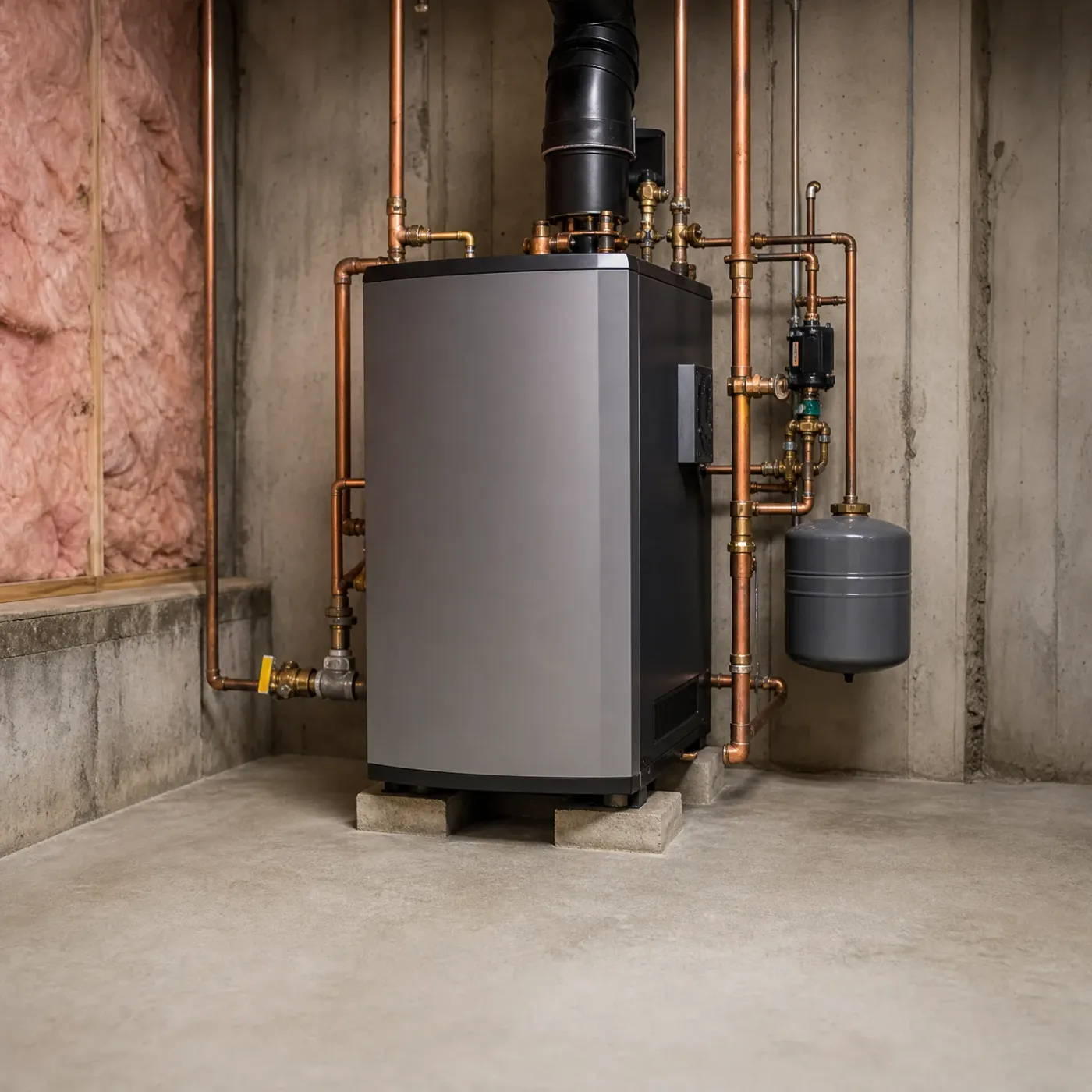
A boiler running the way it should
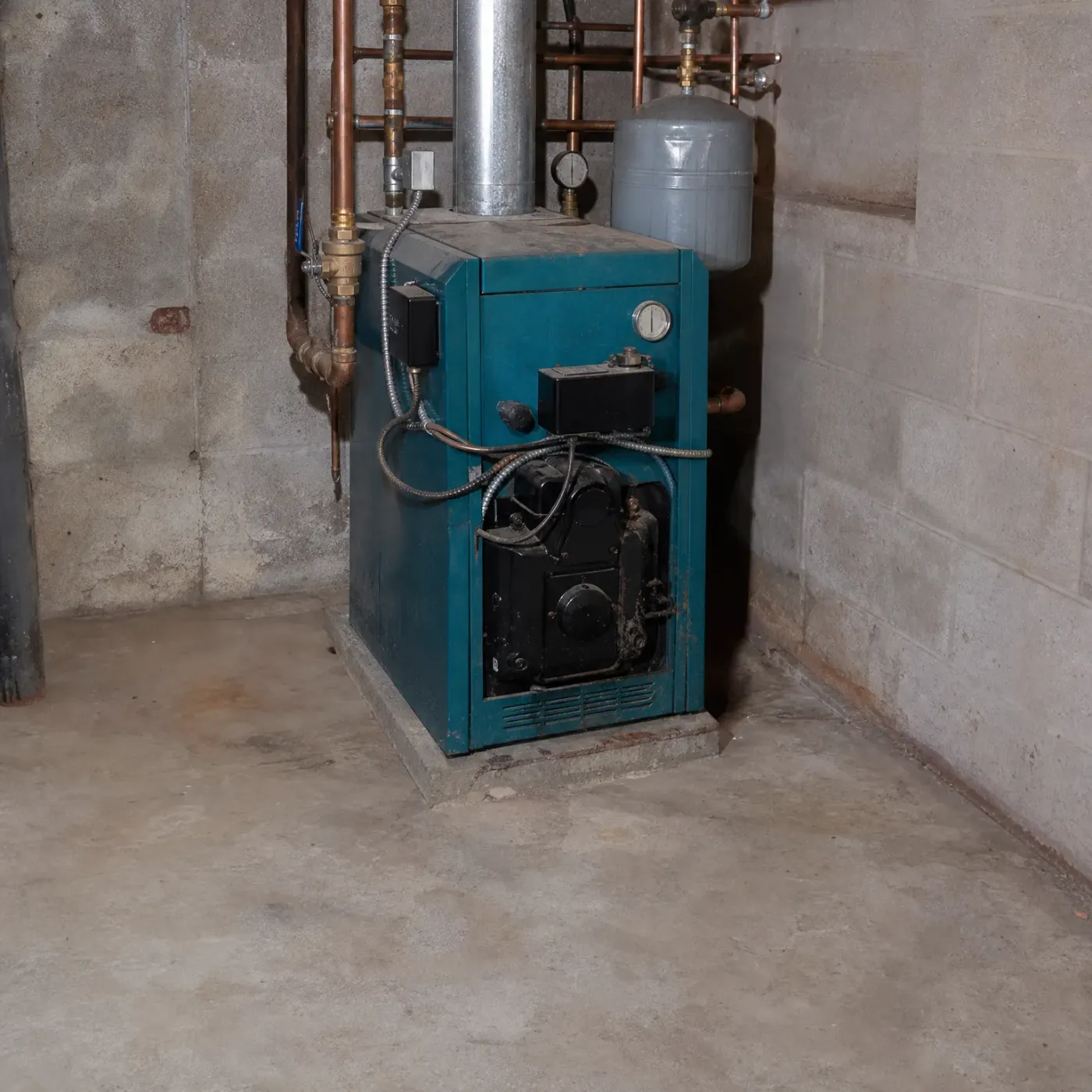
This is what a clean install looks like: copper piping run tight, an expansion tank sized right, valves labeled and reachable. A boiler in this shape can carry your whole house through a Maine winter with no help from anything else.
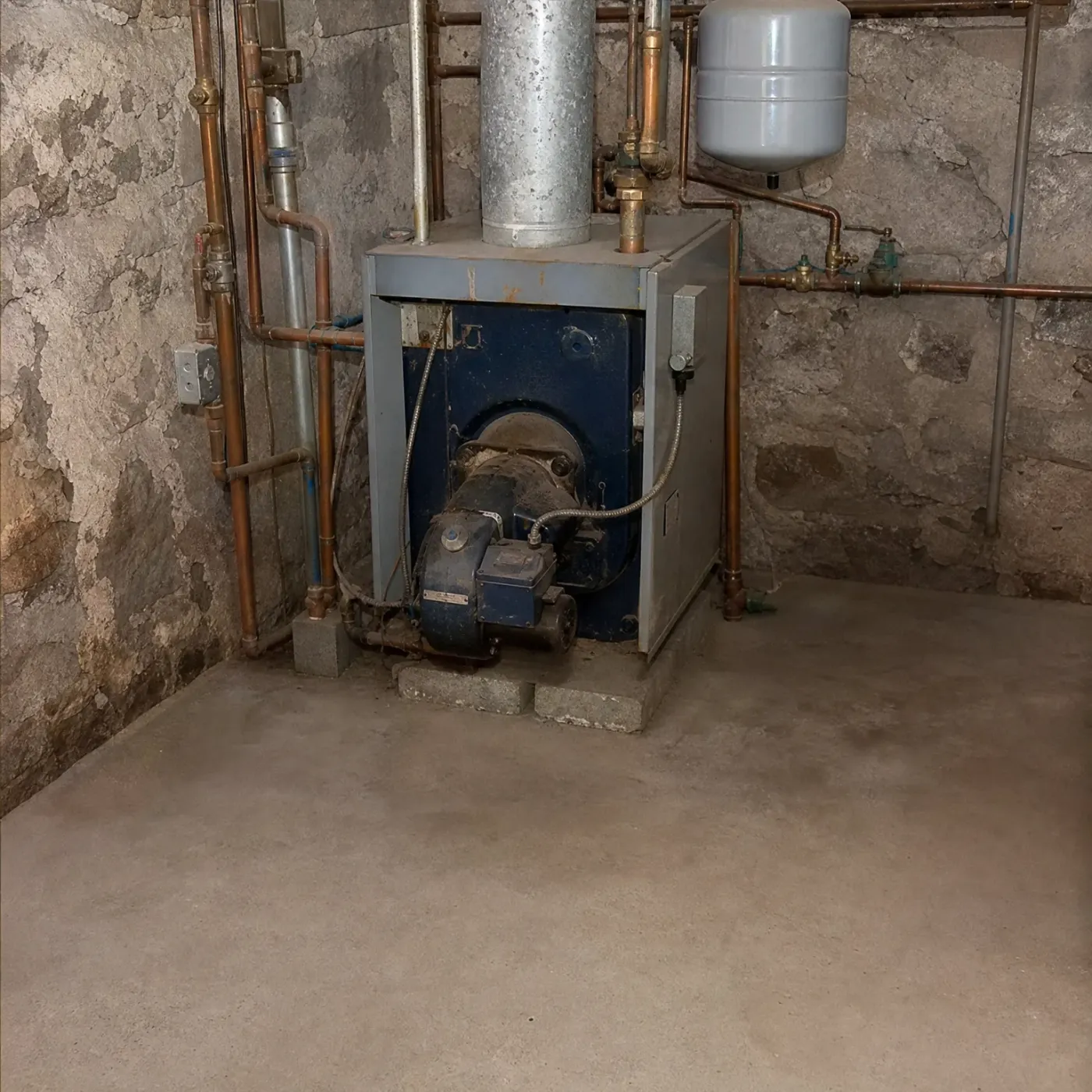
A boiler on borrowed time
That teal casing and the bare pad tell you this unit has been in that corner a long while. Once a boiler gets old, it pairs with a heat pump less like a backup plan and more like a hedge against a breakdown you can't predict.
Keep the boiler, let the heat pump take the shoulder months
Your boiler and a cold climate heat pump do different jobs in the same house. The boiler carries the deep cold, the stretch where the heat pump's output falls off. The heat pump carries everything above that, which in Maine is most of the year, and it does that work for less than the boiler burning oil to do it. Neither one replaces the other. Sizing the install right, and setting up the two systems to hand off to each other instead of fighting over the thermostat, is what decides whether this saves you money or just adds a bill.
That's the part worth getting a second set of eyes on. A contractor who knows your boiler's condition and your home's layout can tell you what the heat pump should cover and where the crossover point ought to sit. Once you send the form, you're not the one tracking down who does this kind of install well. You're matched with someone who takes on heat pump and boiler setups like yours, and they'll reach out to walk through what your house needs.
Boiler Installation
Get your boiler to the right pro
Describe your boiler job, and a local pro who handles it gets in touch.
Say what's going on with your boiler, and a pro who works on them reaches out.
Send it once and finding someone is no longer on you.
Send the form and stop researching installers for the new boiler.
Skip collecting and comparing quotes for the new boiler.
One form replaces the calls you'd make to find a boiler pro.
One installer gets your project, so there's no bidding war over it.