



What winter here does to a heat pump
Your heat runs nine months a year here, September through May, and for about 170 of those nights it's at or below freezing. A standard heat pump starts losing ground well before that. Below 40°F it puts out less heat than its rating says. Below about 35°F it often needs backup heat to make up the difference. Your average winter night here is 10°F. That's not an edge case for this county, it's the norm. Every single one of those 170 freezing nights falls below both marks.
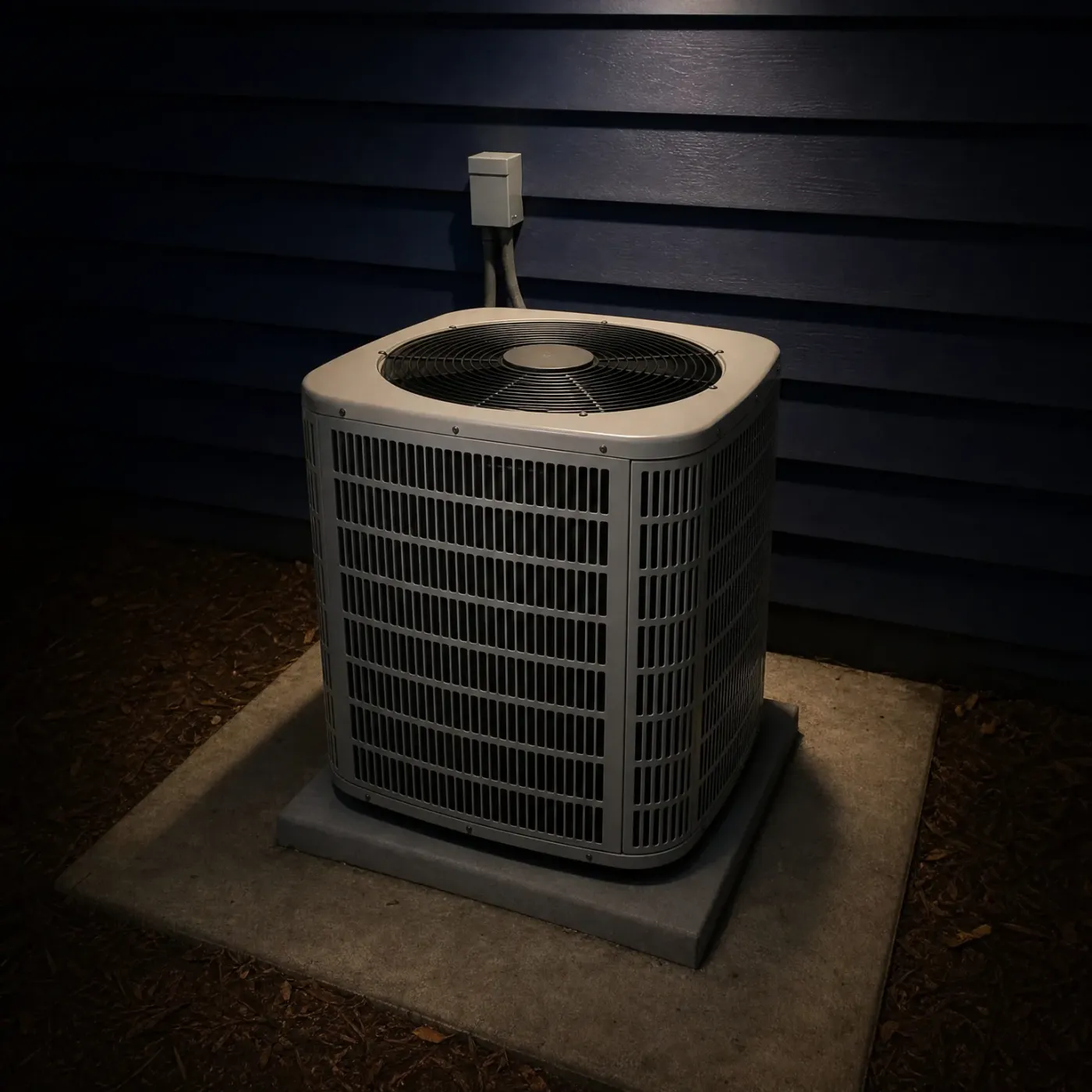
About 25 nights a year drop to 0°F or colder. That's under a quarter of the cold nights, so most of your winter isn't that extreme. But it's also not nothing, and it's the range where a standard heat pump is leaning hardest on backup heat to keep the house warm. If you go with a heat pump here, the model matters. One built to carry the ENERGY STAR Cold Climate rating has to prove it can still make 1.75 units of heat per unit of electricity at 5°F, and hold onto 70 percent of its warm-weather capacity at that temperature, tested by someone other than the manufacturer. A unit built to the federal minimum was never tested to do that.
Field testing on cold-climate heat pumps in real homes over two winters found backup heat carried only a small share of the load between 0°F and 35°F, and the system running on backup alone was rare even above 0°F. That's the case for the cold-climate version. It's not a claim about whatever heat pump happens to be cheapest at the supply house.