




A row of illuminated white colonial houses photographed at twilight along a tree-lined road with a stone wall in the foreground.

Furnace Installation in Bath, ME

Tell us about the job

Takes about a minute. No obligation.

New system or replacementFurnace or heatingSagadahoc County, ME
Step 1 of 2

What ZIP code is the job in?

Fuel oil ran $23.73 per million Btu across Maine in 2024. That's the number your furnace works against every time it fires, all winter. An older furnace loses a good share of that to the flue before it ever reaches your rooms. A new one burns closer to what you're paying for. If your furnace is on oil, the installation itself is where that gap gets closed, not something you manage after the fact with the thermostat.

9 months
September through May, your furnace is on duty
16°F
the average winter night it heats against
80% AFUE
the federal minimum any new unit must meet
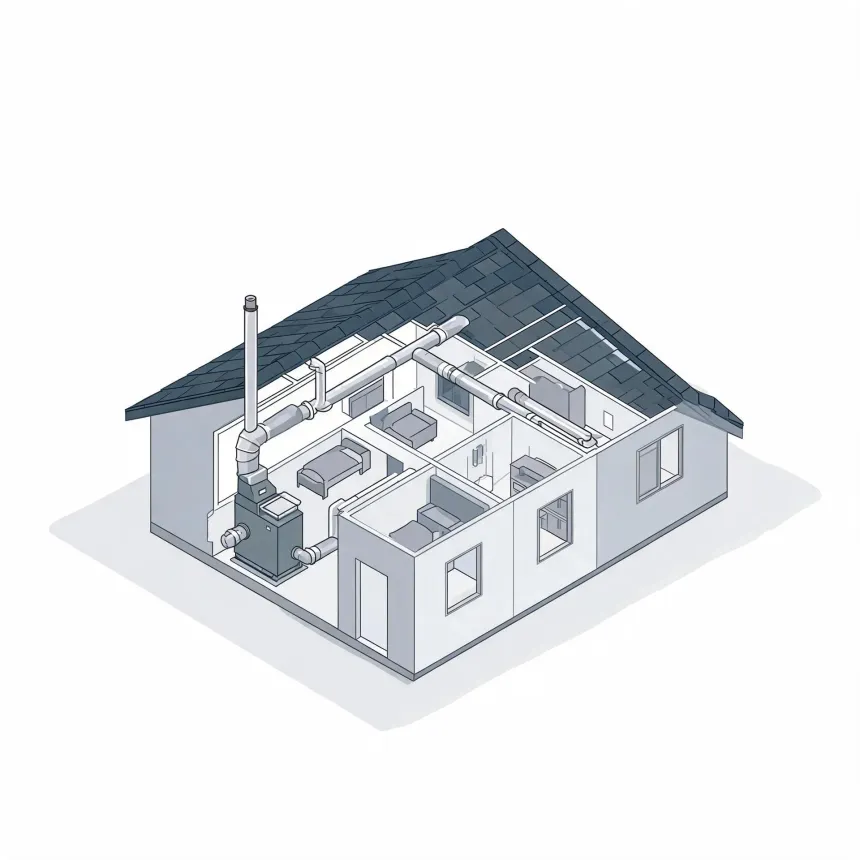
Isometric cutaway illustration of a single-story house showing interior rooms with furniture, ceiling ductwork, a furnace unit with a tall flue pipe, and a dark shingled roof.
Your furnace works hardest from November through March.

NOAA nClimDiv, 1991–2020 normals

Oil heats 53 percent of homes in Sagadahoc County, more than any other fuel.

A furnace built for oil is the straightforward swap for most houses here.

Nine months of heat starts in September. August is the month you have before that.

Heat runs September through May
Winter nights average 16°F
40 winter storms from 2015 to 2024
What Bath burns for heatOil runs $23.73 per million Btu across Maine, and most houses here use it.

Heat runs here from September through May. That's most of the year the furnace is on. Overnight lows average 16°F across December, January and February, so it's not just running long, it's working against real cold for a good stretch of that. Winter storms hit this county often, heavy snow and ice that can knock out power or leave a system running flat out for days straight. A furnace sized a little small gets away with it somewhere milder. Here it won't keep up, and it wears itself out trying. Get the sizing right at installation and it runs the way it's supposed to.

Efficiency pays here

Power costs more here, so an efficient system pays you back on every bill.

Find a contractor
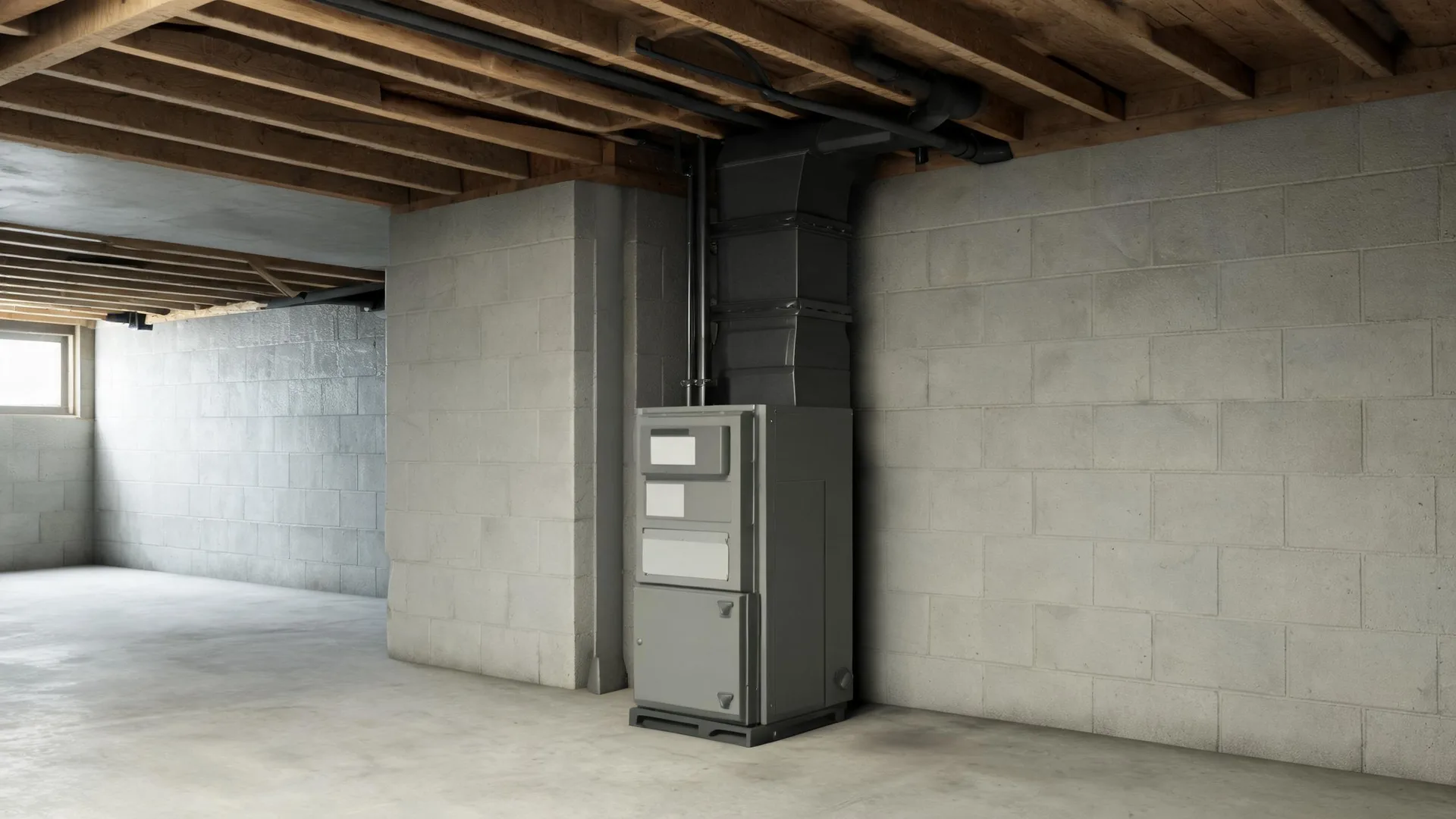
A gray residential gas furnace installed in an unfinished basement, connected to sheet-metal ductwork and PVC pipes.

Nothing here changes the size you need

Half the houses in Sagadahoc County were built in 1977 or earlier, half in 1977 or later. That split doesn't change what furnace goes in. A standard size and a standard efficiency rating cover both, old house or new, as long as the unit is sized to the house it's going into. Nothing about the building stock here calls for anything bigger than what you'd put in anywhere else.

The old furnace comes out whole

A furnace isn't rebuilt in place. The installer disconnects the gas or oil line, the flue connection, the ducts and the wiring, then takes the whole cabinet out. What goes in afterward is new from the heat exchanger to the control board, not a patched version of what was there.
Disposal isn't your problem to plan

The old unit gets hauled off as part of the job, along with the old venting if it's being changed. If the furnace is on oil, any leftover line or tank work that needs attention gets handled at the same time, so you aren't left figuring out where an old appliance goes.

The AFUE number on the label tells you how much of the fuel the furnace actually turns into heat, and how much goes straight out the flue. A low rating means a good share of every gallon or therm is being paid for and then vented outside. A high rating means the furnace is pulling nearly all of it into the house instead. That difference shows up in how the furnace is built. The ones that earn a high rating pull extra heat out of the exhaust before it leaves, which is why they vent through plastic pipe instead of a metal flue, and why they produce condensate that has to drain somewhere. That's not a flaw. It's how the rating gets earned. Whatever rating you pick, it only pays off if the furnace is sized right for the house and the ducts it's tied into.

Installation day starts with the old furnace still running, so the first step is shutting off the gas or oil line and the power before anything gets disconnected. The flue comes apart. The ducts get detached from the plenum. The cabinet gets carried out whole. With that gone, the installer can see the ductwork and the venting clearly for the first time, and some adjustments get made on the spot rather than guessed at ahead of time. The new furnace goes in, and most of the day is the connections. Gas or oil line. Venting. Return and supply ducts. Condensate drain if it needs one. Wiring to the thermostat and control board. Once it's hooked up, the installer runs it through a full cycle, checks the gas pressure or oil nozzle, and checks the temperature rise across the heat exchanger. The flue gets checked too, to make sure it's drafting the way it should. A furnace that's sized and installed right brings the house up to temperature evenly, with no cold room lagging behind the rest.