





A gray forced-air furnace with ductwork stands in an unfinished concrete basement surrounded by storage items and clutter.

Furnace Installation in Dover-Foxcroft, ME

Tell us about the job

Takes about a minute. No obligation.

New system or replacementFurnace or heatingPiscataquis County, ME
Step 1 of 2

What ZIP code is the job in?

Fuel oil ran $23.73 per million Btu in Maine in 2024. If your furnace runs on oil, that number shows up on every tank fill, all winter long. A new furnace installed with a tight duct connection and the right size for your house burns less to get the same heat. The old furnace you're replacing was built to a lower standard than what's available now, so the gap between them is worth asking a contractor about directly.

10 months
September through June, your furnace is on duty
6°F
the average winter night it heats against
80% AFUE
the federal minimum any new unit must meet
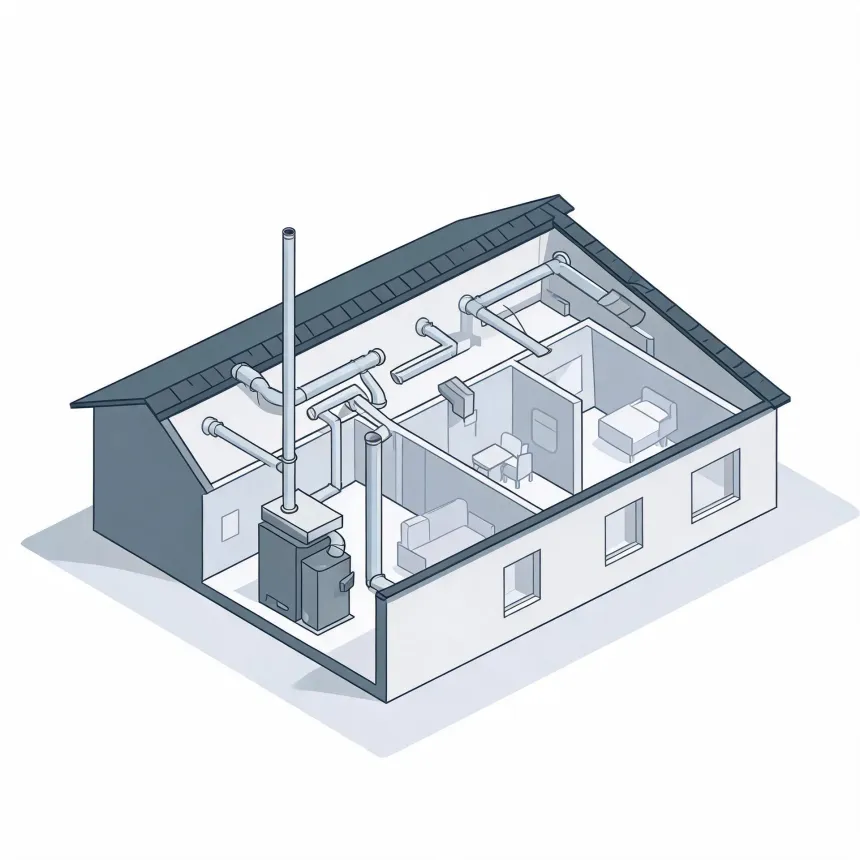
Isometric line illustration of a single-story house cutaway showing interior rooms with furniture, ductwork or piping running along the ceiling, and a boxy furnace unit with a tall vertical flue pipe.
Your furnace works hardest from November through April.

NOAA nClimDiv, 1991–2020 normals

Furnaces here run from September through June, with overnight lows averaging 6°F in December, January and February.

A furnace sized wrong for your house will struggle through ten months of that, not just a few cold snaps.

A furnace sized and installed right pays you back on every oil fill

Heat runs September through June
Winter nights average 6°F
147 winter storms from 2015 to 2024

Half the homes in Piscataquis County were built in 1978 or earlier, half in 1978 or later. That split doesn't change what furnace goes in. A contractor sizes the new furnace to your house, the windows and insulation it actually has, not the year it was built. Standard sizing and a standard efficiency rating cover this job the same way they cover most homes anywhere. There's no reason tied to this county to pay for anything beyond that.

Most homes here run on oil, so size it right and install it tight

More than half the homes in this county heat with oil. If that's you, a furnace installed and sized for this house is what keeps that number down on every fill.

Find a contractor
A man in a cap, dark long-sleeved shirt and brown work pants carries a canvas tool bag up porch steps toward a blue front door, with a shrub in a blue planter beside it.
A gas furnace with attached ductwork, gas piping, and condensate lines installed in a concrete-block basement.

Ten months a year, starting in September

Heat runs here from September through June. That's ten months a year this furnace will be working, not just the coldest stretch of winter. August is the month before it starts, and it's the month to get a new furnace in. Wait for the first cold morning in September and you're choosing from whatever's on the truck, on whatever day a contractor can get to you. Replace it in August and the choice is yours, not the weather's.

The old furnace gets disconnected and hauled out

The gas or oil line gets capped, the flue or vent connection comes apart, and the old furnace gets disconnected from the ductwork and carried out. A working furnace still has scrap value in the steel cabinet and the copper and aluminum inside it, so most contractors haul it away as part of the job rather than leaving it for the homeowner to deal with.
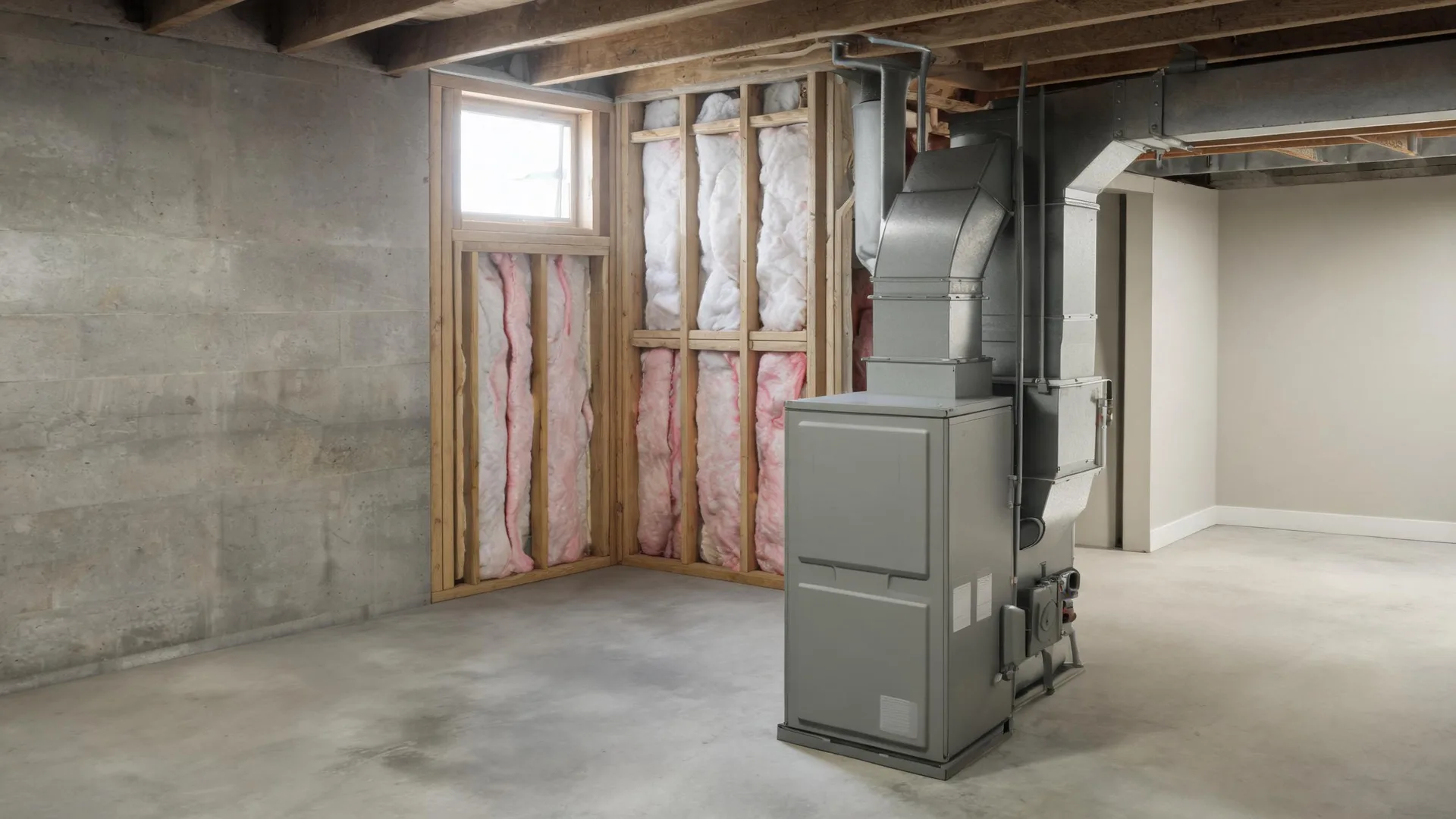
The new furnace has to fit where the old one sat

Your ductwork, your flue, and your gas or oil line were all built around the furnace that's coming out. A contractor checks that the new furnace lines up with those connections, or adjusts what's needed to make it fit, before anything else about the install matters.

What drives the cost of an installation is mostly what the contractor can't change. The size of the furnace matters most, and that's set by your house, not by preference. A bigger cabinet needs more clearance, more ductwork work, sometimes a bigger gas line or a larger vent run. Venting is its own cost too. A high efficiency furnace vents through PVC pipe out a sidewall, and running that pipe to the right spot can mean more labor than the furnace itself. If the ductwork already in place doesn't match what the new furnace needs, that gets modified before the furnace ever gets set. None of this shows up until someone's actually in your mechanical room looking at what's there.

Installation day starts with the old furnace coming out. Most of that first stretch is disconnecting, not installing. Once it's out, the contractor sets the new furnace in place and levels it. Then comes connecting it to what's already there, the ductwork, the gas or oil line, the flue or vent. Each connection gets checked as it's made, not all at once at the end. After everything's hooked up, the furnace gets fired and run through a full cycle so the contractor can check the flame, the gas pressure or oil pump, and the temperature rise through the ductwork. A combustion analyzer gets used too, reading the exhaust to confirm the furnace is burning clean and the venting is drafting the way it should. Nothing gets called finished until it's run long enough to prove it holds steady.