




A white clapboard house with dark shingled roof, black shutters and dormer windows stands behind a lawn, framed by large trees and a blurred green shrub in the foreground.

Furnace Installation in Ellsworth, ME

Tell us about the job

Takes about a minute. No obligation.

New system or replacementFurnace or heatingHancock County, ME
Step 1 of 2

What ZIP code is the job in?

Fuel oil ran $23.73 per million Btu across Maine homes in 2024. If your furnace runs on oil, that number sits behind every delivery. An old furnace loses a good share of that heat up the flue before it ever reaches a room. A new one keeps more of what you pay for, and on a fuel this expensive, the difference shows up fast on the tank gauge. Worth asking any contractor you talk to what efficiency rating they are installing, and what fuel it runs on.

9 months
September through May, your furnace is on duty
14°F
the average winter night it heats against
80% AFUE
the federal minimum any new unit must meet
Isometric cutaway illustration of a single-story house with a dark shingled roof, showing interior rooms with furniture and a furnace connected to ductwork and a flue pipe extending above the roof.
Your furnace works hardest from November through March.

NOAA nClimDiv, 1991–2020 normals

Heat in Ellsworth starts in September.

Get the furnace in during August, while it's still a job on your terms and not an emergency call.

Half of Ellsworth heats with oil, so an oil furnace is still the straightforward choice

50.5% of homes heat with fuel oil
Heat runs September through May
Winter nights average 14°F

Hancock County is zone 6A, a cold climate with a long winter. Any gas furnace going in now has to hit 80 percent AFUE at minimum. That holds until December 2028, when the floor rises to 95 percent. Higher-efficiency units are already on the market, so a furnace installed today does not have to stop at the legal minimum. Worth asking what AFUE rating is actually going into your house, since in a winter this long, the gap between 80 and 95 percent adds up on the fuel bill.

Plan the install around the outages, not just the cold

Hancock County logged 155 severe weather events over the past decade, and winter storms and damaging wind made up most of them. More than half of Maine households lost power for a day or more in 2024. A new furnace needs power to run even on oil or gas, so this is the time to ask what happens to your heat when the lines go down.

Find a contractor
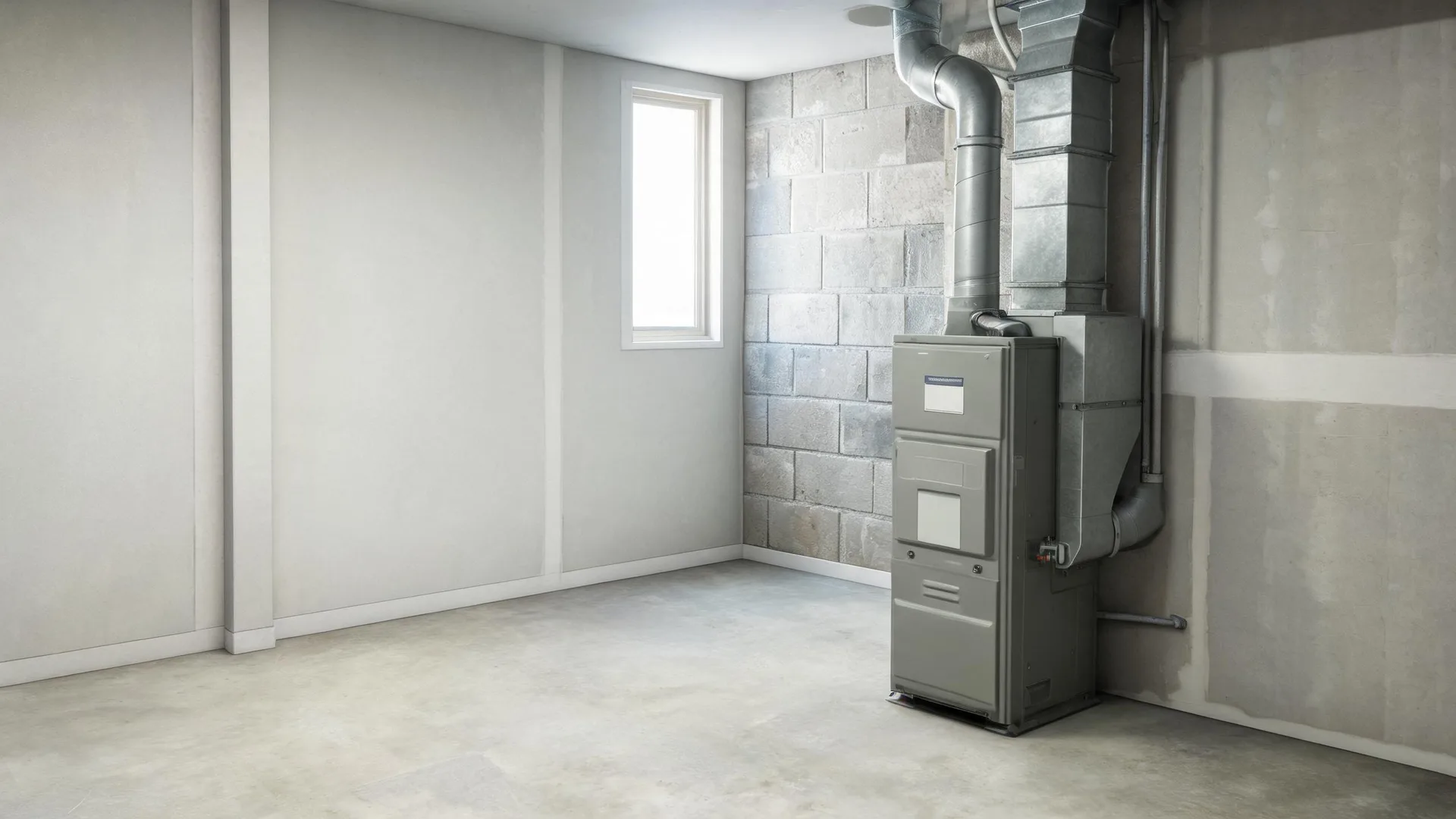
A gray residential gas furnace installed in an unfinished basement, surrounded by ductwork, a metal flue pipe, and a gas supply line.

Nine months a year, against real cold

Furnaces here run nine months a year, September through May. Overnight lows average 14°F in December, January and February, so most of that stretch is spent working against real cold, not just taking the edge off. That's what wears on an ignition system over time. Get the size right for this house and the system can keep up without strain. Undersize it and it runs longer to hold the same temperature, which only adds to the wear.

Sizing comes from a heat loss calculation, not the old furnace

A contractor works out the right size by figuring how fast this house loses heat through its walls, windows, and roof, not by matching whatever is being pulled out. That old furnace may have been oversized from the start, or sized for a house that's since been insulated or had windows replaced. The calculation accounts for the house as it stands now.
Bigger isn't a safety margin, it's a different problem

An oversized furnace heats the house fast, shuts off, then starts again soon after. That cycling keeps the heat exchanger and ignition system working through more start and stop cycles than they need to, and it leaves rooms farther from the thermostat uneven, hot one hour and cooler the next. The right size runs longer, steadier stretches and holds the temperature without the swings.

AFUE is the share of fuel that actually turns into heat in the house, not the share you pay for. The rest goes up the flue as exhaust. It comes from a standard test, so it's a fair way to compare one furnace against another before either one is installed. It says nothing about the ductwork carrying that heat around the house, or the insulation holding it in, those affect the bill too, but the rating itself only describes the furnace. A higher rating usually means a more involved burner and venting setup, which is worth asking about when you're comparing what each unit takes to install and keep running, not just what goes into the house.

Install day starts with the old furnace coming out, and that alone takes a few hours once the gas or oil line, the vent, and the ductwork are disconnected. The new unit gets set, leveled, and tied back into the same connections, but a few things usually get touched along the way. The flue or vent pipe often needs adjusting to match the new furnace's venting requirements, since those change from one efficiency level to the next. The ductwork gets checked where it meets the furnace, and any gaps or loose seams get sealed there. Once it's wired and connected, the contractor runs it through a full cycle, checks the gas pressure or oil flow, and confirms the temperature rise falls where the manufacturer says it should. That last check matters as much as the install itself, since a furnace can be hooked up correctly and still run outside its intended range if nothing gets tested.