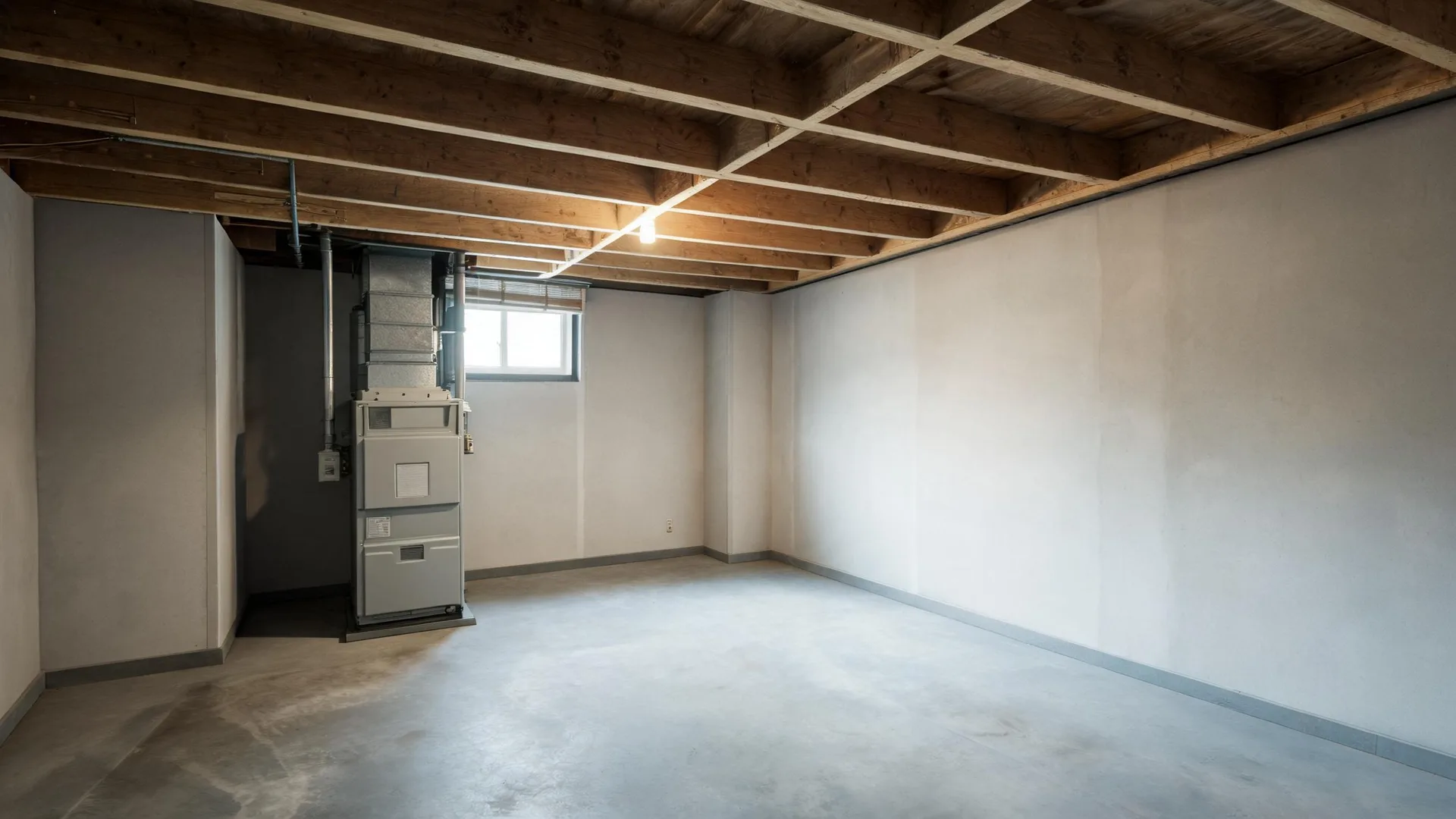
An unfinished basement interior featuring a large metal furnace unit, exposed ceiling joists, concrete walls, and scattered boxes and cables on the floor.

Furnace Installation in Presque Isle, ME

Tell us about the job

Takes about a minute. No obligation.

New system or replacementFurnace or heatingAroostook County, ME
Step 1 of 2

What ZIP code is the job in?

Winter storms hit hard and often

Aroostook County logged 179 winter storms between 2015 and 2024. A furnace install here should plan for snow piling up against the house. The intake and exhaust vents need clearance, or the furnace can't draw or release air properly.


Power cuts are the real risk

More than half of Maine households lost power for a day or more in 2024. A furnace needs electricity to run even if it burns gas or oil. Worth asking about a backup power plan, since the storm most likely to knock out the furnace is also the one that knocks out the grid.

10 months
September through June, your furnace is on duty
4°F
the average winter night it heats against
80% AFUE
the federal minimum any new unit must meet
Isometric grayscale illustration of a cutaway house showing an interior furnace with a tall flue pipe and ductwork running to rooms under a partially lifted roof.
Your furnace works hardest from November through March.

NOAA nClimDiv, 1991–2020 normals

Fuel oil ran $23.73 per million Btu in Maine in 2024.

A more efficient furnace burns less oil to heat this house, and that difference shows up on every bill this winter.

Ten months of heat a year, against nights near 4°F, wears a furnace faster here than almost anywhere else

Heat runs September through June
Winter nights average 4°F
179 winter storms from 2015 to 2024
Most homes here run on oil67.8% of Aroostook County homes heat with fuel oil or kerosene, more than any other fuel

Half the homes in Aroostook County were built in 1972 or earlier. A furnace going into a house that age isn't going into a blank slate. Whatever ductwork and venting is already there was likely sized for a different furnace, maybe decades ago. The new unit has to match what's actually in the house, not just the floor space. If your home came with the duct system still in place, it's worth having that checked alongside the furnace itself, since a new furnace pushing air through old ducts can run into problems the furnace alone won't explain.

Efficiency pays here

Power costs more here, so an efficient system pays you back on every bill.

Find a contractor
A man in a cap, dark t-shirt and work trousers carries a canvas tool bag up porch steps toward a blue front door, with a tall planter and shrub beside the entry.
A gray residential gas furnace installed in an unfinished basement, surrounded by ductwork, a metal flue pipe, and a gas supply line.

The right size is worked out, not guessed

Size comes from a heat loss calculation, not the square footage of the house. A contractor works out how fast the house loses heat on the coldest nights, counting the walls, the windows, the ceiling, the floor over any crawlspace, and how much of that envelope faces the wind. That number tells them the output the furnace needs to hold the temperature, nothing more. Too big and the furnace short cycles, firing up, satisfying the thermostat fast, then shutting off before it's run long enough to warm the place evenly or wring the moisture out of the air. The burner and the heat exchanger take the brunt of that, starting and stopping over and over instead of running a steady cycle. Too small and it runs constantly on the coldest days and still can't keep up, so it ages fast trying. A furnace sized right for the house runs long, steady cycles and heats evenly room to room. That's the one that lasts.

The old furnace has to come out first

A gas or oil furnace is disconnected from its fuel line, its vent and its ductwork before the new one goes in. If it's a gas furnace, that line gets capped off safely. The old heat exchanger, burner and blower are hauled out as a unit in most cases, since by the time a furnace is replaced those parts have usually worn past the point of reusing.

The vent connection often changes too

An old furnace vented through a chimney or a metal flue pipe. A new high efficiency furnace vents through plastic pipe out a sidewall instead, so that old flue connection gets sealed or removed rather than left hooked to nothing. Skipping that step is how a chimney ends up drafting wrong for whatever else still uses it, like a water heater.

The furnace itself is only part of what's being bought. The ductwork gets evaluated, and if any runs need resizing or sealing, that's labor before the furnace ever gets set. Venting is its own job too, especially moving from a flue to a sidewall vent, since that means new pipe, a new wall penetration and a condensate line for the water the exhaust leaves behind. The thermostat, the gas line, the electrical hookup, each can need work depending on what's already there and what the new furnace requires. A straightforward swap, same fuel, same venting, same ductwork, costs less because there's less to touch. The more that has to change around the furnace to make it work, the more the install costs, separate from the price of the unit itself.

The old furnace comes out first, then the new one gets set in place. After that the contractor hooks up the gas or oil line, the electrical, the thermostat wiring, the ductwork and the venting. Once it's running, the flame or burner pattern gets checked, along with the gas pressure or oil nozzle. The contractor also measures the temperature rise across the heat exchanger against what the manufacturer specifies for that model, since a furnace running hotter or cooler than spec usually points to an airflow problem rather than a bad unit. Airflow gets checked room to room too, because a furnace can run fine at the unit and still leave part of the house cold if a duct run is pinched or undersized. The last thing before the crew leaves is a carbon monoxide check at the furnace and anywhere else exhaust could leak into the house.