





White colonial-style houses with lit windows photographed at dusk along a tree-lined street.

Furnace Installation in Skowhegan, ME

Tell us about the job

Takes about a minute. No obligation.

New system or replacementFurnace or heatingSomerset County, ME
Step 1 of 2

What ZIP code is the job in?

Fuel oil ran $23.73 per million Btu in Maine in 2024. That's the state average, and it's what a lot of furnaces in this area still burn. A furnace that wastes less of that oil getting your house warm matters more here than it would somewhere running on cheap gas. When you're comparing models, the efficiency rating on the label is telling you how much of that cost actually turns into heat in your house, and how much goes up the flue.

10 months
September through June, your furnace is on duty
7°F
the average winter night it heats against
80% AFUE
the federal minimum any new unit must meet
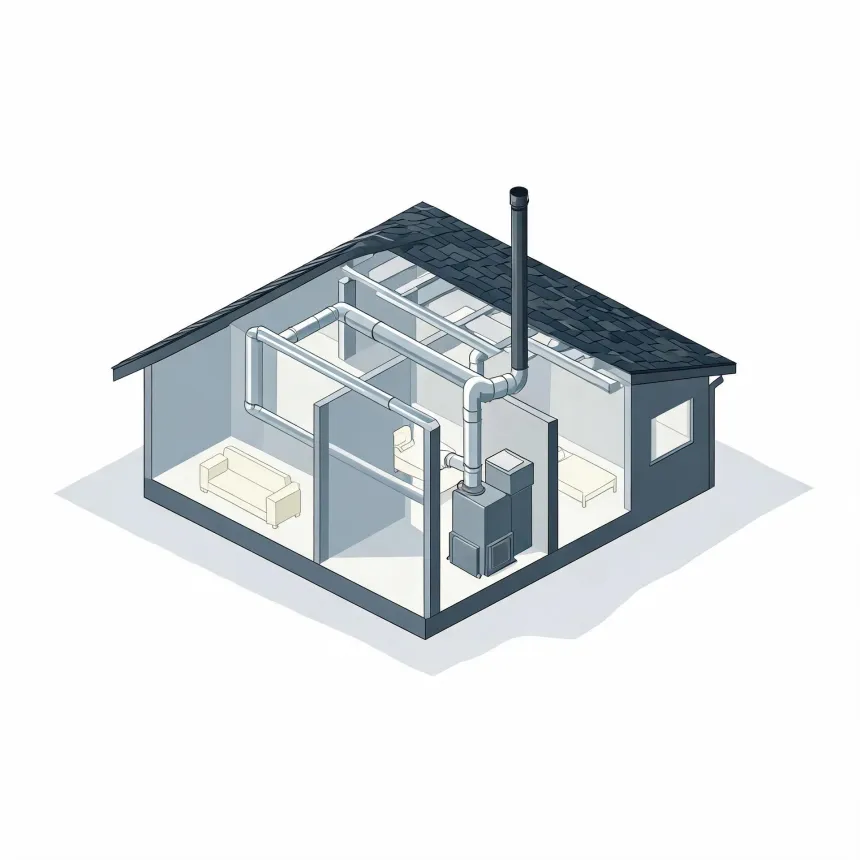
Isometric cutaway illustration of a small single-story house showing a furnace with a flue pipe through the roof and ducting running to rooms containing a sofa, chair and bed.
Your furnace works hardest from November through April.

NOAA nClimDiv, 1991–2020 normals

Furnaces in Skowhegan start running in September.

Get the new one in by August and the install happens on your schedule, not during the first cold snap.

Ten months of heat a year means this furnace doesn't get much rest

Heat runs September through June
Winter nights average 7°F
137 winter storms from 2015 to 2024
Winter here does not go easy on a furnace137 winter storms hit Somerset County in the last ten years, and most Maine homes lost power for a day or more last year.

Skowhegan is in climate zone 6A, a cold zone under the current energy code. Any furnace installed here has to clear 80.0 percent AFUE, the federal minimum for a non-weatherized gas furnace. That floor is set to rise to 95.0 percent for furnaces built from December 2028 on. Installing before then still means a choice between a furnace built to the old minimum and one already built closer to where the standard is headed.

A standard size fits this job

Half the homes in Somerset County were built in 1978 or earlier, half after. That split doesn't call for anything special. A standard size, installed by a contractor who's measured your house and done the load calculation, is what fits here.

Find a contractor
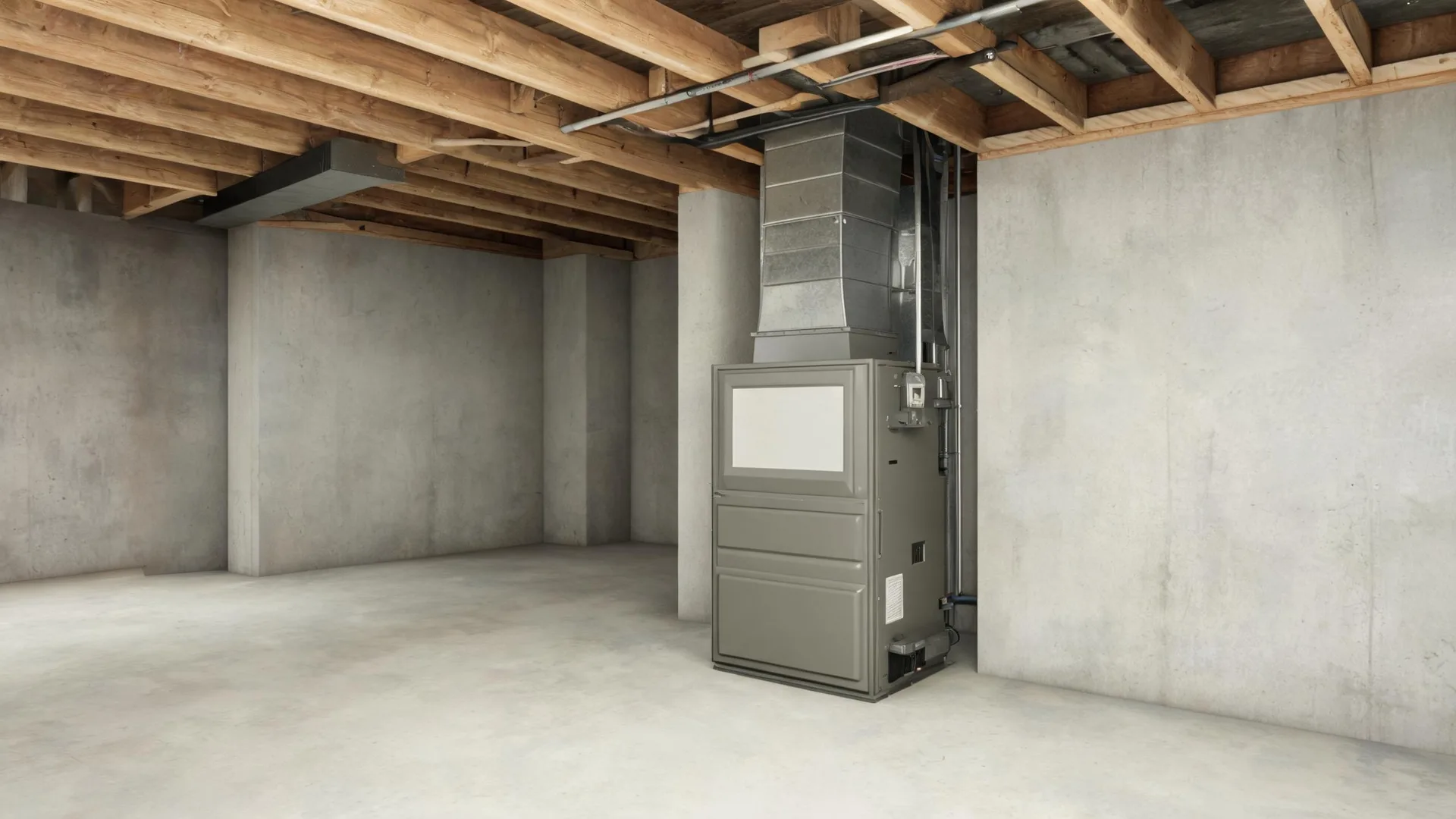
A gray residential gas furnace installed in an unfinished basement, connected to sheet-metal ductwork and PVC pipes.

This furnace needs to be sized for the job

Ten months a year and a 7°F average overnight low in the dead of winter means this furnace runs long, hard cycles, not short ones. That's where sizing matters. Too big and it short-cycles, beating up the igniter and the heat exchanger faster than it should. Too small and it never stops reaching for a temperature it can't hold. A load calculation tells the contractor what size fits your house. Size to that number, not to the unit coming out.

The load calculation looks at the whole house

A contractor doing this right measures the square footage, checks the insulation, counts the windows and their orientation, and walks the ductwork before naming a size. A house that holds heat well needs less furnace than one the same size that doesn't. Guessing the size from the old unit skips all of that.
Oversizing shows up fast, not later

A furnace that's too big for the house heats the air quickly and shuts off before it's pulled the chill out of the floors and walls. The thermostat reads satisfied while the house still feels cold, so it fires again soon after. That short cycling wears the igniter and the heat exchanger down well before their time.

Ask what stage the burner runs. A single-stage furnace fires at full output every time, then shuts off, so the house swings warm and cool as it cycles. A staged or modulating furnace holds a low flame most of the time and only opens up on the coldest days, which keeps the temperature steadier and runs the blower longer on low speed. Ask what the blower motor is too. A variable-speed motor draws less power at low speed and moves air more quietly than a motor that's either on full or off. Ask how the contractor plans to vent it, since that depends on the efficiency tier and changes what has to be run through the house. None of this shows up on the price tag, but it's what you'll actually live with.

The old furnace comes out first. If the ductwork or the gas or oil line needs rework to fit the new unit, that's where the extra time goes. The contractor sets the new furnace in place, connects the supply and return plenums, runs the gas or oil line, and wires it to the thermostat. Venting comes next. A higher-efficiency furnace vents through PVC pipe out a sidewall. A lower-efficiency one ties into an existing chimney flue. Once it's connected, the contractor fires it up and checks the gas pressure, the temperature rise across the heat exchanger, and the flame itself. Static pressure gets measured and the blower speed gets set to match the ductwork. Before leaving, the contractor should walk through the thermostat settings with you.