






A row of illuminated white colonial houses with black shutters and a stone wall along a road at dusk.

Mini Split Installation in Belfast, ME

Tell us about the job

Takes about a minute. No obligation.

New system or replacementMini-splitWaldo County, ME
Step 1 of 2

What ZIP code is the job in?

Winter storms hit Waldo County 79 times between 2015 and 2024, more than any other kind of severe weather here. Heavy snow and ice are what a mini split's outdoor unit has to sit through, winter after winter. Where the installer mounts it matters. It needs to sit clear of roof runoff, up off the ground on a proper stand, away from where plowed snow gets piled. Power cuts matter too. A mini split will not heat or cool through an outage without backup power behind it. Worth asking the installer whether a generator hookup makes sense for this house.

9 months
September through May, your system heats
1 months
July through July, it cools
14°F
the average winter night it heats against
76°F
the average summer afternoon it cools against
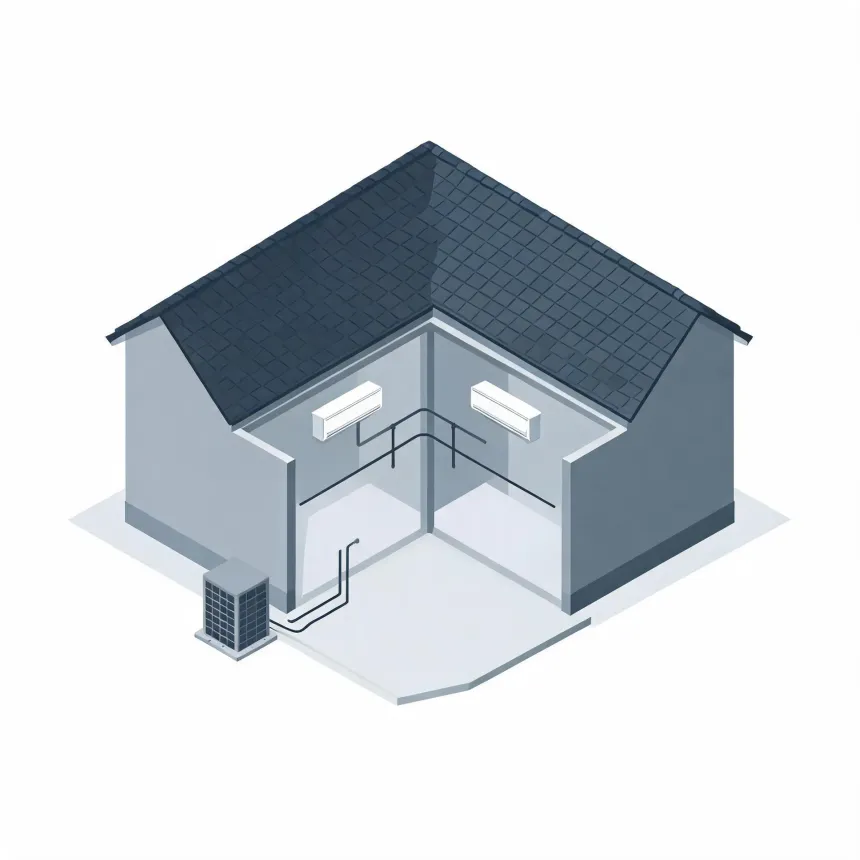
Isometric illustration of a cutaway gray house with a dark shingled roof, showing two wall-mounted indoor air conditioning units connected by piping to an outdoor condenser unit on the ground outside.
Your system heats September through May and cools July through July.

NOAA nClimDiv, 1991–2020 normals

Fuel oil heats 51.3% of the homes in Waldo County, more than any other fuel.

A mini split installed here is almost always going in alongside an oil furnace, not replacing the only heat source.

July is the only cooling month here, so get the mini split in before it

Cooling runs July through July
Summer afternoons average 76°F
34 damaging wind events from 2015 to 2024
One month of cooling, built for the restBelfast cools in July alone, afternoons near 76°F, so a mini split here is barely tested

Nothing about Belfast calls for an oversized system or top-tier efficiency. A correctly sized mini split, matched to the room or zone it serves, will heat and cool this house the way it's meant to. Maine electricity ran 24.29 cents per kilowatt-hour in 2024, which is enough reason on its own to size it right rather than big. An oversized unit cycles on and off more than it should, and that costs more to run, not less. The installer figures the size from the square footage, the windows and how the room is used, not from the brand or the price tag.

A mini split built for zone 6A, with a credit toward it

Waldo County falls in climate zone 6A, with cold winters that run long. Any mini split installed here has to meet the federal minimum for a split-system heat pump. That means 14.3 SEER2 for cooling and 7.5 HSPF2 for heating. A unit meeting those numbers is built for what this climate asks of it, all winter and the one month it has to cool. A federal tax credit is available toward the cost of a qualifying system.

Find a contractor
A person in a dark long-sleeved shirt and tan pants, seen from behind, carries a worn canvas tool bag up stone steps toward a blue front door with a shrub in a blue planter beside it.
A white outdoor air conditioner condenser unit mounted on metal wall brackets against gray horizontal siding, with a blue sky and white clouds behind it.

Light duty, most of the year

One month of real cooling work a year is not much to ask of a compressor. The rest of the time it is sitting idle or running light. That kind of schedule does not wear a unit down. A mini split here is more likely to go bad from a bad install or years with no service than from the job itself. Spend the money on correct sizing and a clean installation, not on a higher-tier model you will not get the use out of.

The line set length is part of the cost

The distance between the indoor head and the outdoor unit sets how much line set, wiring and conduit the job needs. A short, direct run costs less than one that has to snake around a corner of the house or climb a wall to reach the only spot the outdoor unit can sit. The walk-through is where that distance gets measured, before anyone quotes a price.
A multi-zone system costs more than one head

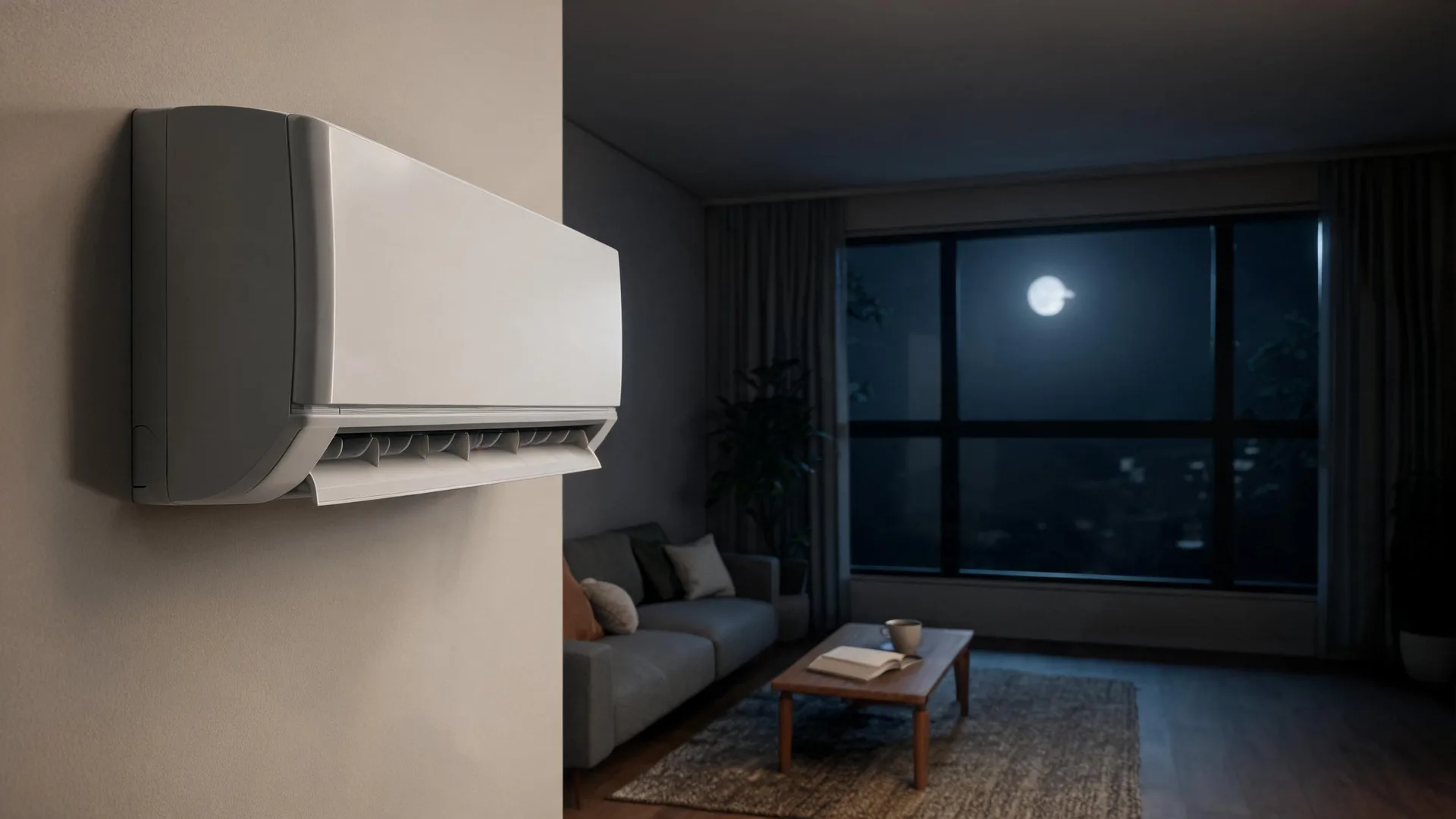
Adding a second or third indoor head off the same outdoor unit means more line set, more wiring and more labor hanging each head, on top of an outdoor unit sized to run them together. A house getting one zone done right now can still cost less than a house doing several rooms in the same visit, even with one installer and one trip.

Since the mini split is going in alongside the oil furnace rather than replacing it, there usually isn't an old heating system to remove. What does come out is whatever was handling cooling before, a window unit or an old through-wall air conditioner if the house had one. The installer pulls that out and patches the opening it leaves behind, rather than just covering it over. None of that old equipment carries over into the new install. A mini split needs its own line set run between the indoor and outdoor units and its own dedicated electrical circuit, sized for that unit alone.

Installation starts with the walk-through. The installer looks at where the indoor head will go, where the outdoor unit will sit, and the path the line set has to travel between them. That path matters because the refrigerant lines, the electrical wiring and the condensate drain all run together through one hole in the wall. Once that hole is drilled and the line set is run, the crew mounts the indoor unit, sets the outdoor unit on its pad or bracket, and connects the lines. Then the installer pulls a vacuum on the line set. That clears out air and moisture before refrigerant ever moves through it, and skipping it is how a compressor fails early. After that comes a pressure test and a power-up, with the installer checking that the head is actually heating and cooling the room it was placed in.