Zone 6A sets the floor
Knox County is in zone 6A, a cold climate with winter running long here. Any mini-split installed new has to meet the federal minimum for a split-system heat pump. That means 14.3 SEER2 for cooling and 7.5 HSPF2 for heating.
Takes about a minute. No obligation.
Knox County is in zone 6A, a cold climate with winter running long here. Any mini-split installed new has to meet the federal minimum for a split-system heat pump. That means 14.3 SEER2 for cooling and 7.5 HSPF2 for heating.
A mini-split that gets by in a warmer state may not clear the HSPF2 number required here. Check a unit's rating against both numbers before buying. It narrows the field fast.
NOAA nClimDiv, 1991–2020 normals
Fuel oil heats 56.2 percent of homes in Knox County, more than any other fuel.
A mini-split installed alongside an oil furnace can take over most of the year's heating and cut down how much oil gets burned.




A standard mini-split sized for this house will cover it. Rockland does not push equipment any harder than it was built for, so there is no case for oversizing a unit or paying up for a higher-tier model than the job calls for. What matters more is the rate you are running it against. Maine electricity ran 24.29 cents per kilowatt-hour in 2024, above what most of the country pays, and that difference shows up every month the mini-split runs, not just at installation. A unit that meets the federal minimum will do the job here. Where it is worth paying attention is efficiency within that range, since every kilowatt-hour saved counts for more against a rate like this one.
Cooling runs one month here, July, so June is the month to get a mini-split in place. Installed before then, the job happens on your schedule, with no rush to beat a system already running.
Find a contractorCooling runs one month a year here and the afternoon high across June, July and August only averages 74°F, so the compressor is not working against much even in that one month. With a load this light, put the money into the install instead of the equipment. A unit at the federal minimum, properly sized and charged, will outlast one bought up a tier for a job it was never going to face.
If fuel oil is staying in as backup heat, the furnace and its distribution stay put. The mini-split goes in as its own system, with its own line set and its own head. There's no tie-in to the oil system and no need to open it up or modify it.
Pulling out an old unit, whether it's a window AC, baseboard heaters, or a failed heat pump, means capping or removing whatever line, vent, or wiring served it. A baseboard heater leaves a wall opening and an electrical circuit that either gets reused or needs to be made safe. That part of the job is worth asking about before the install date, not after.
Ask how many zones a system can run and whether one outdoor unit covers the whole house or just a room. Ask what happens if one indoor head needs service, whether the rest keep running or the whole system shuts down. Ask about the line set length the installer is planning, since a longer run between outdoor and indoor units can affect how the system performs and that length is fixed once it's installed. Ask what the warranty covers on the compressor versus the parts, and whether it requires the installer to register it or handle maintenance on a schedule. A system quoted without these answers is harder to compare, even if the price looks good.
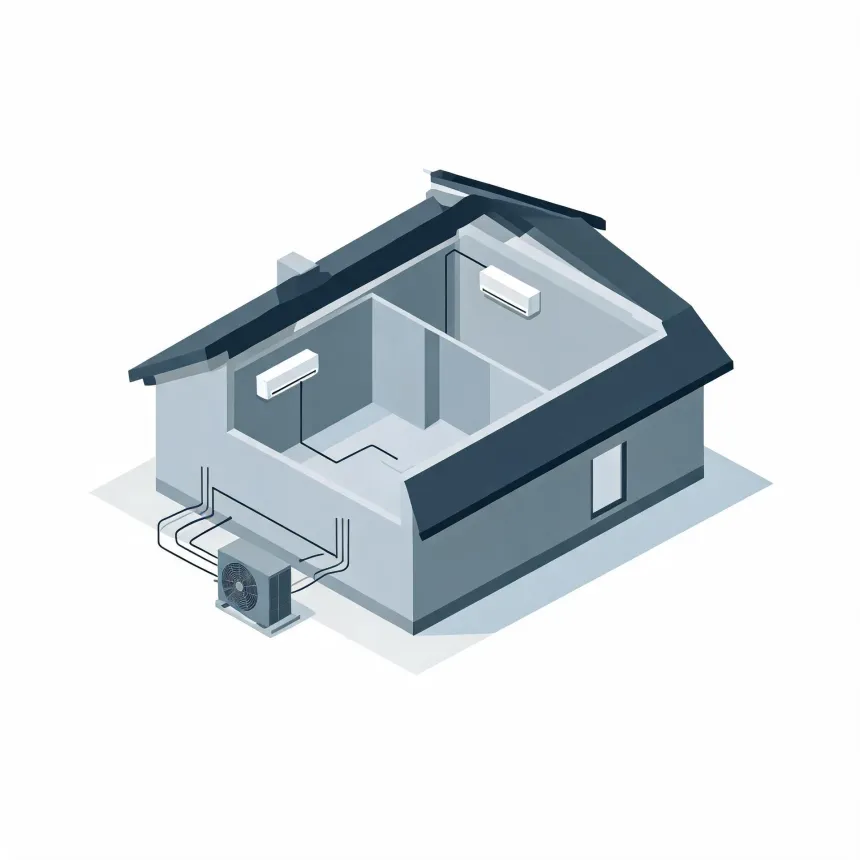
Installation starts with the outdoor unit placement, and that gets decided before anything is mounted. The compressor needs clearance on all sides for airflow and a pad or bracket solid enough to keep it level and off the ground. Inside, the installer runs a line set from the head to the outdoor unit through a hole drilled in the wall, usually behind where the head will hang. That hole gets sealed once the lines, the drain, and the wiring are through it, and the seal matters as much as anything else done that day since it is the only new opening in the wall. The lines get connected, the system is evacuated to pull out moisture and air, then charged with refrigerant to the manufacturer's spec. Once it's charged, the installer runs the system through both heating and cooling to check that the head responds, the thermostat reads correctly, and the condensate drains where it should.