





A row of illuminated white colonial houses along a road photographed at dusk.

Mini Split Installation in Sanford, ME

Tell us about the job

Takes about a minute. No obligation.

New system or replacementMini-splitYork County, ME
Step 1 of 2

What ZIP code is the job in?

Ask what the unit's rated output is at low outdoor temperatures, not just its nameplate capacity. Some heat pumps lose a lot of heating power in a hard freeze, others hold onto most of it, and that difference matters more than the sticker price. Ask how many zones the system can run and whether the outdoor unit has enough capacity for all of them at once, since running every indoor head on a cold night is different from running just one. Ask where the installer plans to put the outdoor unit and why. It needs clearance for airflow and a spot where snow and ice won't bury it or drip onto it. Ask about the line set length and how many bends it needs, because a longer run or a sharp turn can cost you efficiency. Ask who sizes the system and how. A good contractor measures the space and does a load calculation instead of guessing off square footage.

9 months
September through May, your system heats
2 months
July through August, it cools
16°F
the average winter night it heats against
79°F
the average summer afternoon it cools against
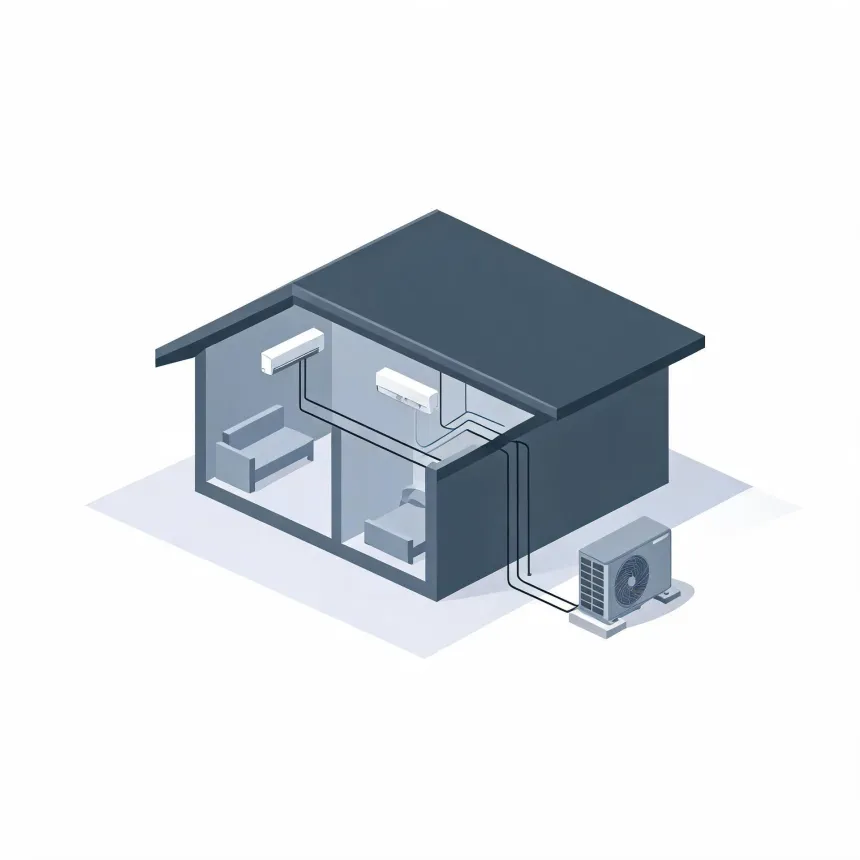
Isometric illustration of a cutaway house showing two wall-mounted mini-split indoor units connected by line sets to an outdoor condenser on a pad outside.
Your system heats September through May and cools July through August.

NOAA nClimDiv, 1991–2020 normals

Oil heats 60.5% of homes in York County.

A mini split here usually works alongside that system, not instead of it, taking over the shoulder months and cutting into oil use.

A normal size, running on 24.29 cent power

Power costs 24.29 cents a kWh statewide
Cooling runs July through August
Summer afternoons average 79°F
Ready before JulyCooling here runs July through August, so June is the month to get it in.

York County falls in zone 6A under the energy code, a cold climate with winter that runs long. Any mini split sold here has to meet the federal minimum for a split-system heat pump, 14.3 SEER2 for cooling and 7.5 HSPF2 for heating. That rule applies whether the system is ducted or ductless, since the standard does not treat mini splits as their own category. Buying above that floor is where the difference shows up on a hard freeze night, in how much heat the unit still puts out once the temperature drops. Two units can carry the same rating and perform very differently in January.

Two months of real work a year

Cooling here only runs July through August, with afternoon highs averaging 79°F. That is not a hard season for a mini split to carry. A system here spends most of its life well under what it is rated for, so a dependable mid-range unit is usually enough. You do not need to pay for the top of the lineup to get a system that holds up.

Find a contractor
A white mini-split air conditioner outdoor condenser unit mounted on metal brackets against a beige stucco exterior wall, with a blue sky and scattered clouds in the background.

What the install actually involves

The outdoor unit and the indoor head usually go in the same day, and most of that time goes into work you never see once it's done. The line set gets cut to length, run through the wall, and brazed, then the whole system is pulled down to a vacuum to clear out any moisture and air before refrigerant moves through it. A tech who rushes that step is setting up a leak or a compressor problem that won't show for a while. Mounting matters too. The indoor head has to sit level so condensate drains the way it should instead of pooling or dripping where it shouldn't. Once it's running, a good installer checks the refrigerant pressures and the temperature split between the air going in and the air coming out, because that tells them the charge is right, not just that the unit is powered on. Skip that check and the system can run for years at a slight loss, cooling or heating a little worse than it should without ever throwing an error.

Sizing comes from a room by room calculation

A load calculation looks at the size of each room, how many windows it has, which way it faces, and how well it's insulated, then adds up how much heat the space loses in winter and gains in summer. That number, not the square footage of the house, is what tells an installer which unit and which indoor heads to put in. Rooms the same size can need different amounts of capacity if one has more glass or faces the weather.
Oversized and undersized both cause problems

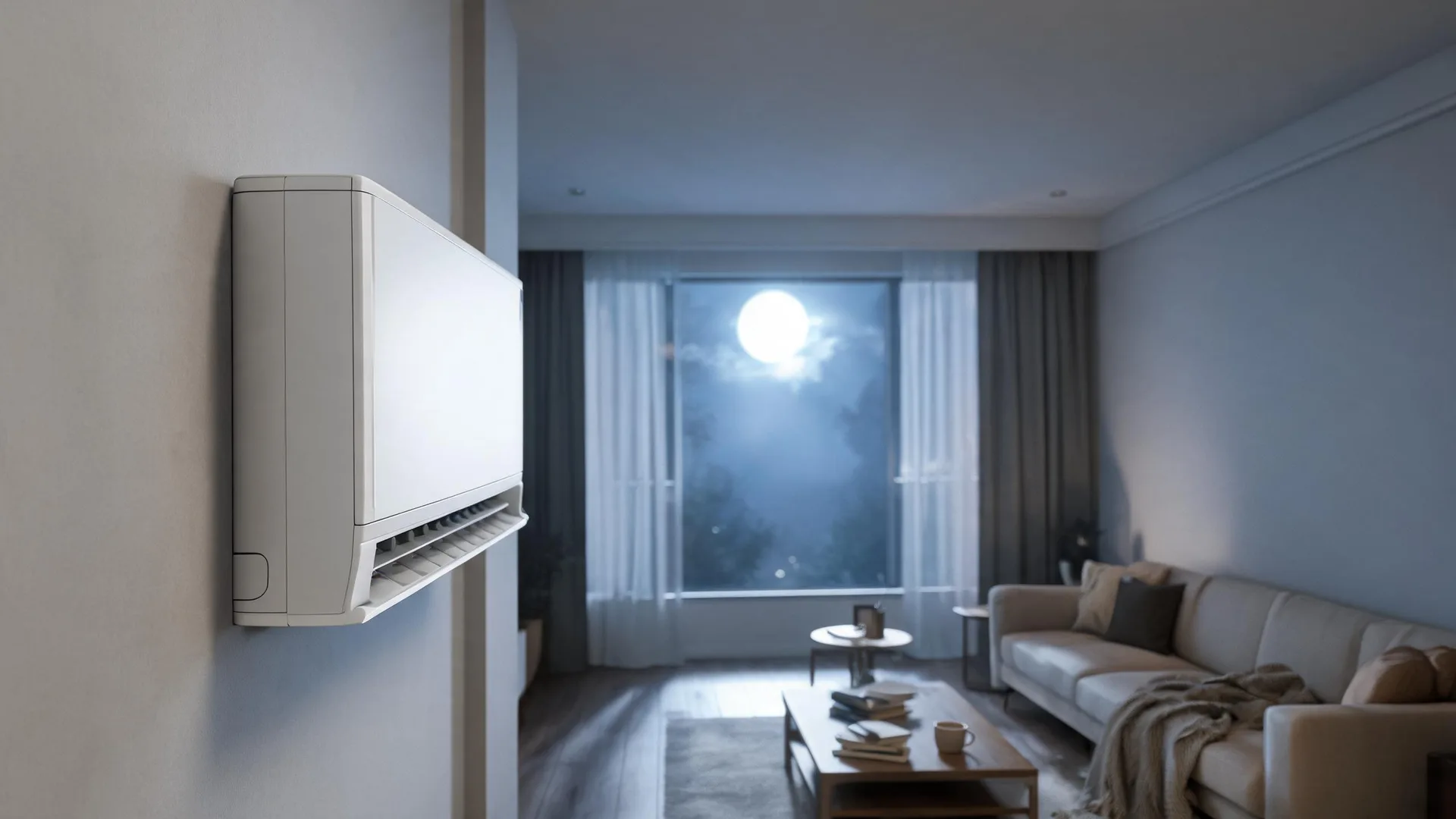
A unit that's too big cools or heats the room fast and shuts off before it finishes pulling moisture out of the air, so the space feels cool but damp. It also cycles on and off more than it should, which puts more wear on the compressor over the life of the system. A unit that's too small never shuts off at all, running constantly and still falling behind on the coldest or hottest days. The right size runs in long, steady stretches instead of either extreme.

If the house is being pulled off an oil furnace or baseboard heat, the old system usually doesn't come out. Baseboard stays as backup for the nights a mini split can't keep up alone, and an oil furnace stays connected for the same reason, with the mini split carrying the load most of the year instead. If a window unit or an older ductless system is being replaced, the indoor head and outdoor unit both come out, along with the line set and the wiring that ran to them. Whoever installs the new system should also recover the refrigerant from the old one rather than just disconnecting it, since that refrigerant can't be released into the air. Ask who's hauling away the old equipment and whether that's included in the quote, because some installers leave it on site and expect the homeowner to deal with it.

That light cooling load also means a mid-range outdoor unit isn't fighting for its life every July. Pick one from a brand with parts and service support in the area over one with a slightly better spec sheet. Since the system barely gets pushed here, the gap between a dependable mid-range unit and the flagship model shows up less in how it runs and more in what happens when something needs fixing years down the road. A straightforward, well-supported system beats a premium one with a long wait on a part.