




Two white colonial houses with lit windows and black shutters photographed at dusk along a tree-lined residential street.

Mini Split Installation in Skowhegan, ME

Tell us about the job

Takes about a minute. No obligation.

New system or replacementMini-splitSomerset County, ME
Step 1 of 2

What ZIP code is the job in?

Ask what the unit is rated to do at low outdoor temperatures, not just what it's rated to do at mild ones. Some mini splits lose most of their heating capacity well before it gets truly cold out, and keep running anyway while putting out less and less heat. Ask how many zones the outdoor unit can actually support well, since piling too many heads onto one compressor can leave all of them working harder than they should. Ask where the line set will run and how long it needs to be, because a longer run between the outdoor unit and the indoor head changes how the system performs. And ask who sizes the system for each room, since a head that's too big for the space will short cycle, turning on and off instead of running steadily.

10 months
September through June, your system heats
7°F
the average winter night it heats against
74°F
the average summer afternoon it cools against
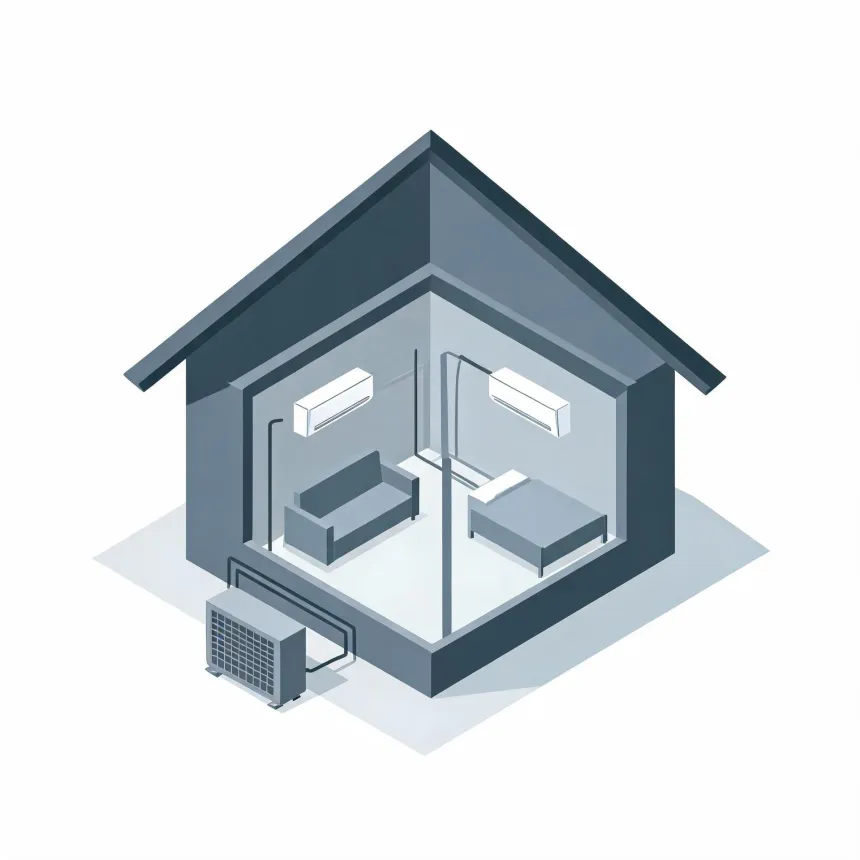
Isometric cutaway illustration of a small gray house showing two rooms, one with a sofa and one with a bed, each with a wall-mounted indoor air conditioning unit connected by line sets to an outdoor condenser unit on the ground outside.

Oil heats most homes in Somerset County, not gas.

A mini split works alongside that oil furnace or lets you cut back on it, either way.

A standard mini split, sized normally, is what this county needs

Half the homes here were built by 1978
Summer afternoons average 74°F
83 damaging wind events from 2015 to 2024

A mini split here runs on electricity, and Maine homes paid 24.29 cents per kilowatthour for it in 2024, higher than the national average. That's worth knowing going in, but it doesn't change what size or efficiency makes sense for the house. A correctly sized unit costs less to run than an oversized one, whatever the rate per kilowatthour happens to be. The standard efficiency ratings sold here work the same way they do anywhere else in the state. Nothing about Skowhegan's power costs calls for a bigger compressor or a higher-tier model, just one sized to the room and installed well.

Any new system here has to meet Maine's cold-climate standard

Somerset County sits in climate zone 6A, a cold zone with winters that run long. A mini split installed here, if manufactured from 2023 on, has to meet 14.3 SEER2 for cooling and 7.5 HSPF2 for heating at minimum. That's the floor a contractor has to meet, and a federal tax credit is available on top of it for equipment that qualifies.

Find a contractor
A white mini-split air conditioner outdoor condenser unit mounted on metal brackets against a beige stucco exterior wall, with a blue sky and scattered clouds in the background.

The cooling side barely works

At a 74 degree afternoon high, the outdoor unit barely has to work to cool this house. Most places ask a compressor to fight real heat for months at a stretch. Here there isn't a month that calls for it. The load falls almost entirely on the heating side instead, through a winter that runs long under zone 6A. That's steadier work than cycling hard against summer heat, and it wears a compressor less. A standard mini split, sized to the room, holds up fine under that kind of load. It doesn't need to be built for extremes this county doesn't get.

The outdoor unit and its location set the baseline

A single-zone system costs less to install than a multi-zone setup running several heads off one compressor. Where the outdoor unit sits matters too. A spot close to the indoor head keeps the line set short and the refrigerant charge simple to get right. A longer run costs more, especially if it has to clear a foundation or get routed around the back of the house.
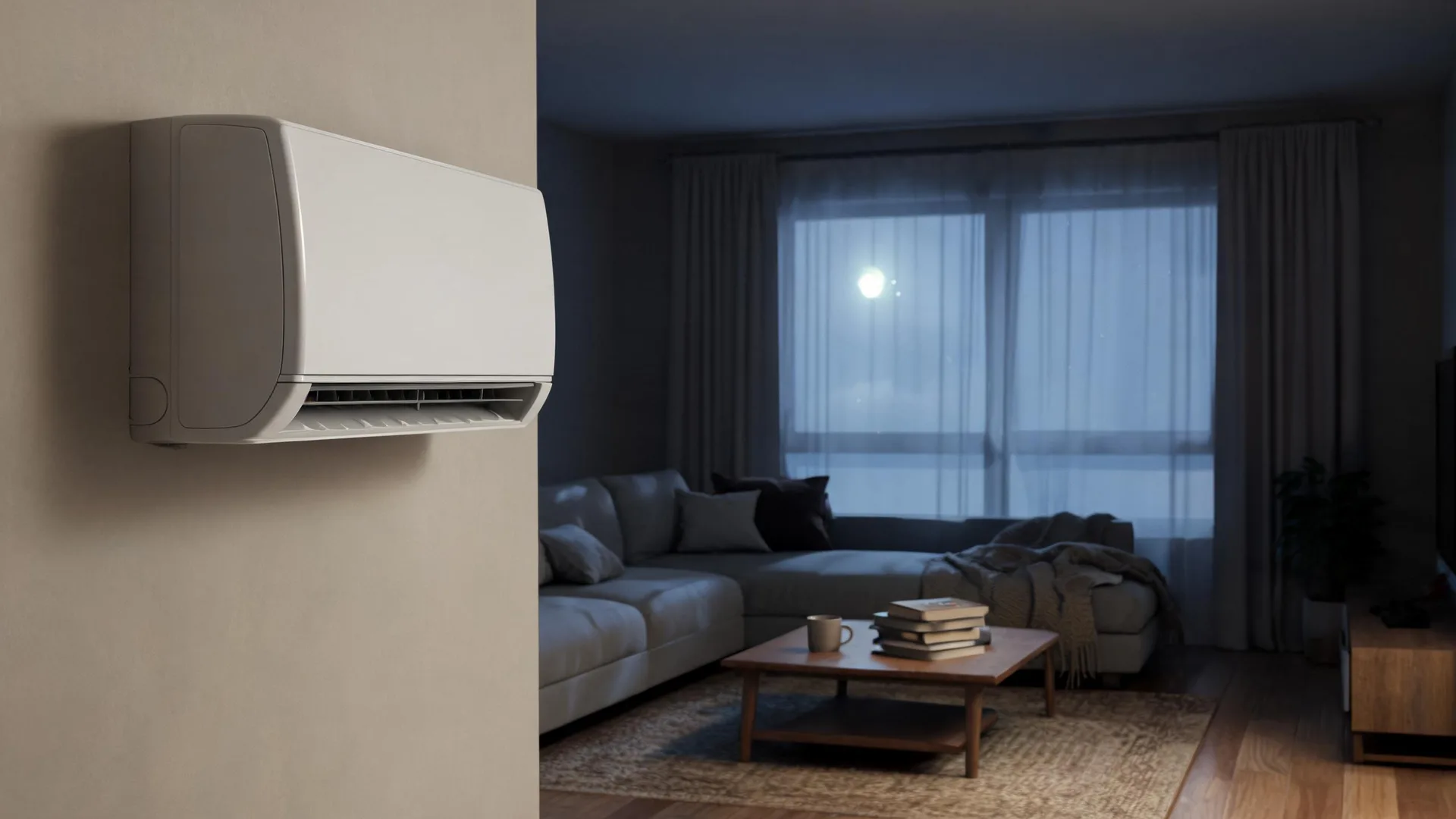
What's already there changes the job

Running a mini split means a new electrical circuit, a condensate drain, and a wall or ceiling penetration for the line set. An electrical panel with room and capacity to spare keeps that part of the job simple. One that's already full means the installer has to add that work in first. The wall itself matters too. Some walls are a clean, quick core drill. Others take more time depending on what's behind them.

The rating tag gives a cooling number and a heating number, and together they're telling you something different than the number on an old furnace label. They measure efficiency across a full season of running, not at any single moment, so a higher number means the compressor gets more heating or cooling out of the power it draws over all the short cycles and long ones it runs. Neither number tells you what happens on the coldest night of the year, only how the unit averages out over the whole season. A unit with a strong rating that's oversized for the room still runs worse than a smaller one sized right, because it short cycles instead of settling into a steady run. The rating describes the equipment sitting on the showroom floor. It doesn't describe the installation, and the installation is what decides whether you ever see that efficiency on your power bill.

Install day starts with the outdoor unit and works inward. The installer mounts the outdoor unit on its pad or brackets, sets the indoor head on the wall, and drills the penetration that connects them. The line set runs through that hole, carrying refrigerant lines, a condensate drain, and electrical wiring together, then gets connected at both ends. Once the lines are joined, the installer pulls a vacuum on the system to clear out air and moisture before any refrigerant moves through it. Skipping that step or rushing it is what causes a system to run poorly from day one, so it takes the time it takes. After that comes the charge, the test run, and checking that the head is actually heating and cooling the room the way it should before anyone calls the job done.