Profile view of a bearded man wearing a black baseball cap and a dark gray T-shirt against a plain light background.

Why your boiler is gurgling in Maine

RepairBoilerMaine
Step 1 of 2

What ZIP code is the job in?

A gurgling boiler usually means air trapped in the system, and it needs to be bled out. Water moving past trapped air makes that gurgle or knock you're hearing, often right when the heat kicks on. It can also mean the water level or pressure inside the boiler has dropped too low, which lets air pull in through the same spots the water should fill. Either way, it's not something to leave alone through a Maine winter. Most homes here run on oil heat, and a boiler working harder than it should to push water through trapped air burns more oil doing it. Left alone, that air pocket can also wear at the pump or cause uneven heat room to room. Catching it now, while it's still just a noise, is a lot simpler than catching it after something inside fails.

A smiling man with dark curly hair in a navy t-shirt sits on a gray couch indoors, with a large-leafed plant and a window in the background.
A bearded man in a plaid flannel shirt stands in a kitchen looking out a window toward snow-covered shrubs, with a steaming mug on the windowsill and potted plants on a shelf behind him.
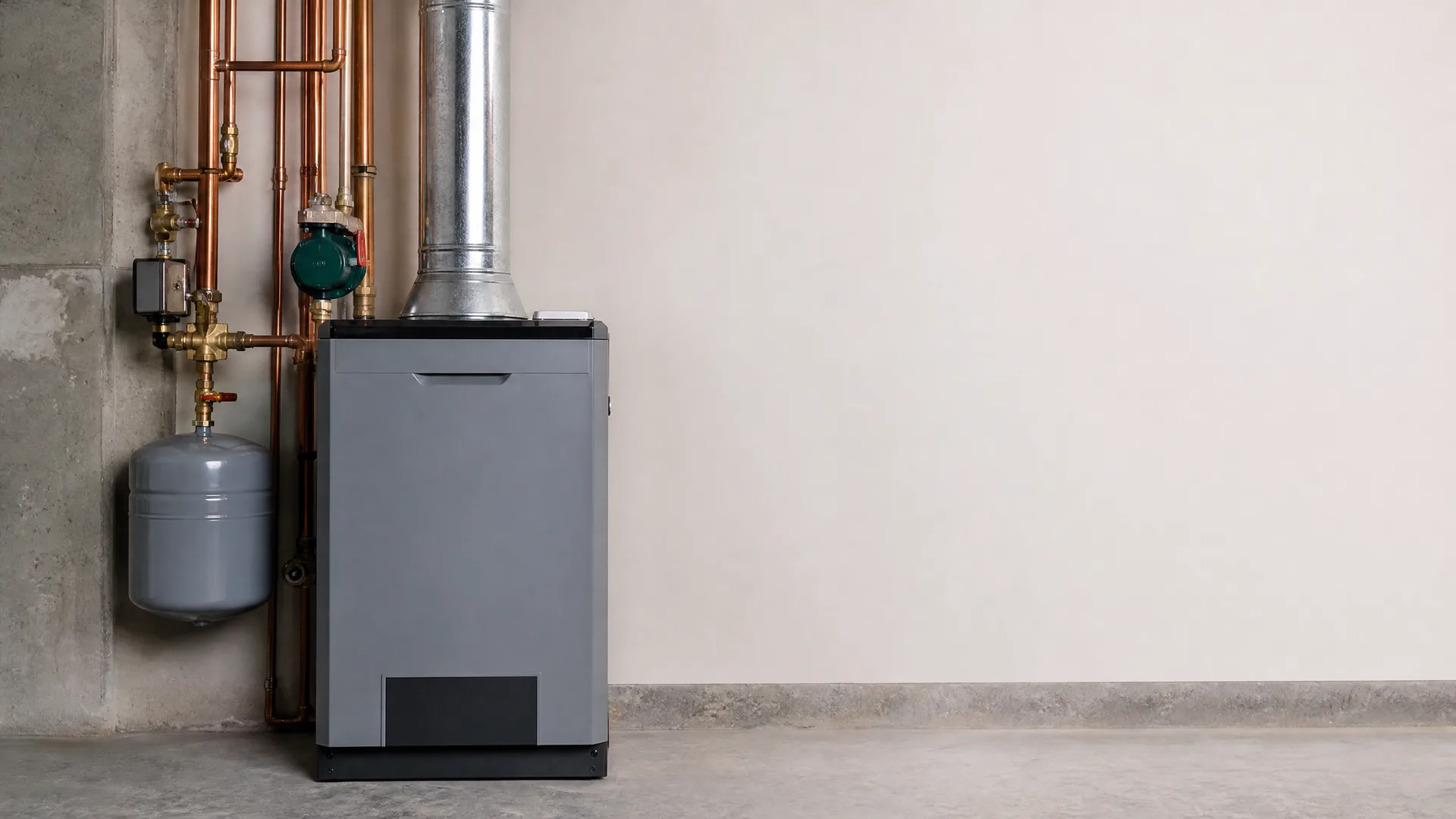
A gray floor-standing boiler with a metal flue stands against a concrete block wall, connected to copper pipes, brass valves and a gray expansion tank, on a bare concrete floor.
Quiet gurgle, water moving steady through the copper and brass once the air is bled out.
A blue oil-fired boiler with a burner unit and pressure gauge stands in a concrete basement corner, connected to copper pipes and a metal flue.
Loud gurgle with knocking, especially near the burner, often points to low water pressure or a cracked heat exchanger.

Is that gurgling getting louder or starting earlier in the cycle?

Pay attention to when the noise starts and how loud it gets. If it used to show up only after the boiler had been running a while and now it starts the moment the burner fires, air is building up faster than before, or your pressure is slipping. You might also notice the radiators or baseboard heat unevenly, warm at one end and cold at the other, which is air sitting where water should be. Left alone through a Maine winter, a boiler working around trapped air or low pressure burns more oil to put out the same heat, and the knocking can wear on the heat exchanger over time. A quick bleed sometimes clears it. A pressure drop that keeps coming back usually doesn't fix itself.

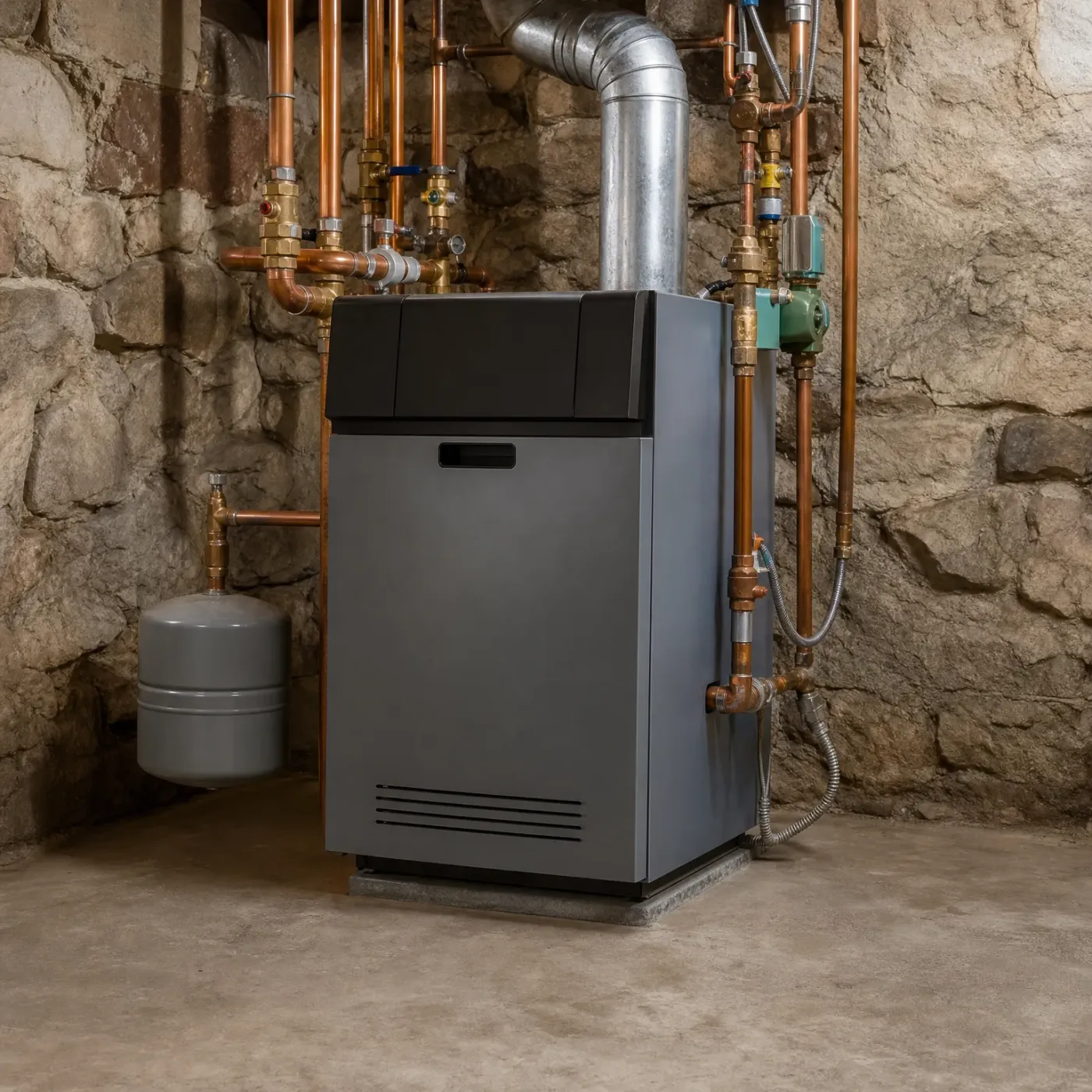
A gray residential boiler on a concrete pad in a basement with stone walls, connected to copper piping, brass valves, a circulator pump, an expansion tank, and a metal flue duct.

Bled out and running quiet

This is what a boiler sounds like once the air is out of it. Water moves through the copper and brass without a sound, the pump runs steady, and the burner fires without any knock behind it. That expansion tank is doing its job holding pressure steady.
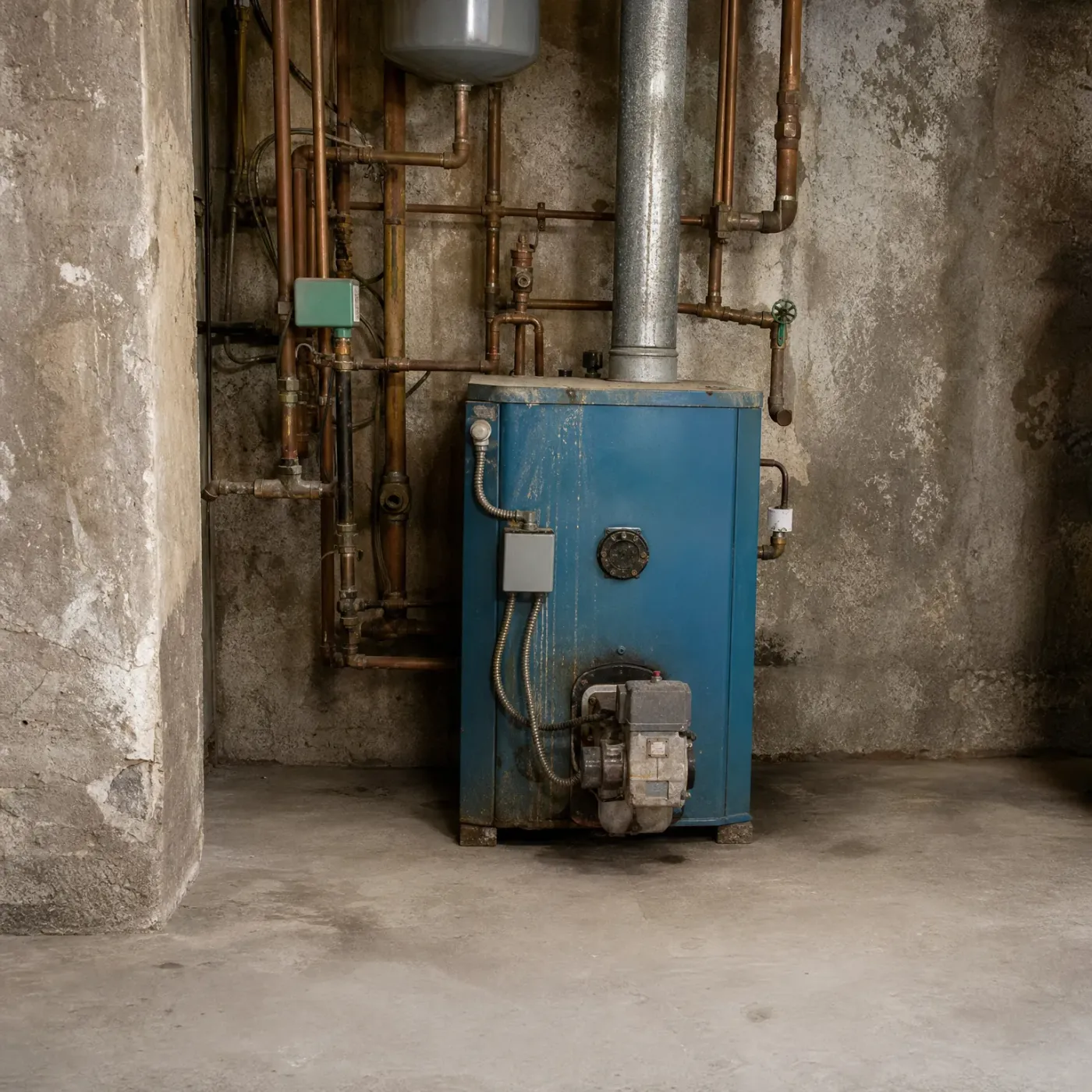

A blue cabinet boiler with a metal flue pipe and copper piping stands against a bare concrete wall in a basement with a concrete floor.

Old, loud, and worth a look

This unit is older, the flue is bare galvanized steel, and the burner sits exposed at the base. A boiler built like this one has had more years for a leak or a crack to start, and the gurgle you hear from it may not be air at all.

A smiling man in a gray long-sleeved shirt stands in a kitchen looking to the side, with open shelves of dishes, a white mug on the counter, a potted plant, and a view through a doorway into a living room.
A smiling bearded man in a green sweater sits at a white marble kitchen island with a mug, potted plant and bowl of fruit, in a bright white interior with open shelving and an arched doorway.
A smiling man with dark curly hair and a beard, wearing a dark green knit sweater, stands at a white marble kitchen counter with a dark blue mug, with open shelving, pendant lights and a houseplant behind him.
A smiling man in a green ribbed sweater stands behind a wooden table holding a ceramic mug of coffee in a kitchen with white subway tile, shelves of potted plants, and a bowl of fruit.

Winter nights average 13°F statewide

At 13°F overnight, your boiler is firing often and running long. That's more cycles for trapped air to work its way into the system, and more chances for the gurgle to show up right when the burner kicks on.

NOAA nClimDiv 1991-2020 county normals weighted by homes

A gray floor-standing boiler with a metal flue pipe, copper piping, a circulator pump and a gray expansion tank, installed against a concrete wall.

Oil boilers and trapped air

Most boilers in Maine run on oil, and oil burners cycle harder on cold nights than a gas burner would. Every time the burner fires, water moves through the system fast, and any air still in there gets pushed around with it. That's what you're hearing. The more the burner cycles, the more chances that air has to knock against the copper and brass on its way through.

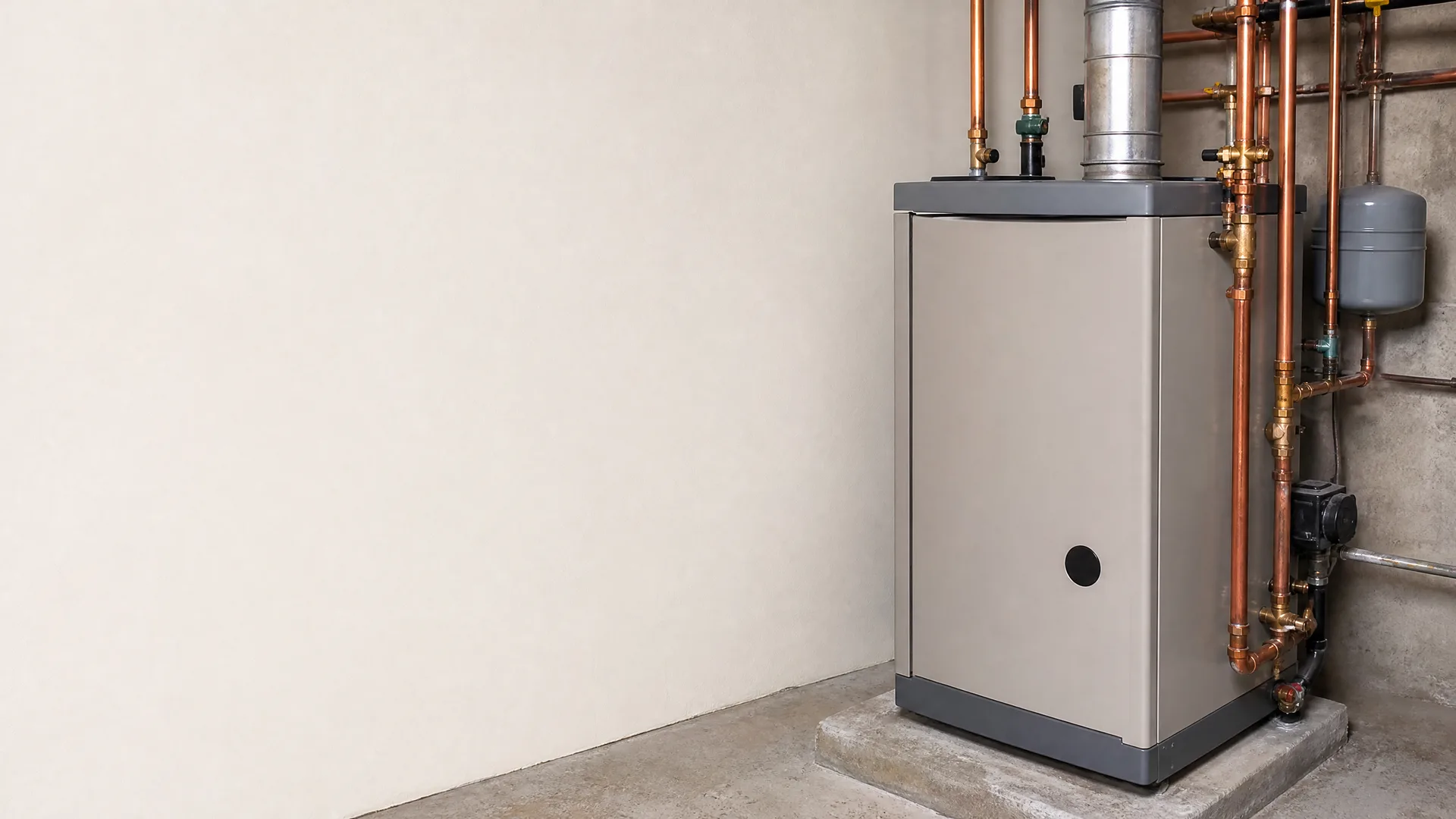
A tall grey floor-standing boiler on a concrete plinth in a corner of a room, with copper pipework, a flue, a circulator pump and an expansion vessel to its right, beside a plain cream wall.

Why bleeding it matters here

Power in Maine costs more than almost anywhere else in the country, and a boiler working against trapped air runs longer to push the same heat into your rooms. That's more oil burned and more electricity for the pump, for no extra warmth. Bleeding the air out doesn't just quiet the knock. It gets the system back to moving heat the way it was built to, instead of fighting itself on every cycle.

Bleed It or Call Someone

Bleed it yourself

  • The bleed valve is usually near the top of the boiler or on a radiator, and a radiator key or flathead screwdriver opens it.
  • Turn off the boiler and let it cool first, since the water coming out will be hot if the system just ran.
  • Open the valve slowly until air stops hissing and water starts to dribble out, then close it before more than a cup or two escapes.
  • Check the pressure gauge afterward, since bleeding air out drops the pressure and it may need topping up through the feed valve.
  • If the gurgle comes back within a day or two, air is getting in faster than bleeding it out is solving, and that points to a bigger problem.

Call a contractor

  • A cracked heat exchanger or a failing feed valve can cause the same gurgle as trapped air, and those aren't fixes you can bleed away.
  • A contractor can pressure test the system and tell you whether the noise is air, low water, or something failing inside the boiler itself.
  • If you're not sure where the bleed valve is or how much pressure the system should hold, sending someone in saves you from guessing with hot water and gas lines nearby.
  • Once you send the form, you're done hunting for who to call, phoning around, and explaining the gurgle over and over to different companies.
  • A contractor already knows how oil boilers here behave on cold nights, so you're not comparing quotes or sorting through who actually works on your make of boiler.
  1. Water sits below the fill line in the boiler

  2. The pump pulls in air along with water

  3. Air pockets travel through the copper and brass pipes

  4. A pocket hits a bend or the heat exchanger and collapses

A blue boiler on a raised concrete pad in a basement corner, with copper and steel pipes, a gauge cluster, an expansion tank, and a metal flue running up the bare concrete walls.
Before you get your boiler repair
A dark gray floor-standing boiler on a concrete pad in a basement, surrounded by copper piping, brass valves, a gray expansion tank, a circulator pump, and a metal flue pipe against concrete block walls.
After you get your boiler repair

Hand off the boiler problem

Fill out one short form instead of calling around.

It costs nothing to send, and you don't have to hire anyone.

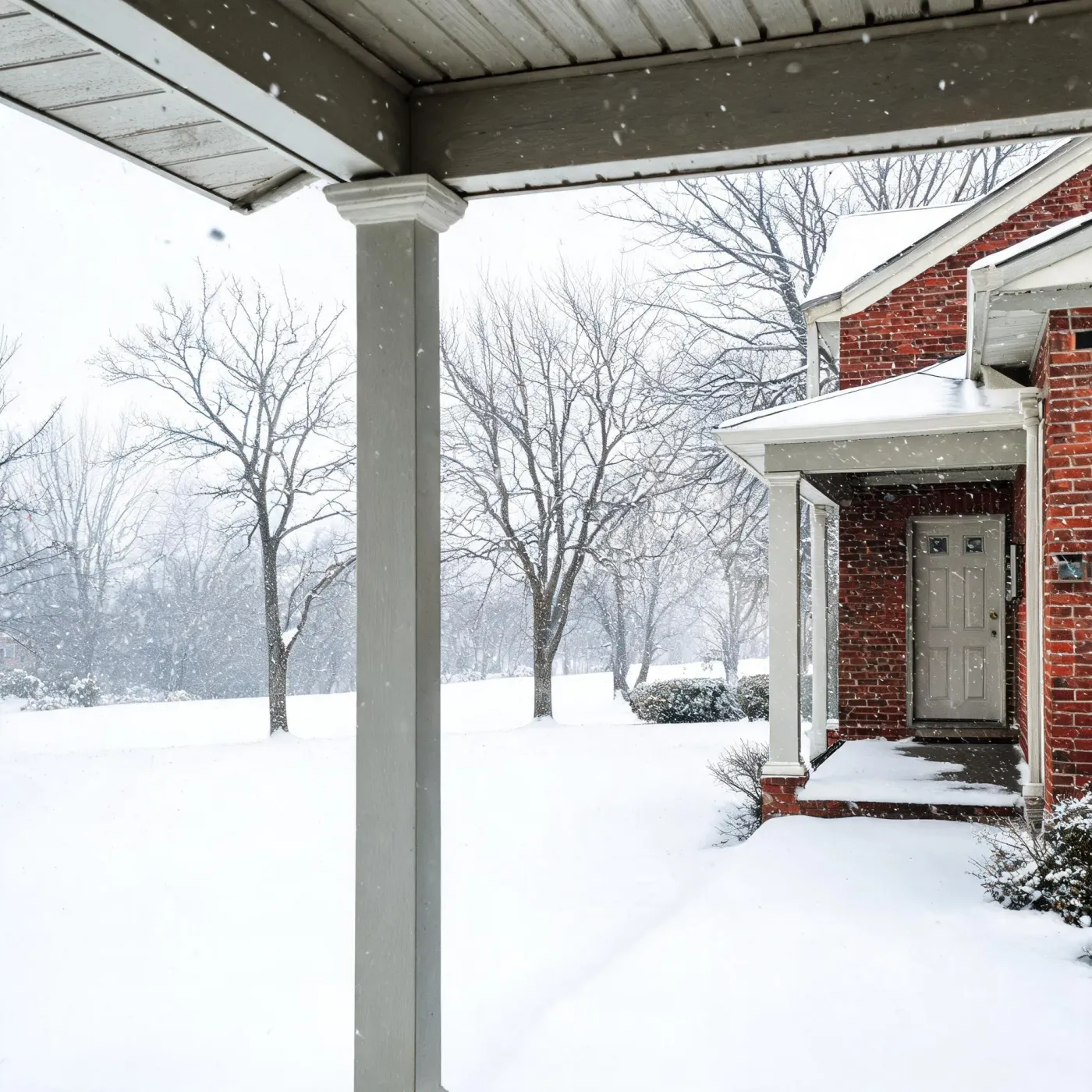
View from under a covered porch with a white column toward a red brick house entrance with a gray door, surrounded by deep snow, bare trees, and falling snowflakes.

Statewide, winter nights average 13°F, and that's the number the National Weather Service uses to describe a normal Maine winter, not a cold snap. At that temperature your boiler doesn't idle. It fires, pushes hot water out through the copper and brass, shuts off, and fires again within the hour, all night long. Each start pulls water through the system under pressure, and if there's air riding along with it, that's another chance for a pocket to hit a bend and knock. The gurgle you hear at 2 a.m. isn't random. It's tied to how hard the boiler is working to keep up with the cold outside.

NOAA nClimDiv 1991-2020 county normals weighted by homes

Does bleeding the boiler fix the gurgling for good, or will it come back?

You bled the boiler, or had it bled, and the gurgling stopped. Now you're wondering if that's the end of it or if you'll be back at the bleed valve again in a few weeks. It's a fair question. Air doesn't belong in a closed system, so if it's getting back in, something is letting it in, and bleeding alone won't fix that part.

It depends on why the air got in there

If air got into the system once, from a drained boiler or new radiator, bleeding it out ends the problem. If it keeps coming back within a few weeks, something is feeding air into the system faster than normal, usually a leak somewhere in the loop or a fill valve that's letting too much water, and air with it, into the boiler. The automatic air vent can also wear out and start drawing air in instead of keeping it out. A contractor checks the fill valve, the pressure, and the vent itself to find where the air is coming from, rather than just bleeding it out again and waiting for it to return.

A gray boiler unit on a concrete pad in a basement corner, connected to copper piping, circulator pumps, and a ceiling-mounted expansion tank against bare concrete walls.

Running right

This is the setup you want, copper and brass runs clean to the pump and the expansion tank, and the system holds its pressure. Water moves through without a sound to announce it. No gurgle, no knock, just heat getting where it needs to go.

A blue oil-fired boiler with a pressure gauge, burner unit and metal flue sits on a concrete pad in a basement corner, surrounded by copper and black pipes against bare concrete walls.

Trouble at the burner

The gauge on the front will tell you if pressure's dropped, and a burner that's knocking while it fires is worth a look before the next cold night. A cracked heat exchanger doesn't announce itself quietly, and the flue duct won't tell you either.

A closed laptop and a cream mug of coffee on a coaster sit on a dark wooden table, with a potted plant at left and a kitchen counter, tiled backsplash and shelf of ceramics in the background.

Gurgling means air, and air gets dealt with

A gurgling boiler is telling you something specific: air is moving through water that should be moving on its own. Sometimes bleeding the valve clears it. Sometimes the knock near the burner means the pressure is off or something inside has cracked, and that calls for someone who can look at the heat exchanger directly. Either way, you know enough now to tell which kind of problem you have and how urgent it is.

What you don't have to do is spend the next cold night calling around to find out who's free, explaining the gurgle and the knock over again to three different shops, then sitting with quotes trying to guess who's worth the call. Send the details once. The search for the right contractor stops being your problem, and you get back to deciding what to do about the actual noise in your pipes.

A living room corner with a beige upholstered armchair holding navy and striped cushions, a small round wooden side table with a carved bowl and a potted green plant, a framed landscape picture on a pale wall, built-in shelving, and a curtained window.
A dark wood cabinet with a paneled door and a ceramic pot of green foliage on top stands in a beige-walled room with white baseboard, a window at left, hardwood floor, and a patterned area rug.
A dark wood glass-front cabinet holding folded towels, woven baskets and a ceramic vase stands in a bathroom corner beside a window, with a potted fern and stacked towels on top and a freestanding tub partly visible at left.
A woven basket holding a green cushion and a cream fringed knit throw sits on a wood floor in a room corner beside a window and a dark wooden cabinet.
Corner of a room with a dark wood cabinet topped by a round vase, a linen curtain at a window, white baseboard, oak plank flooring with sunlight patches, and a woven jute rug in the foreground.
A dark wood sideboard against a pale wall holds a shallow stone bowl and a round ceramic vase with leafy branches, with sunlight from a curtained window falling across the wall, wood floor and woven rug.

Send one request and you're done looking

Explain the job once and skip repeating it on every call.

Send my request

No charge to send it. You decide if you hire them.