Fill out one short form instead of calling around.
A relief valve lets water or steam out when pressure or temperature in your boiler goes higher than it should. If yours is leaking or dripping, it's doing its job, telling you something upstream is off. It could be a boiler running at too high a pressure, a faulty valve that needs replacing, waterlogged expansion tank, or something else. Either way, a small drip at the valve is often the first sign most people notice before anything bigger shows up.
That matters more in Maine than most places. Oil heat runs your boiler hard from fall through spring, and a system working overtime on pressure problems is burning oil it doesn't need to. With power rates here among the highest in the country, few homeowners want a boiler losing efficiency quietly in the basement for weeks before they catch it.
Finding someone to look at it is its own chore. You'd normally be searching for boiler techs near you, calling two or three, explaining the leak and what you've already checked to each one, then waiting on quotes that are hard to compare because every contractor describes the job differently. That's the part that eats an afternoon, not the repair itself.
This page skips that. You tell it what's happening with your boiler once, and it goes to a licensed contractor local to Maine, someone who works on these systems all winter and has seen plenty of relief valves drip for plenty of reasons. You're not fielding calls from five different companies trying to win the job. It's one contractor who already knows what you told them, ready to look at the valve, the pressure, and whatever's behind it.
From there, the fix is between you and them. What's below walks through the usual causes so you know what you're dealing with before they arrive.
A relief valve drips because something is pushing pressure in your boiler past where it should sit, and the valve is built to open before a pipe or fitting gives way instead. Most often the pressure itself is too high, set wrong at install or crept up over time. Sometimes it's a waterlogged expansion tank that can't absorb the pressure swings as your boiler heats up, so the valve takes the overflow instead. Less often the valve itself has worn out and leaks even at normal pressure, especially if it's old or has sat under mineral buildup from the water passing through it. With oil heat running most of the winter here, that valve cycles through a lot of pressure changes each season, and a valve that's starting to fail tends to get worse as the weather gets colder and the boiler works harder.
How the pressure actually builds
The relief valve is set to open at 30 psi on most residential boilers, a number stamped right on the valve itself.
A boiler should run between 12 and 15 psi when cold, so a gauge sitting near 25 or 30 points straight at the problem.
The expansion tank absorbs the extra volume water takes up as it heats, and a waterlogged tank forces that pressure into the system instead.
A fast-closing zone valve or a stuck feed valve can spike pressure for a moment, enough to trip the relief valve without the gauge showing it later.
Oil-fired boilers common in Maine cycle on and off often through the winter, and each cycle is another chance for a marginal valve or tank to fail.
A relief valve that's dripped for a while can corrode at the seat, so it keeps leaking even after the pressure problem gets fixed.
Cold, your boiler should sit at 12 to 15 psi. That water expands as the burner heats it, and the expansion tank is there to give that extra volume somewhere to go besides the pipes. A bladder tank that's lost its charge of air, or an older tank that's taken on water, can't absorb that swing anymore. The pressure has nowhere to go but up, and it climbs until it reaches the 30 psi most relief valves are set to open at, stamped right on the valve. At that point the valve does exactly what it's built to do. It isn't the problem. It's reporting one.
Sometimes the spike is quick rather than steady. A zone valve that closes fast, or a feed valve that sticks open even for a moment, can push the system past 30 psi and trip the relief valve without leaving any sign on the gauge afterward. You come down, the needle reads normal, and the floor under the valve is wet anyway. That's a different kind of problem than a tank that's slowly failed, and it points a contractor toward the zone and feed valves instead of the tank.
Oil-fired systems, common through Maine winters, cycle on and off all day as the house calls for heat. Each cycle is another chance for a marginal tank or valve to be pushed past where it can hold. And once a valve has dripped long enough, mineral buildup at the seat can keep it weeping even after the pressure itself gets corrected.
Winter nights average 13°F statewide
At 13°F, your boiler is working hard most winter nights, cycling on often to keep up. That's more hours of runtime for the relief valve to see high pressure, and more chances for a weak one to start dripping before spring.
NOAA nClimDiv 1991-2020 county normals weighted by homes
Pressure holding steady
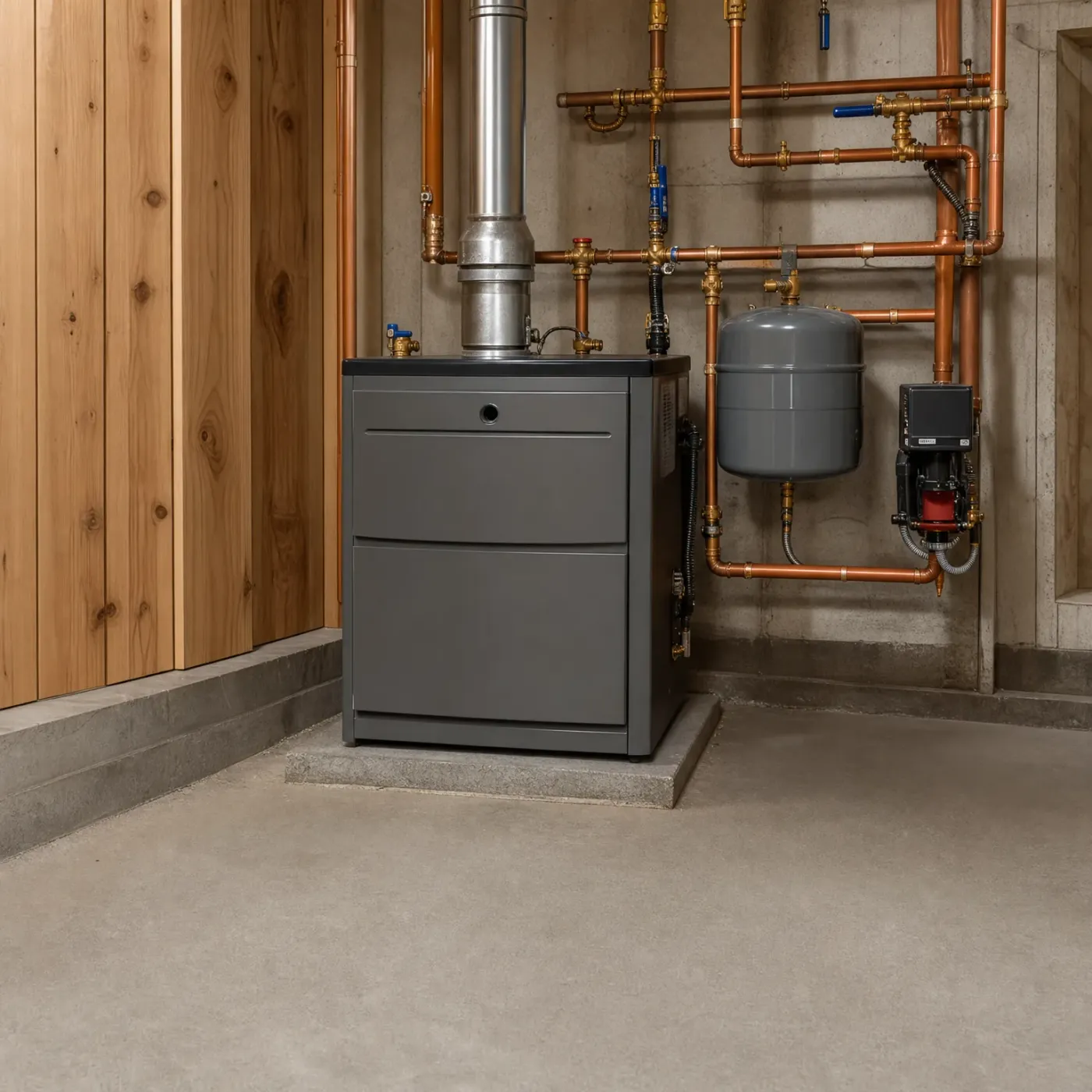
The gauge sits between 12 and 15 psi, the expansion tank is doing its job, and the relief valve stays dry. Copper lines run tight to the pump and the boiler cycles on and off without any water showing at the valve. This is what a boiler looks like when nothing upstream is pushing back.
Valve under pressure
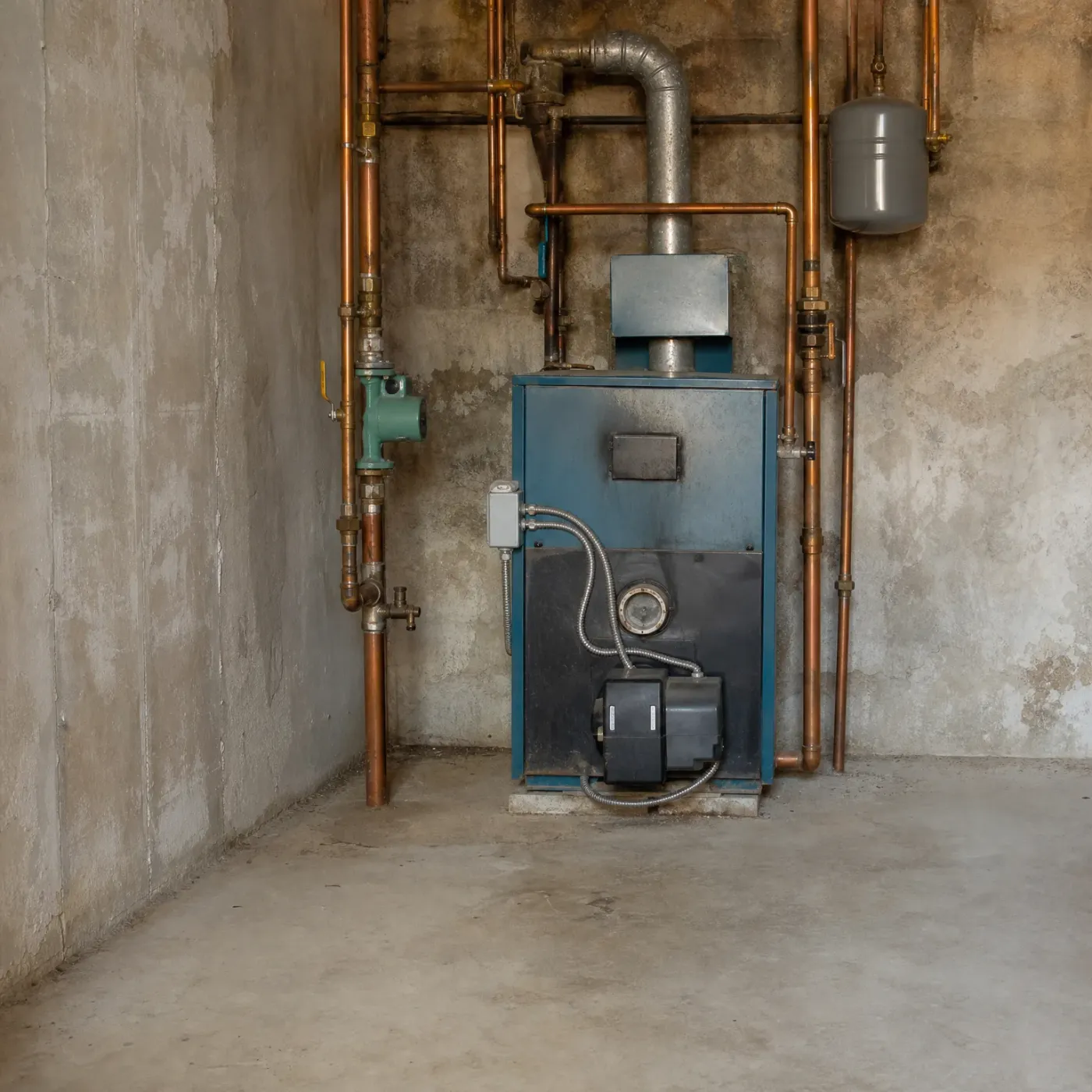
Water sits at the base of the relief valve or drips down the pipe below it. Somewhere in this system, pressure is running past 30 psi, or the expansion tank has lost its charge and can't absorb what the boiler sends out. The valve opening is the only sign most homeowners ever see of it.
Watch It or Call Someone
Drip you can watch
A valve that lets a few drops out after the burner shuts off and then stops is relieving a normal pressure spike, not failing.
If the gauge reads 12 to 15 psi once the boiler cools, the system pressure itself is fine and the valve reset.
Checking it once a week through January and February costs you nothing but a look at the gauge and the floor underneath.
A dry valve the rest of the time means whatever caused the drip was a one-off, maybe a cold snap that pushed the boiler harder than usual.
Waiting makes sense when the drip is rare and small enough that you can still read the model number stamped on the valve.
Steady leak or high pressure
A valve dripping constantly, even hours after the burner stops, is passing water it should be holding back.
A gauge sitting at 25 or 30 psi instead of 12 to 15 means something upstream is pushing past where the system should sit.
Mineral buildup inside an older valve can hold it open slightly even once pressure drops, so it never fully reseats.
A waterlogged expansion tank stops absorbing the normal pressure rise, so the relief valve ends up doing the tank's job every cycle.
With oil heat running most nights through a Maine winter, a valve that won't reseat sees that pressure spike over and over instead of once.
A dripping relief valve on an oil-fired boiler isn't something to leave alone through a Maine winter, and figuring out whether it's the pressure, the expansion tank, or the valve itself takes someone who opens up boilers like yours all season long. Finding that person yourself means searching, calling a few shops, describing the drip and the gauge reading over and over, then weighing quotes against each other while the valve keeps dripping. Submit the request here and it goes to one licensed contractor working near you in Maine, someone who sees this exact failure on oil systems every heating season and knows whether a 30 psi valve dripping at 25 psi on the gauge means a bad expansion tank or something else. With power costs here among the highest around, a boiler that's cycling wrong is worth sorting before the cold months lean on it hardest. You get one call to make, not five quotes to sort through.
You come down before the sun is up, the way you always do when it's this cold outside, and the living room has that smell of oil heat running hard. The radiator under the window is ticking away, and the window itself has ice feathered across the inside of the glass. On the floor by the radiator there's a small dark ring on the wood where water has been finding its way down from the valve. You crouch and touch the pipe above it. Still warm. Still dripping, slow, one drop every few seconds, right onto the same spot it's been hitting all week.
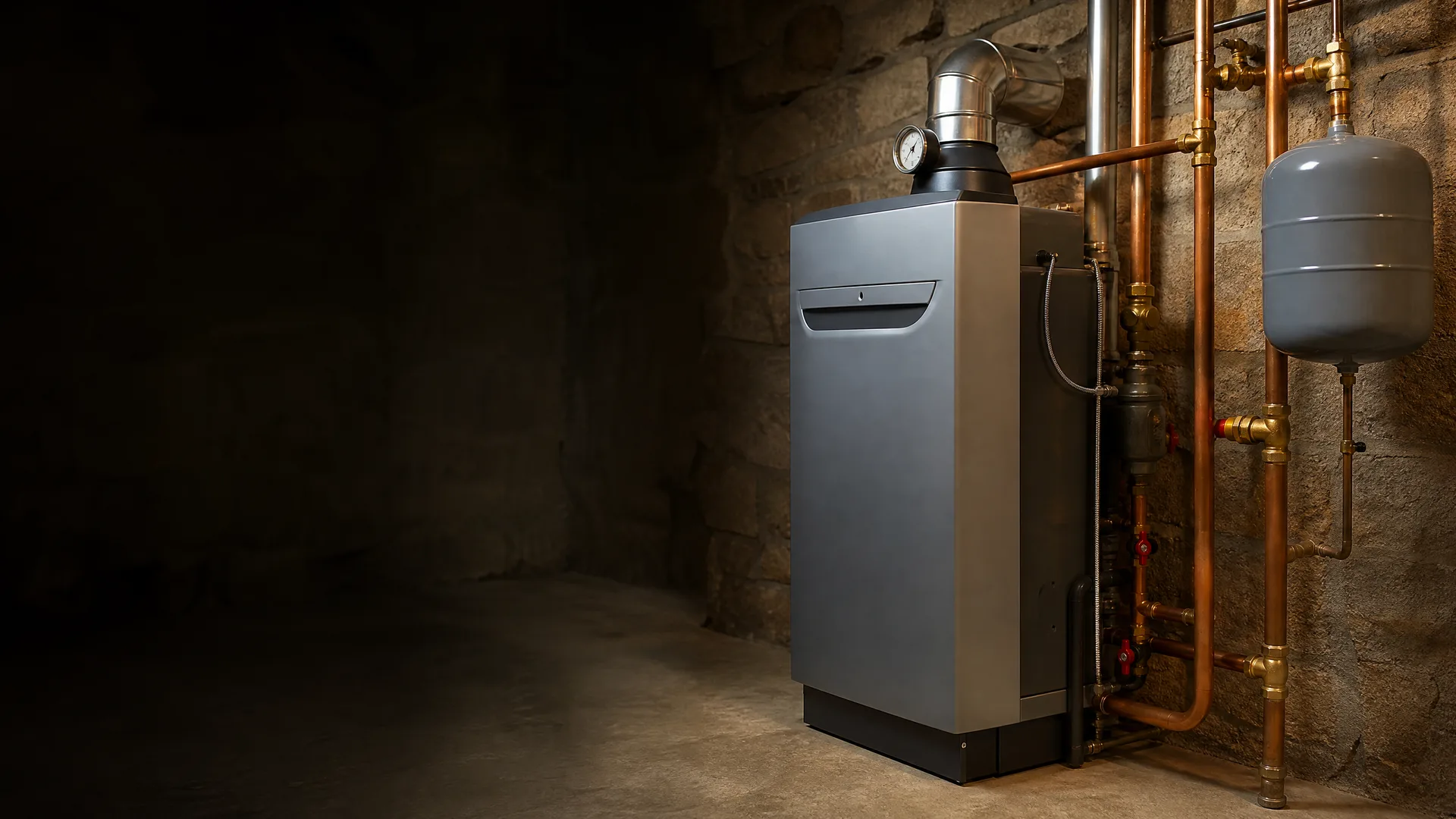
A boiler like this holds steady pressure because the expansion tank and valve are doing exactly what they're built for.
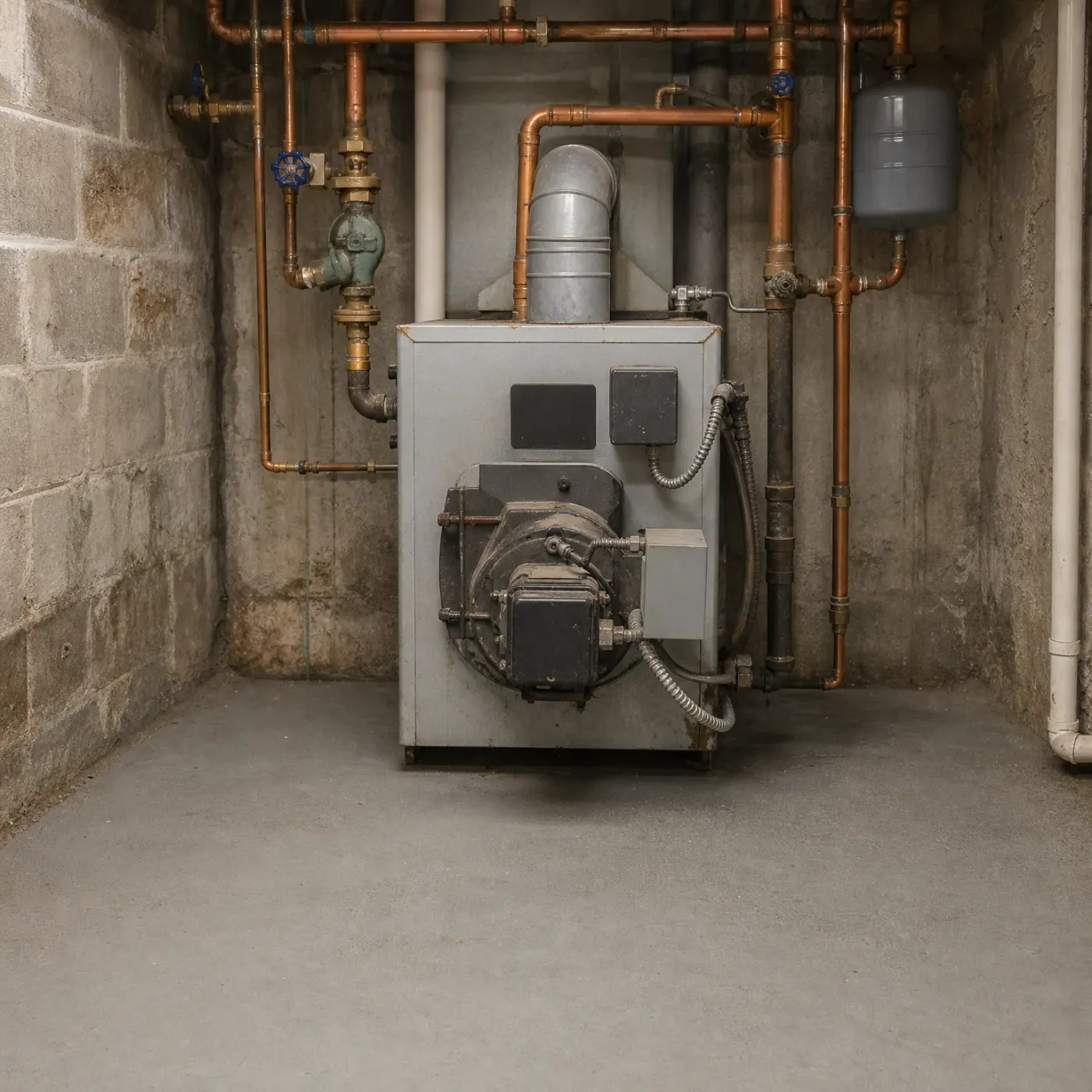
Here the valve is weeping down a bare concrete wall, and that galvanized flue and worn housing have likely seen this before.
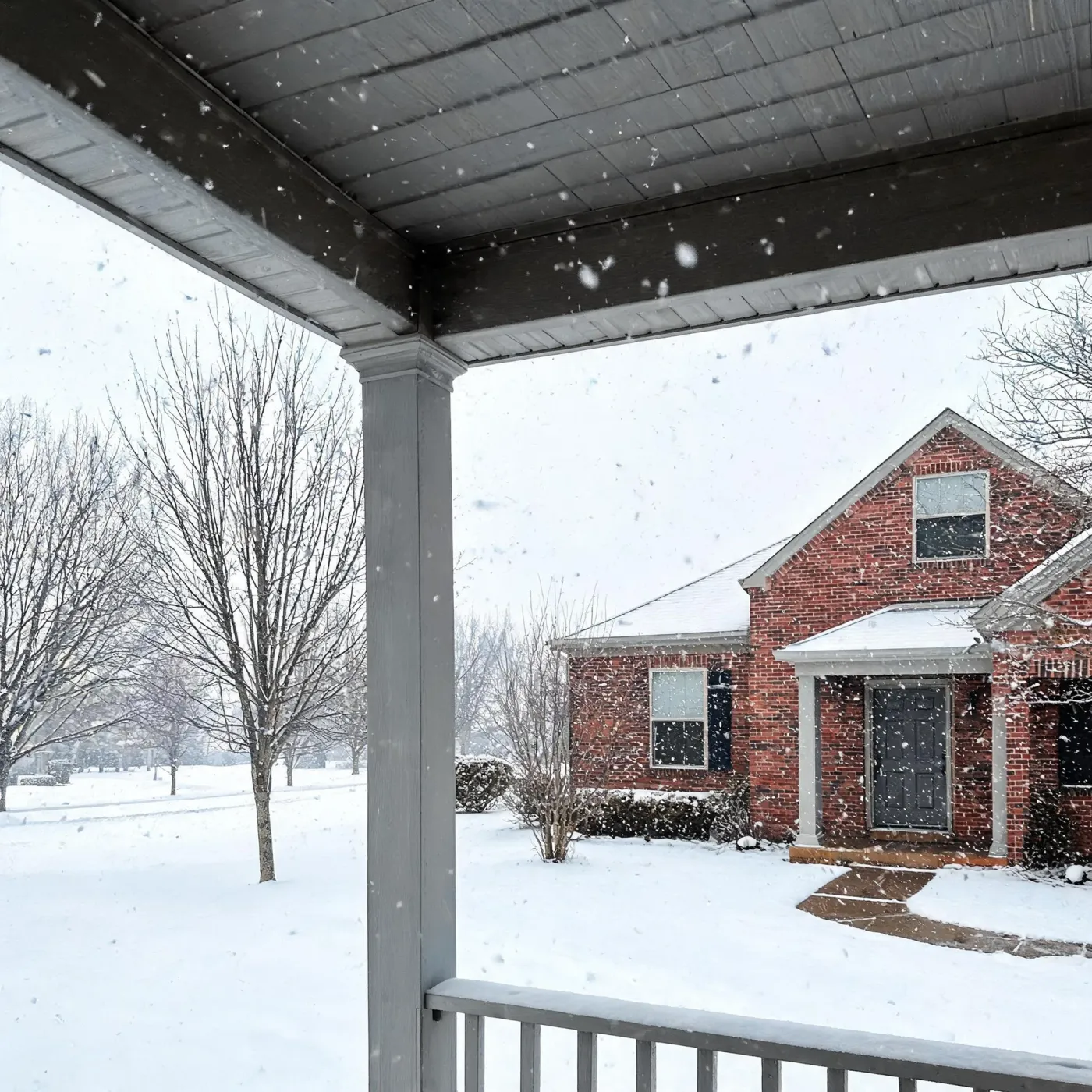
Statewide, winter nights average 13°F, and your boiler answers to that cold by staying on the burner longer and cycling more often to hold the house at temperature. Every one of those cycles pushes the water hotter and the pressure higher before the thermostat finally lets it rest. A system that might hold steady on a mild night gets pushed harder on a night like that, and a relief valve that's borderline starts showing it, a few drops at first, then a steady weep on the coldest stretches. You'd notice it as a damp patch near the valve that shows up more on the nights the cold snaps hardest.
Source: NOAA
NOAA nClimDiv 1991-2020 county normals weighted by homes
What's that stain on the basement floor or wall
Look where the valve's discharge pipe ends, usually a few inches off the floor near the boiler. A crust of white or rust-colored mineral is dried water, left behind drip after drip. The wall or concrete below it might look stained or chalky even if it's dry right now. If you catch it fresh, you'll see an actual drop forming, or hear a faint hiss or tick right after the burner shuts off. Left alone, that steady drip wastes water and adds to an oil bill that's already high enough most winters, and it wears at the valve itself, so a small weep now can turn into a steadier leak before the season's over.
1
Water heats up and pressure inside the boiler starts to climb.
2
Pressure pushes past 30 psi, the valve's set point.
3
The valve lifts off its seat to let water escape.
4
Water drains out through the discharge pipe near the floor.
A dripping valve has a cause, and it's findable
A relief valve drips for a reason, whether that's pressure set too high, a waterlogged expansion tank, or a valve that's just worn out after years of holding back your boiler's heat. None of those get better left alone through a Maine winter, and none of them are a guess once someone has eyes on your system and a gauge in hand.
You don't have to be the one who sorts out which of those it is. That means skipping the part where you search around for someone who works on oil boilers, call a few, explain the drip and the stain and the gauge reading all over again to each one, then sit with a stack of quotes trying to compare them. One local contractor who services this equipment all season takes the call, and you explain it once.