Oil runs $23.73 per million Btu here
Maine households paid $23.73 per million Btu of fuel oil in 2024. A boiler that wastes heat burns through that oil faster, and the cost shows up on every delivery.
Takes about a minute. No obligation.
Maine households paid $23.73 per million Btu of fuel oil in 2024. A boiler that wastes heat burns through that oil faster, and the cost shows up on every delivery.
At this price per Btu, the difference between an old boiler and a new one shows up on the oil bill all winter. Ask what efficiency rating a replacement carries before you choose one.
Fuel oil or kerosene heats just over half the homes in Hancock County.
A boiler replacement here is usually a straight swap, oil boiler for oil boiler.



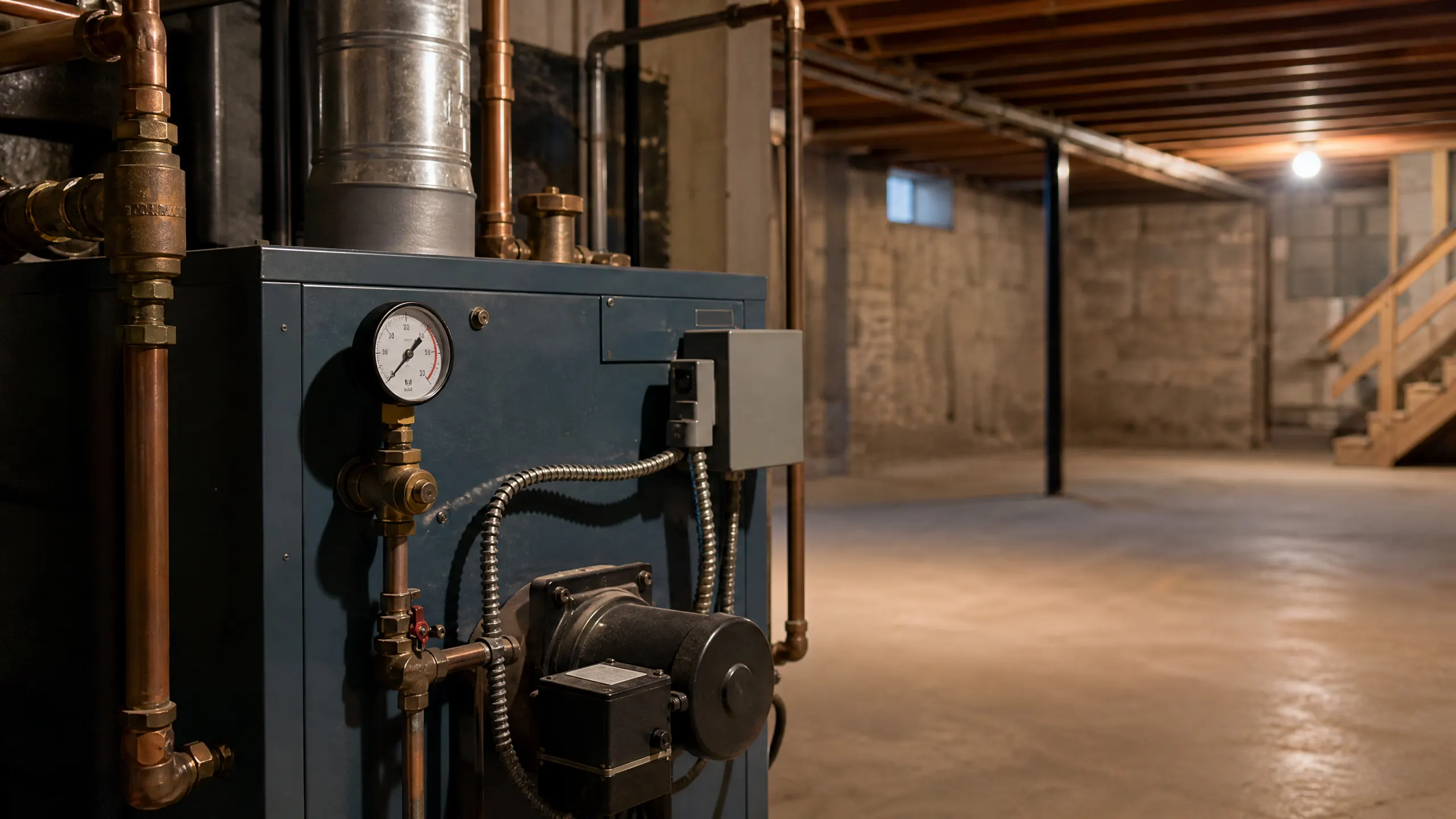
Nine months of the year, this boiler is doing real work, not idling. September through May, it's carrying the house. Overnight lows average 14°F through December, January and February, and a boiler sized wrong will run long hours trying to make up for it. Undersized, it never catches up on the coldest nights. Oversized, it short cycles and wears out its own parts faster than it should. Hancock County has seen plenty of winter storms, heavy snow and ice that can knock out power for stretches, so whatever goes in should be matched to the house by someone who's done a load calculation, not a guess based on the last unit's size.
Power costs more here, so an efficient system pays you back on every bill.
Find a contractorA contractor should run a load calculation on the house, not match the replacement to whatever is coming out. Boilers get oversized more often than not, and an oversized boiler short cycles, wearing out its own parts years before it should. The right size comes from the walls, the windows, how the house is laid out. Nothing about the last unit tells you that.
A boiler vents either through a chimney or straight out a wall, and the choice changes what the install involves. A chimney has to be lined and in good shape to carry combustion gas safely. A direct vent needs a clear path through the wall and some clearance outside it. One of these may already exist at the house. The other may not. Ask which the quote assumes before you compare price.
The rating on a boiler tells you how much of the fuel it burns turns into heat for the house, and how much goes straight up the vent. A boiler that's more efficient keeps more of that fuel working for you, delivery after delivery. The rating on the label is tested under set conditions, so the number you see is a ceiling, not a promise. How the boiler is piped, how it's vented, and whether it's sized right for the house all affect what it actually delivers once it's running. A high-efficiency boiler that's oversized for the house still short cycles and still wastes fuel, rating or no rating. The number on the label is where to start the comparison, not where to end it.
Install day starts with draining the old boiler and cutting it loose from the supply and return lines, the fuel line, and the vent. Getting the old unit out often takes longer than setting the new one in, especially if it has to come out in pieces. The new boiler gets set, leveled, and piped into the existing lines, then tied into the vent, whether that is a chimney liner or a run straight through the wall. Every joint gets pressure tested before anything is fired up. A leak found after the fact means opening the system back up. Once it is filled and purged of air, the contractor fires it, checks the flue for proper draft, and sets the controls to match the house. The longest part is usually the last one, watching it run through a full cycle, checking temperatures and pressures, making sure it shuts off and restarts the way it should before anyone calls the job done.