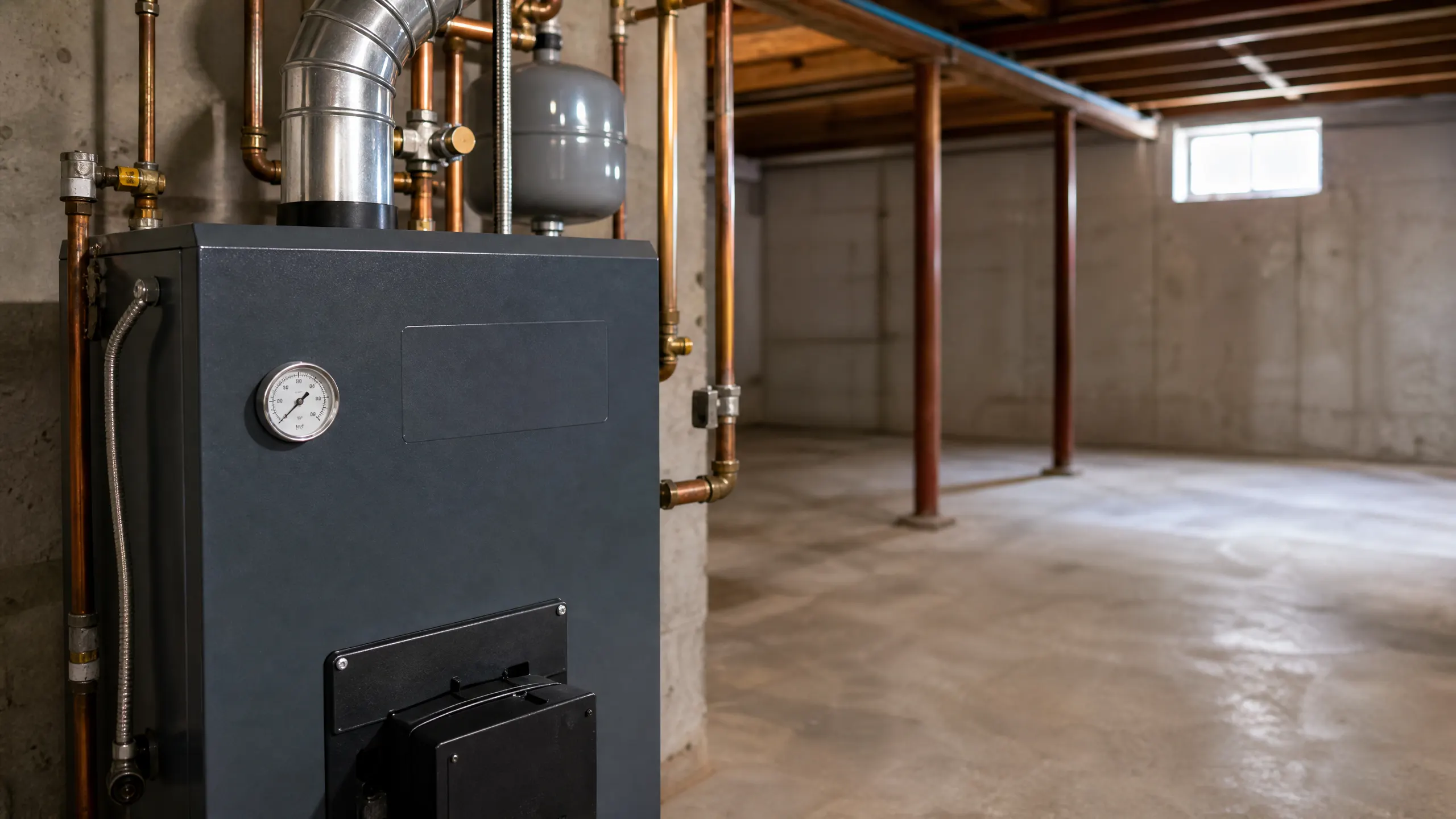




A hydronic boiler with copper pipes, an expansion tank, and a pressure gauge mounted in an unfinished concrete basement.

Boiler Installation in Lewiston, ME

Tell us about the job

Takes about a minute. No obligation.

New system or replacementBoilerAndroscoggin County, ME
Step 1 of 2

What ZIP code is the job in?

Fuel oil ran Maine homeowners $23.73 per million Btu last year, according to state energy data. That is the real cost of an old, inefficient boiler burning more fuel than it needs to. A new boiler gets more heat out of the same gallon, and that difference shows up on every delivery through the winter. Ask what AFUE rating a unit carries before you buy. The higher that number, the less of your oil is going up the flue instead of into your radiators.

Boilers in Lewiston run from September clear through May, nine months of the year.

A new boiler here needs to be sized for nine months of real work, not for a mild climate it will never see.

Nine months of heat means August is your deadline, not your warning

Heat runs September through May
Winter nights average 13°F
45 winter storms from 2015 to 2024
Lewiston runs on oil58.9% of homes in Androscoggin County heat with fuel oil or kerosene

Winter storms have hit this county 45 times between 2015 and 2024, and damaging wind nearly as often. A boiler doesn't run on electricity alone. The circulator pump, the igniter and the zone valves all need power, so a long outage can leave you with a full oil tank and no heat moving through the radiators. If you're installing new, ask what happens to the system when the power drops and whether a battery backup or generator hookup makes sense for your home. Where the outdoor components sit matters too, somewhere clear of falling branches and drifting snow.

Your new boiler has to fit the house, not the other way around

Half the homes in Androscoggin County were built in 1969 or earlier. A boiler going into a house that age has to work with the radiators, pipes and layout already there, not a blank slate. Get the new unit sized to the house you have, and the install planned around what's already running through it.

Find a contractor

A boiler too big wastes fuel every time it fires

An oversized boiler heats the house fast, shuts off, and sits idle until the rooms cool again. Each of those short cycles wastes fuel getting the burner up to temperature, and the boiler never runs long enough to settle into steady, efficient operation. The radiators end up with hot and cold swings instead of even heat.
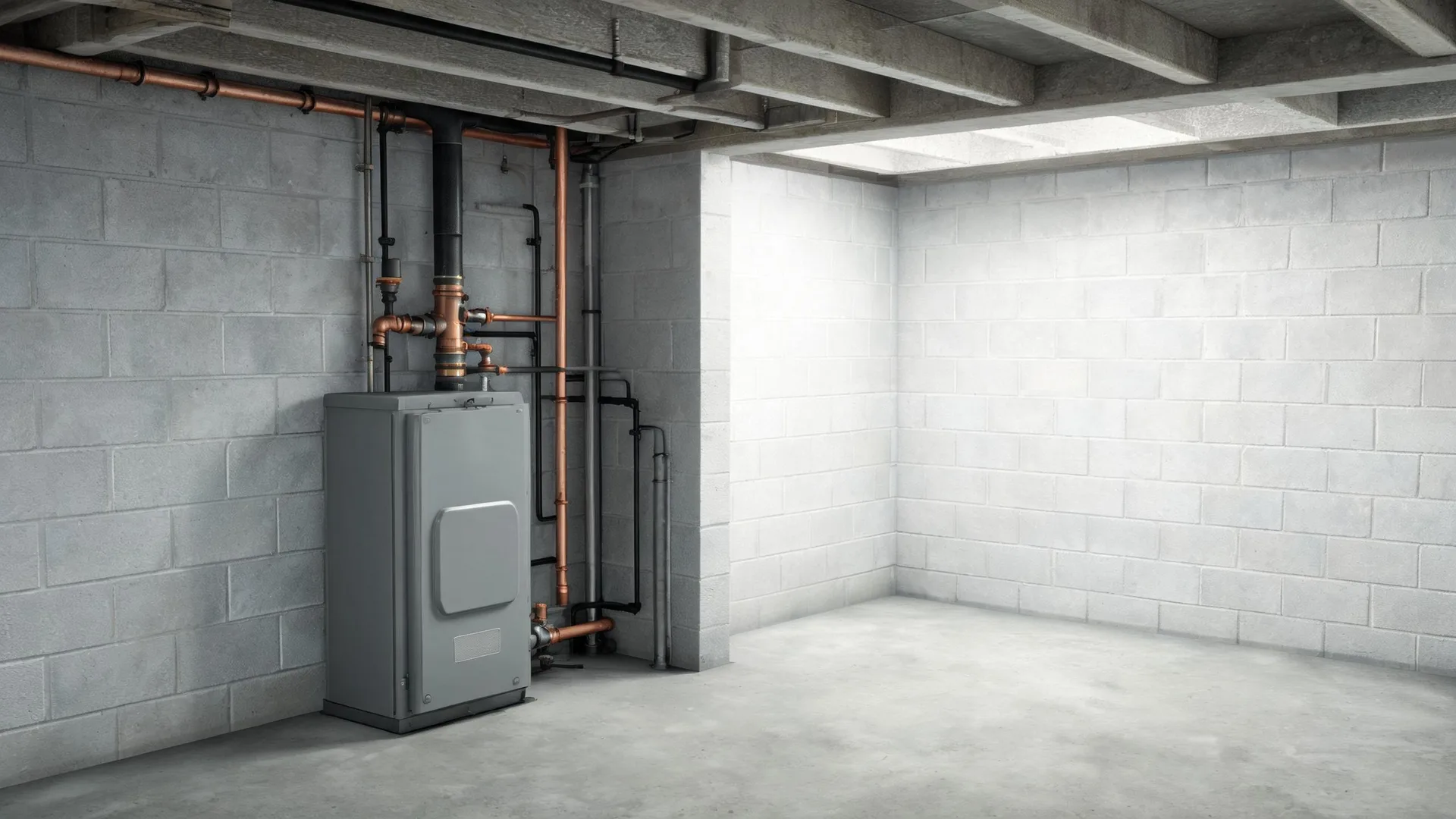
Sizing comes from a heat loss calculation, not the old boiler's output

A contractor works out how much heat the house actually loses on a cold day, room by room, based on wall and window area, insulation, and ceiling height. That number sets the size of the new boiler. Matching the new unit to whatever the old one put out just carries forward a guess someone made years ago, which may never have been right for the house.

The old boiler doesn't just get hauled away. It gets drained and disconnected, and whoever installs the new one has to deal with whatever that old unit leaves behind. If it ran on oil, the tank it was feeding from needs to be addressed too, whether that means reusing it, removing it, or capping a line that won't be used again. Cast iron boilers are heavy, and getting one out of a basement or mechanical room can take more work than setting the new one in. If the old unit is being scrapped, the metal has value, and a contractor will often account for that in what they quote. None of this is a reason to delay a failing boiler. It's just part of the job, and a contractor who's done it before has a plan for it before they ever show up with the new unit.

Install day starts with the old boiler coming out, and the new one won't go in until that's done and the space is ready. The contractor runs new pipe where it's needed, ties into the existing radiators or baseboard, and sets the flue or vent pipe for the new unit, which is often a different diameter than what the old boiler used. Gas or oil lines get connected and checked for leaks before anything fires. Once the boiler is set and piped, the system gets filled with water and purged of air, because trapped air in the lines shows up later as cold spots or banging pipes. Wiring for the thermostat, circulator pump and any zone valves gets connected and tested. Before anyone leaves, the boiler gets fired up and run through its paces, checking that every zone heats, the pressure holds, and the burner settles into a clean, steady flame.