





A two-story red brick house with black shutters, a dark roof and a chimney stands on a mown lawn behind a dry stone wall, framed by large spreading deciduous trees under an overcast sky.

Furnace Installation in Belfast, ME

Tell us about the job

Takes about a minute. No obligation.

New system or replacementFurnace or heatingWaldo County, ME
Step 1 of 2

What ZIP code is the job in?

The furnace itself is only part of what you're paying for. Size matters more than people expect. A unit too big for the house cycles on and off fast, wearing out parts sooner and never running long enough to heat evenly. One too small runs constantly and still can't keep up on the coldest days. Getting that right means the contractor looks at the house itself, not just what's being pulled out. The ductwork matters too. If it's undersized or leaky, a new furnace still won't deliver the heat it's making, and that duct work has to happen alongside the install, not after. Venting is another piece. A higher efficiency furnace vents differently than an older one, sometimes through a wall instead of a chimney, and that changes what the installation involves. None of this shows up on the sticker price of the furnace itself, but it's what decides how the job actually goes.

9 months
September through May, your furnace is on duty
14°F
the average winter night it heats against
80% AFUE
the federal minimum any new unit must meet
Isometric line illustration of a cutaway house showing interior rooms with furniture and a furnace with ducting and a flue pipe extending through the roof.
Your furnace works hardest from November through March.

NOAA nClimDiv, 1991–2020 normals

Fuel oil heats 51.3% of homes in Waldo County, more than any other fuel.

Replacing an oil furnace with another oil furnace means the tank, lines and venting already fit what the house needs.

Get a new furnace in before September, not during the first cold snap

Heat runs September through May
Winter nights average 14°F
79 winter storms from 2015 to 2024
What oil heat costs in BelfastFuel oil ran $23.73 per million Btu in Maine in 2024.

A contractor works out size with a room by room heat loss calculation, not a guess based on the old furnace or the square footage alone. That calculation looks at how much heat escapes through the walls, windows and roof, and how much the furnace needs to replace to keep up on the coldest night of the year. Houses the same size can need different furnaces if one has more windows or better insulation than the other. Getting the number right matters on both ends. A furnace sized correctly runs in long, steady cycles that heat the house evenly and give the heat exchanger a chance to warm up fully before shutting off. One sized off that calculation either short cycles or runs nonstop, and both wear the system down faster than normal use would.

Nine months of heat a year means this furnace earns its keep

Heat runs September through May here, with overnight lows averaging 14°F in January. Add the snow and ice storms that roll through most winters, and a furnace in Belfast rarely gets an easy season. That's why sizing it to the house matters from the start.

Find a contractor
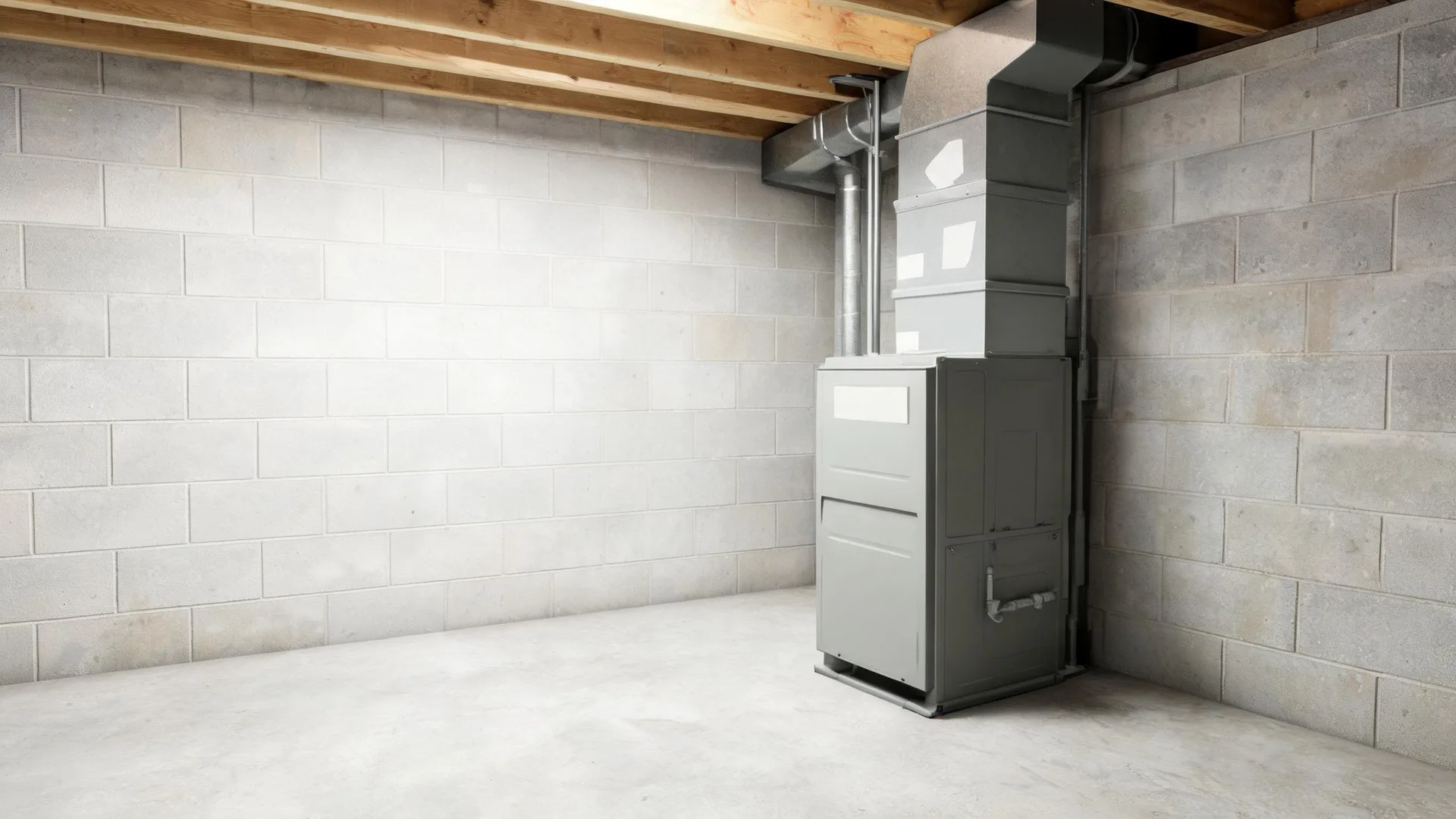
A gray gas furnace with attached ductwork and piping installed in an unfinished concrete basement.

The label tells you what happens to the fuel it burns

The AFUE number on the label tells you how much of the fuel actually becomes heat in the house, and how much goes out the flue. A furnace rated higher keeps more of that heat instead of venting it outside. Over years of runtime that difference adds up, because a furnace doesn't run once, it cycles on and off all winter, every winter it's in the house. The rating also tells you something about the hardware. Higher efficiency furnaces pull extra heat out of the exhaust before it leaves, which calls for a second heat exchanger and a different venting setup than an older, simpler furnace. That's part of why furnaces with similar output can look different inside the cabinet and vent differently out of the house. The number on the sticker comes from a lab test under set conditions, so it won't match the fuel use of every house exactly, but it's still the honest way to compare one furnace against another before it's installed.

The old furnace gets disconnected and hauled out

The gas or oil line gets capped, the flue gets disconnected, and the furnace itself gets broken down and removed, usually the same day the new one goes in. If it's oil, whatever's left in the lines gets drained first. A straight swap, same fuel and similar venting, is a job a crew finishes in a day. Anything that changes the vent path or duct layout can stretch longer.
What's underneath it matters as much as the furnace

Once the old unit is out, the contractor can see the plenum, the duct connections and the flue the old furnace was hiding. Sometimes that's fine as is. Sometimes there's a cracked duct joint or a flue liner that's not rated for the new furnace's exhaust, and that gets handled before the new unit goes in, not after it's running.

A furnace running nine months a year doesn't get a break to reveal a sizing mistake slowly. It shows up the first cold snap and keeps showing up through May. That's the case for choosing a contractor who does the heat loss calculation instead of sizing off the old unit. Two furnaces can look the same on paper and perform nothing alike once the snow starts. The one sized to this house is the one that holds up through nine months of use, not just the first.

Installation starts with the old furnace gone and the space cleared, so the new one goes in on a level base with room to service it. The contractor sets the furnace, connects the supply and return plenums, and runs the gas or oil line back to it. Electrical comes next, the control board, the blower motor and the thermostat wire all need to be tied in correctly for the furnace to fire and run safely. Venting gets connected according to what that furnace needs, and it gets tested, not assumed. Once it's buttoned up, the contractor fires the furnace and checks the flame or ignition, the temperature rise across the heat exchanger, and the airflow at the registers. That last check matters as much as anything else that day. A furnace can be installed correctly and still heat the house unevenly if the airflow isn't balanced through the ducts, so it gets adjusted before the crew leaves, not left for the first cold week to expose.