




A white wooden picket fence curves along a mown lawn in front of a row of similar gray clapboard houses with gabled roofs, backed by large leafy trees.

Furnace Installation in Portland, ME

Tell us about the job

Takes about a minute. No obligation.

New system or replacementFurnace or heatingCumberland County, ME
Step 1 of 2

What ZIP code is the job in?

The efficiency rating tells you how much of the fuel turns into heat for your house instead of going out the flue. A higher rated furnace pulls more heat out of the same flame before the exhaust leaves the house. That is what a condensing furnace does. It cools the exhaust down enough to wring more heat out of it, and that process creates condensate that needs somewhere to drain. A lower rated furnace vents while the exhaust is still hot. It wastes more heat but needs no condensate line and no drain. Neither one is wrong in every home. It comes down to how the furnace will vent, whether there is a place nearby for condensate to go, and what venting is already there to work with.

9 months
September through May, your furnace is on duty
15°F
the average winter night it heats against
80% AFUE
the federal minimum any new unit must meet
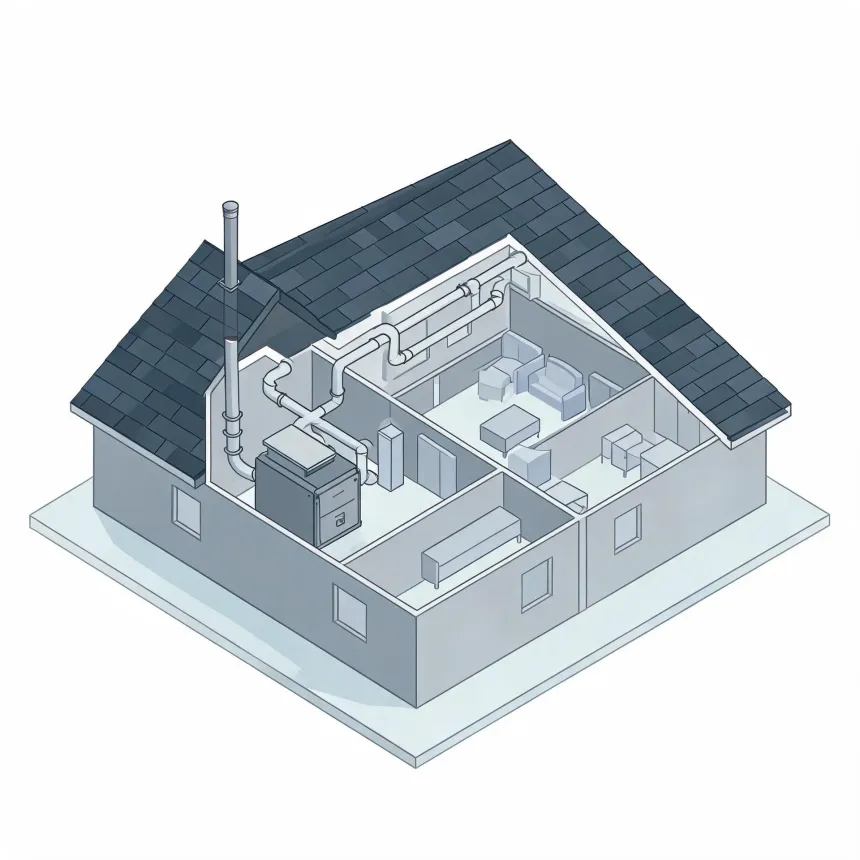
Isometric cutaway illustration of a single-story house with a dark shingled roof, showing interior rooms with furniture, ductwork, a flue pipe, and a furnace unit.
Your furnace works hardest from November through March.

NOAA nClimDiv, 1991–2020 normals

The old furnace gets disconnected from the gas line, the vent and the ductwork before the new one goes in.

Whatever is hauled out, the new furnace has to vent on its own, through its own pipe sized for what it is.

A standard furnace is the right call here

Half the homes here were built by 1976
Heat runs September through May
Winter nights average 15°F
Heating oil runs this county45.6% of homes in Cumberland County heat with fuel oil or kerosene, more than any other fuel.

Cumberland County is zone 6A, a cold climate with winter that runs long. Any furnace going into a home here has to meet 80.0 percent AFUE, the federal minimum for non-weatherized gas furnaces built from November 2015 on. A standard furnace sits right at that mark or a little above it. A condensing furnace runs well past it. Both meet the rule as it stands today. That minimum does step up in a few years, but a furnace going in now only has to clear the standard that applies now.

Oil runs $23.73 per million Btu here

Fuel oil cost Maine homes $23.73 per million Btu last year, and that price does not change by switching installers. It only goes down by burning less oil for the same heat. A furnace rated higher on AFUE pulls more heat from every gallon, so less of what you buy goes out the flue all winter long.

Find a contractor
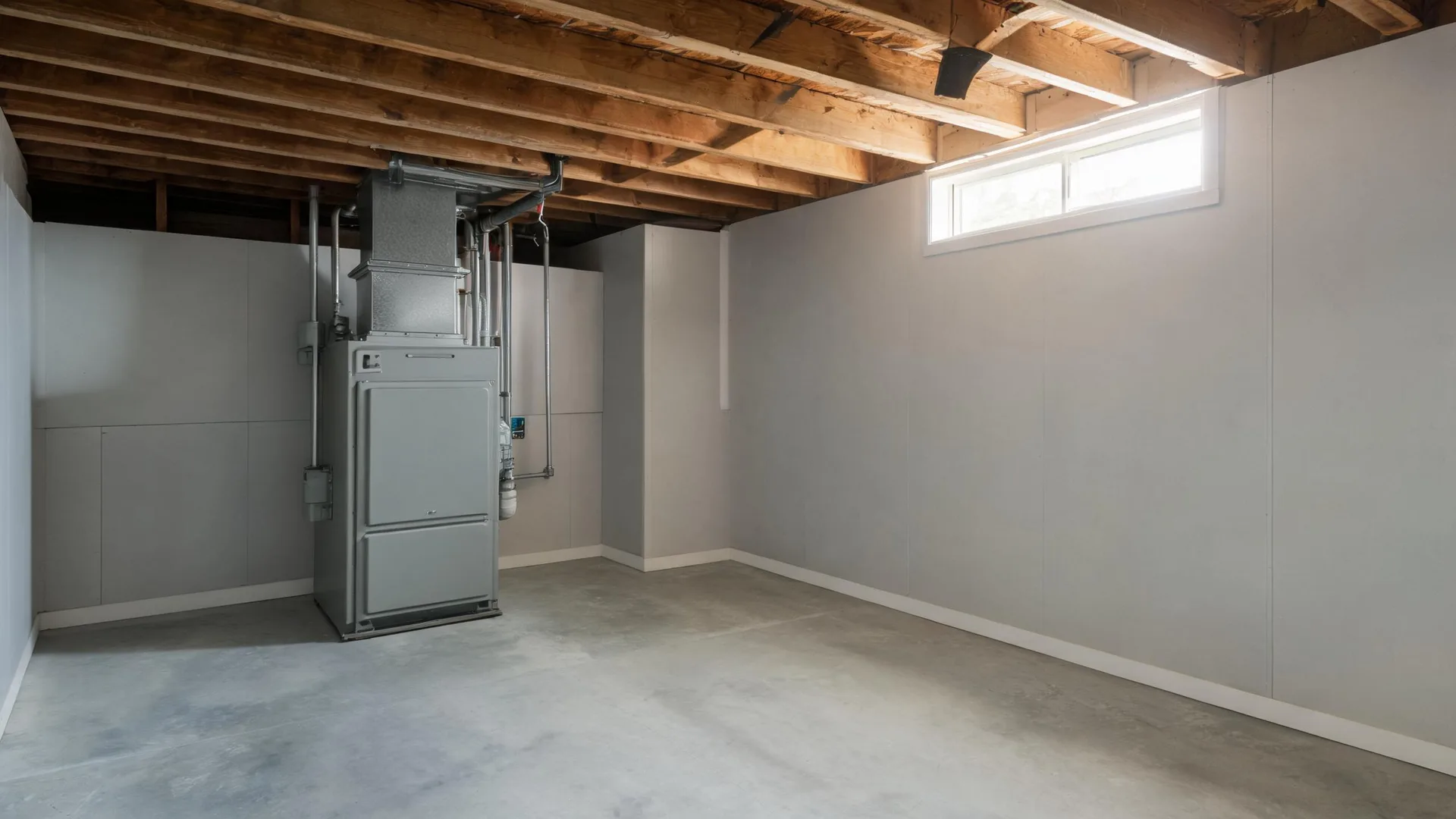
A gray residential gas furnace installed in an unfinished basement, connected to sheet-metal ductwork and PVC pipes.

Put it in before September, not during it

Heat runs here from September through May, nine months of the year. August is the last quiet month before that start. A furnace put in during August gets tested and adjusted with nothing riding on it yet. One put in after September is already working, maybe in the first cold snap, with no good time to go back and fix a setup problem without the house going cold in the meantime.

Ask what size furnace the job calls for

A furnace that is too big for the house cycles on and off instead of running a steady stretch, and that short cycling wears the heat exchanger and the ignition system faster. One that is too small runs constantly and still struggles on the coldest days. The right size comes from a load calculation on the house itself, not a guess based on the old furnace or the square footage alone. Ask whether that calculation gets done or whether the new furnace is just matched to the one coming out.
Ask what happens to the ductwork and venting

A furnace only performs as well as what it connects to. Ducts that are undersized or leaky will choke airflow no matter how good the furnace is, and a vent pipe sized for the old unit may not be right for the new one, especially moving between a standard and a condensing furnace. Ask whether the ductwork gets inspected as part of the job, and whether the venting is being reused or replaced to match what the new furnace needs.

What drives the price on a furnace job is mostly what has to change beyond the furnace itself. Swapping one unit for the same type, in the same spot, with the same vent and the same ductwork, is the simple version. Everything past that adds labor. Moving from a standard furnace to a condensing one means running a new condensate line and often a new vent pipe, since the old one was sized for hot, dry exhaust and the new one puts out exhaust that is cool and wet. A duct system that is undersized or leaky may need work before the new furnace can move enough air through it, and that is a separate job from setting the furnace in place. The size of the furnace itself matters too. A bigger unit costs more than a smaller one, and the only way to know the right size is a load calculation on the house, not a guess carried over from the furnace coming out. Where the furnace sits, how far the gas line has to run, and whether the electrical hookup needs any change all add their own labor on top of the equipment itself.

The furnace gets set in place first, then the gas line, vent, ductwork and electrical hookup all get connected fresh. The gas line is pressure tested before anything is lit. The vent gets checked for proper slope and clearance, because the exhaust has to leave the house on its own draft, not just reach the outside wall. Once that is confirmed safe, the furnace gets fired up and the technician watches the flame itself. It should burn steady and blue, not yellow or lifting off the burner. Airflow gets checked too, since a furnace moving too little air across the heat exchanger runs hotter than it should. Then it cycles on and off a few times while someone watches how it starts, ramps up and shuts down, because problems with ignition or airflow usually show up in that first cycle.