A two-story red brick house with black shutters and a columned entry sits behind a mown lawn, framed by two large deciduous trees, with a long dry-stacked stone wall across the foreground.

Furnace Repair in Bath, ME

Tell us about the job

Takes about a minute. No obligation.

RepairFurnace or heatingSagadahoc County, ME
Step 1 of 2

What ZIP code is the job in?

Nine months of heat a year

Furnaces in Bath run from September through May. With overnight lows averaging 16°F through December, January and February, the burner and blower are rarely idle for long. That kind of runtime wears down ignition parts and motors faster than in places where the furnace cycles on and off for a few months and then sits.

Storms push a weak system over the edge

Sagadahoc County saw 40 winter storms between 2015 and 2024, the kind of heavy snow and ice that keep a furnace running nonstop for days. A system that's already worn from the season's workload is more likely to fail right when that cold snap hits. Getting the actual cause diagnosed, not just patched, is what keeps it running through the next one.

9 months
September through May, your furnace is on duty
16°F
the average winter night it heats against
40 winter storms
in ten years, the nights a failure hurts most
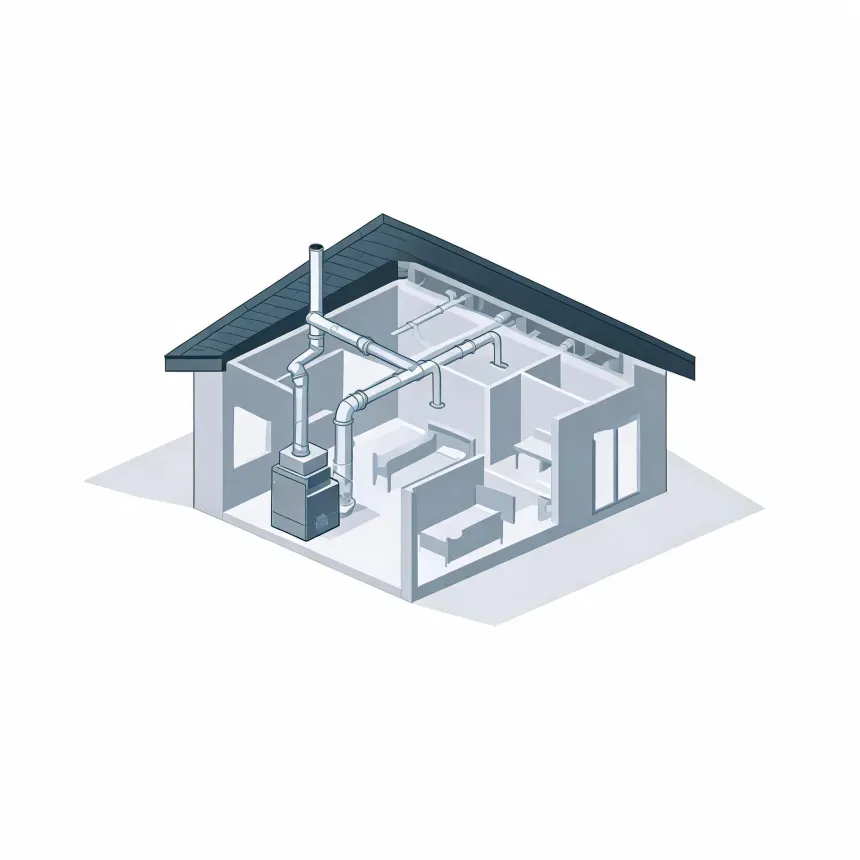
Isometric cutaway illustration of a small single-story house showing interior rooms, a furnace unit with a flue, and connected ductwork running below the dark gabled roof.
Your furnace works hardest from November through March.

NOAA nClimDiv, 1991–2020 normals

Half the furnaces in Bath sit in houses built in 1977 or earlier, half in houses built since.

Old house or new, a furnace still fails the same few ways, and the fix is the same fix.

Storms in Sagadahoc County hit the outdoor parts of your heating system too

66 severe weather events from 2015 to 2024
54% of homes statewide lost power a day or more in 2024
24 damaging wind events from 2015 to 2024

A furnace that's short-cycling or struggling to hold heat is still burning oil the whole time it limps along, and oil here ran $23.73 per million Btu last year. Waiting it out doesn't save anything, since the bad part doesn't fix itself and the furnace just keeps working harder to do the same job. The fix is the same either way. The only question is how many more weeks it runs broken before someone names the part and swaps it.

A furnace acting up costs you every week it runs

Heating oil ran $23.73 per million Btu in Maine last year. A furnace that's short-cycling, running too long, or struggling to hold temperature is burning more of it to do the same job. The longer a bad part sits, the more it costs to keep the house warm while it fails.

Find a contractor
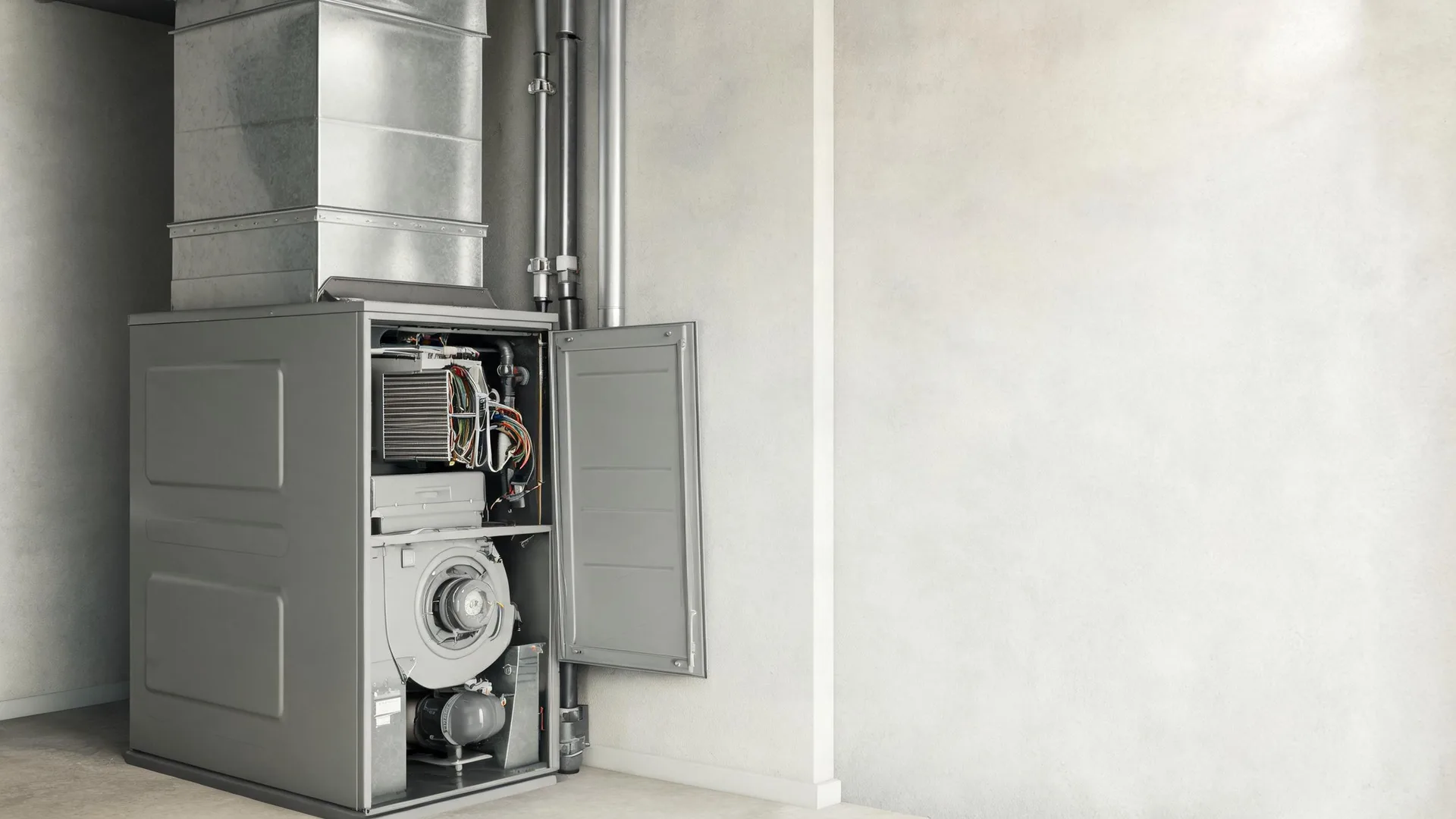
A gray gas furnace with attached ductwork and piping installed in an unfinished concrete basement.

Nine months of runtime is why it broke

Nine months of runtime a year doesn't leave much room to tell a new problem from old wear. If your furnace is short-cycling, losing the flame, or blowing cool air partway through a cycle, that could be an igniter on its way out, a cracked heat exchanger, or a blower motor that's had enough. Guessing wrong means paying for a part that wasn't the problem while the real one keeps wearing. A proper diagnosis before the next storm rolls through is what tells you which part actually failed, so the fix holds through May instead of a few weeks.

Most failures start with ignition

The igniter is a thin strip that glows hot enough to light the gas, and that cycle of heating and cooling is what eventually cracks it. A cracked igniter either won't glow or won't hold together long enough to light the burner, so the furnace tries, fails, and locks out. It's one of the most common reasons a furnace won't start at all.

Motors and flame sensors fail from buildup, not just age

A flame sensor reads the burner flame to confirm it's lit, but a thin layer of residue on the rod can fool it into shutting the gas back off seconds after ignition. A blower motor wears at the bearings from constant starting and stopping, and once they go, the motor either seizes or runs too slow to push air through the ducts properly.

Before anyone comes out, there are a few things worth checking yourself. Start at the thermostat. Make sure it's set to heat, not auto fan, and that the temperature is actually set above room temperature. Next, check the filter. A filter clogged with dust can choke off airflow badly enough that the furnace overheats and shuts itself down as a safety measure. Go look at the furnace itself and check for a blinking light on the control board, most have one, and the pattern it blinks in usually points to a specific fault if you look it up. Last, check your breaker panel and any switch that looks like a light switch near the furnace itself, since that's actually its power switch and it's easy to bump off by accident. If the filter's clean, the thermostat's calling for heat, and the power's on but it still won't run, the problem is inside the unit and it's time to call someone.

A diagnostic visit starts before any panel comes off. A tech will ask what it was doing right before it quit, whether it was short-cycling, running cold, or just dead, because that narrows things down fast. Then the cover comes off and the burner assembly gets checked first, since that's where most no-heat calls trace back to. The igniter gets tested for continuity, the flame sensor gets cleaned or checked for a weak signal, and the pressure switch and limit switch get checked to see if one of them is holding the furnace in lockout as a safety response rather than being the problem itself. If the burner side checks out, the blower gets pulled next, listened to, checked for a dragging bearing or a seized wheel. A gas furnace also gets its venting checked, since a blocked flue can shut the whole system down on purpose. By the end, the failed part has a name, not a guess, and that's what gets replaced.