Winter storms are the regular event here
Washington County saw 128 winter storms between 2015 and 2024. That is the weather a furnace here has to run through, not the exception to it.
Takes about a minute. No obligation.
Washington County saw 128 winter storms between 2015 and 2024. That is the weather a furnace here has to run through, not the exception to it.
Wind and ice work on the flue, the vent cap and anything mounted outside. If your furnace has been through a bad storm, have it looked at even if the heat still comes on.
NOAA nClimDiv, 1991–2020 normals
Furnace in Calais starts its run in September.
A weak part that made it through last spring quiet can fail in the first cold week.



Your furnace in Calais runs nine months out of the year, September through May. That's most of the calendar, not just the cold snap in January. Overnight lows average 14°F through December, January and February, so once it starts working it doesn't get much chance to rest. That kind of stretch wears on an igniter or a blower motor faster than it would somewhere milder. If something's acting up now, it's worth having a contractor find the actual cause rather than just getting it running again, because whatever's failing will keep failing until it's replaced.
Fuel oil cost Maine homes $23.73 per million Btu last year. A furnace that's struggling burns more oil to put out the same heat, and that cost lands on you every month it runs, not just when it finally quits.
Find a contractor
Nine months of runtime is a lot of starts and stops on the same igniter, the same blower motor. A repair that just gets the heat back on doesn't tell you why that part gave out now. A contractor who checks it properly can tell you if it's a one-off or the start of a pattern, and that's the difference between a fix that holds through May and one you're making again in January.
A hairline crack in a heat exchanger opens wider every time it heats up and closes again as it cools. Keep running the furnace and the crack grows until it's leaking exhaust into the air the blower pushes through the house. Caught early it's a repair. Caught late it's a furnace that has to be shut down and replaced on the spot.
If the blower motor is weak or the bearings are going, less air moves across the heat exchanger. That surface runs hotter than it should, and metal that keeps overheating warps and cracks faster than it would otherwise. A motor problem left alone doesn't stay a motor problem.
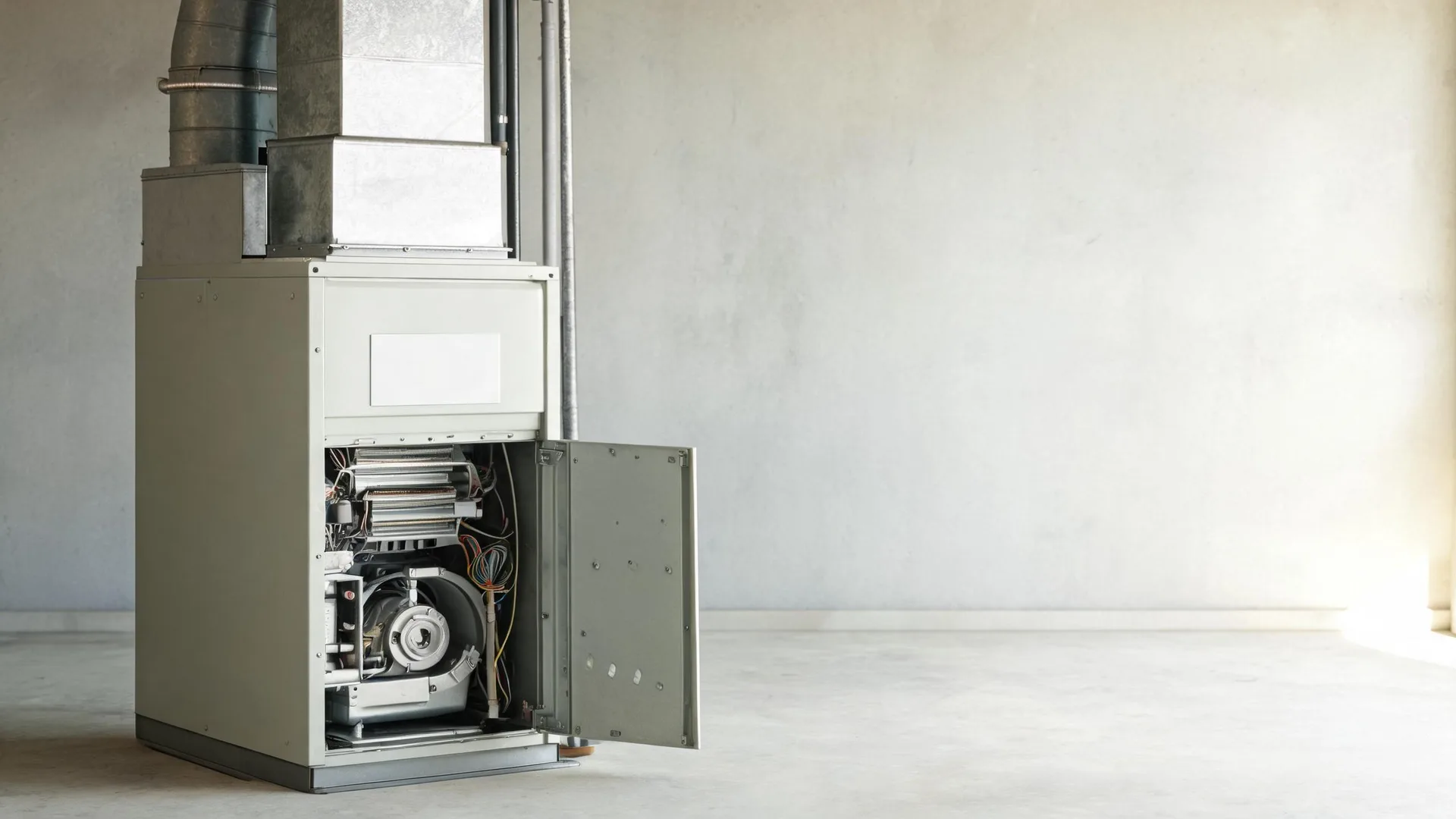
Most furnace failures trace back to a handful of parts, and they tend to go in the same order. The igniter is usually first. It heats up and cools down every single cycle, and that repeated stress is what wears it out, not age by itself. After that it's flame sensors, coated over time with a film that keeps them from sensing the flame at all, so the furnace shuts itself off as a safety measure. Blower motors fail slower, usually bearings going first, and you'll hear it before anything stops working. A dirty filter feeds all of this. It starves airflow, makes the blower work harder than it should, and runs the whole system hotter than it was built to run.
When a contractor tells you a furnace needs replacing instead of repairing, it usually comes down to the heat exchanger. That part isn't worth fixing. Everything else on a furnace can be swapped out on its own, the igniter, the flame sensor, the blower motor, the control board. A cracked heat exchanger means the whole unit gets replaced, because it's the part that keeps the exhaust separate from the air going into your house. How old the furnace is matters less than what actually failed. A furnace with a bad igniter is a repair, whatever its age. A furnace with a cracked heat exchanger is not, no matter how new it is.