Low-angle view across a grassy lawn toward a light-gray house with a dark shingled roof, dormer windows and dark shutters, framed by large leafy trees under an overcast sky.

Furnace Repair in Dover-Foxcroft, ME

Tell us about the job

Takes about a minute. No obligation.

RepairFurnace or heatingPiscataquis County, ME
Step 1 of 2

What ZIP code is the job in?

A cracked heat exchanger spreads

A furnace with a cracked heat exchanger will keep running, but every cycle stresses the crack further as the metal heats and cools. What starts as a hairline split can open enough to push exhaust into the air the blower moves through the house.

A limping furnace still wears out its parts

If the igniter is weak or the flame sensor is dirty, the furnace may still fire, just not cleanly. Short-cycling from a struggling start puts extra wear on the blower motor and the control board, the same parts a clean-firing furnace barely touches.

10 months
September through June, your furnace is on duty
6°F
the average winter night it heats against
147 winter storms
in ten years, the nights a failure hurts most
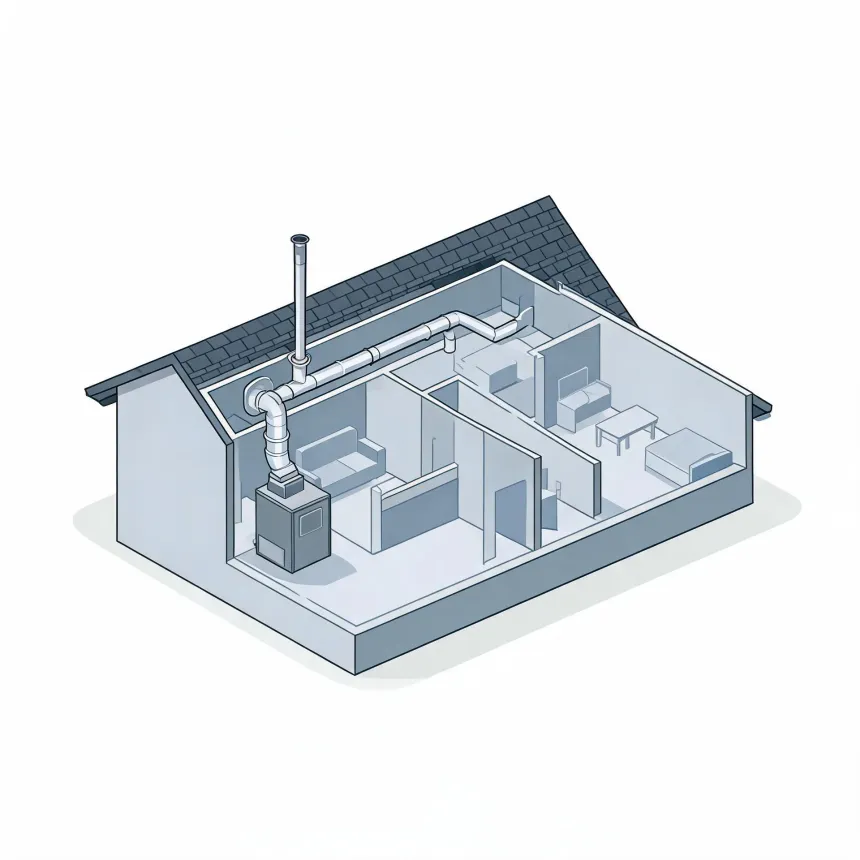
Isometric cutaway illustration of a single-story house showing interior rooms with furniture and a furnace connected to ductwork and a vertical flue pipe extending through the roof.
Your furnace works hardest from November through April.

NOAA nClimDiv, 1991–2020 normals

Fuel oil ran $23.73 per million Btu in Maine in 2024.

A furnace burning oil inefficiently in Dover-Foxcroft is wasting real money every time it cycles.

Ten months of heat a year wears a furnace down early

Heat runs September through June
Winter nights average 6°F
147 winter storms from 2015 to 2024

Furnace here starts work in September and doesn't let up until June. August is the month to get a furnace looked at, before it has to carry a cold house on short notice. A part that's been weak since spring, a cracked igniter or a sensor coated in dust, usually waits for that first real cold snap to fail outright. By then it's not a slow afternoon for a contractor, it's an emergency call on a night when the temperature already dropped. Getting the furnace checked in August catches that same part while it's still just a repair.

Nothing unusual here, just a furnace that needs a look

Half the homes around Dover-Foxcroft were built in 1978 or earlier, half in 1978 or later. Age alone doesn't say much about a furnace's condition. What usually brings one down is the same thing anywhere. A worn igniter. A dirty flame sensor. A motor that's been short-cycling too long. Get it looked at and find out which one it is.

Find a contractor
A man in a navy T-shirt, tan work pants, boots and a green cap climbs porch steps toward a blue front door, carrying a canvas tool bag beside a blue planter with a small shrub.
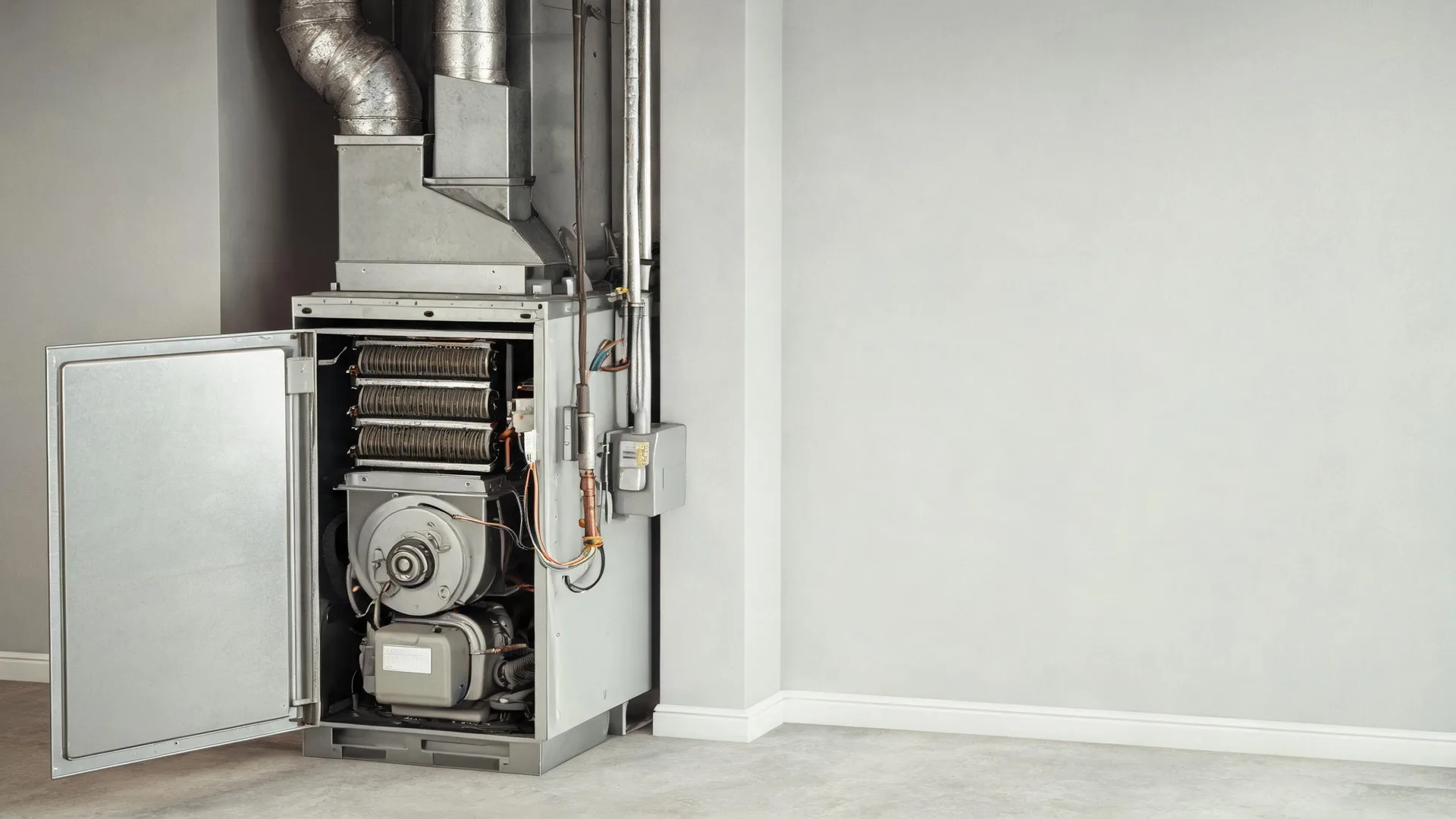
A gray high-efficiency gas furnace installed in an unfinished basement, surrounded by gas lines, a condensate drain, and sheet-metal ductwork.

This furnace doesn't get an off season

Ten months of heat a year is most of the calendar. That kind of run time doesn't leave much room to put off a repair and hope it holds. If the furnace is already acting up now, whatever's wrong has been building since last season. Get it looked at before the next cold snap decides the timing for you.

What you can check yourself

Look at the filter first and hold it up to light. If you can't see through it, swap it, a clogged filter chokes airflow and can make the furnace short-cycle or blow cool air. Check that the thermostat is set to heat and the temperature is actually above room temperature. Make sure the switch on the furnace itself, it looks like a light switch on or near the unit, hasn't been bumped off. If the furnace uses a standing pilot, look for the small blue flame through the view port. Walk around outside and check that the intake and exhaust pipes aren't blocked by anything.

What to leave alone

Don't pull the panel off the furnace and start checking wires or the igniter yourself, a furnace runs on both gas and line voltage and neither is forgiving of guesswork. If you smell gas, don't flip switches or look for the leak, leave the house and call the gas company from outside. If the furnace trips its breaker more than once, stop resetting it and get it looked at, a repeated trip means something downstream is drawing too much current. A furnace that starts, runs a minute, then shuts off is doing that for a reason a sensor is telling it to, not something to force past by cycling the thermostat.

Most furnace failures trace back to a handful of parts, and they tend to go in the same order. The igniter goes first, usually, since it heats up and cools down every single cycle and that stress adds up until it cracks or just stops glowing hot enough to light the gas. The flame sensor goes next, not because it breaks but because it gets coated with a fine layer from the flame itself, and once it's coated it can't tell the control board a flame is there, so the furnace shuts the gas back off a few seconds after it opens. Blower motors wear out slower, usually from bearings that have spun for years finally giving out, and you'll hear that before anything else fails, a grinding or squealing that gets worse over weeks. Capacitors on the blower motor fail without much warning, one day the motor hums and doesn't start. The pressure switch and the draft inducer motor go together more than people expect, since the inducer has to pull exhaust out before the switch will let the gas valve open at all.

A furnace that needs a repair isn't automatically done for. Most of what fails, an igniter, a flame sensor, a capacitor, gets replaced on its own without touching the rest of the furnace. The heat exchanger and the blower motor are worth a harder look before spending money, since those cost enough that an old furnace with a cracked exchanger is often better replaced than patched. A good contractor checks the exchanger during a repair anyway, because sending gas through a cracked one isn't something to patch around. If the rest of the furnace is sound and only one part failed, fixing that part is usually the right call. If a worn part shows up alongside rust on the burners or a blower motor that's been struggling for a while, replacing the furnace starts to make more sense than repairing it piece by piece.