A row of white Colonial-style houses with glowing windows photographed at dusk along a road bordered by a stone wall.

Furnace Repair in Ellsworth, ME

Tell us about the job

Takes about a minute. No obligation.

RepairFurnace or heatingHancock County, ME
Step 1 of 2

What ZIP code is the job in?

What's failing matters more than how old it is

An igniter, a flame sensor, or a pressure switch can be replaced on their own and the furnace goes back to normal. A cracked heat exchanger or a failing blower motor is a different question, because those point to the furnace wearing out as a whole rather than one part letting go.


A furnace that keeps coming back needs a different answer

If this is the first time it's acted up, a repair is the right call. If the same furnace has needed a tech out again and again, fixing the part in front of you stops being the point. Each repair is only buying time until the next part goes.

9 months
September through May, your furnace is on duty
14°F
the average winter night it heats against
67 winter storms
in ten years, the nights a failure hurts most
Isometric cutaway illustration of a small gabled house showing a furnace with flue pipe and ductwork connecting to interior rooms containing a sofa, bed, and cabinets.
Your furnace works hardest from November through March.

NOAA nClimDiv, 1991–2020 normals

Half the homes in Hancock County were built in 1982 or later.

A furnace in a newer Ellsworth home likely still has years left in it, so repair is the right call.

Heat runs September through May, on oil priced higher than almost anywhere else

Heat runs September through May
Winter nights average 14°F
67 winter storms from 2015 to 2024

Oil ran $23.73 per million Btu in Maine last year, about as high as fuel prices get. A furnace that short cycles or struggles to hold a setting is burning through more of it than it should, every day you put off the call. That cost doesn't pause for the mild weeks. If something's off with yours, get a tech out before the cold months put it to real work.

Get it diagnosed properly

Your furnace works hard here, and that's usually what's behind the problem. Have it diagnosed properly so the fix lasts.

Find a contractor
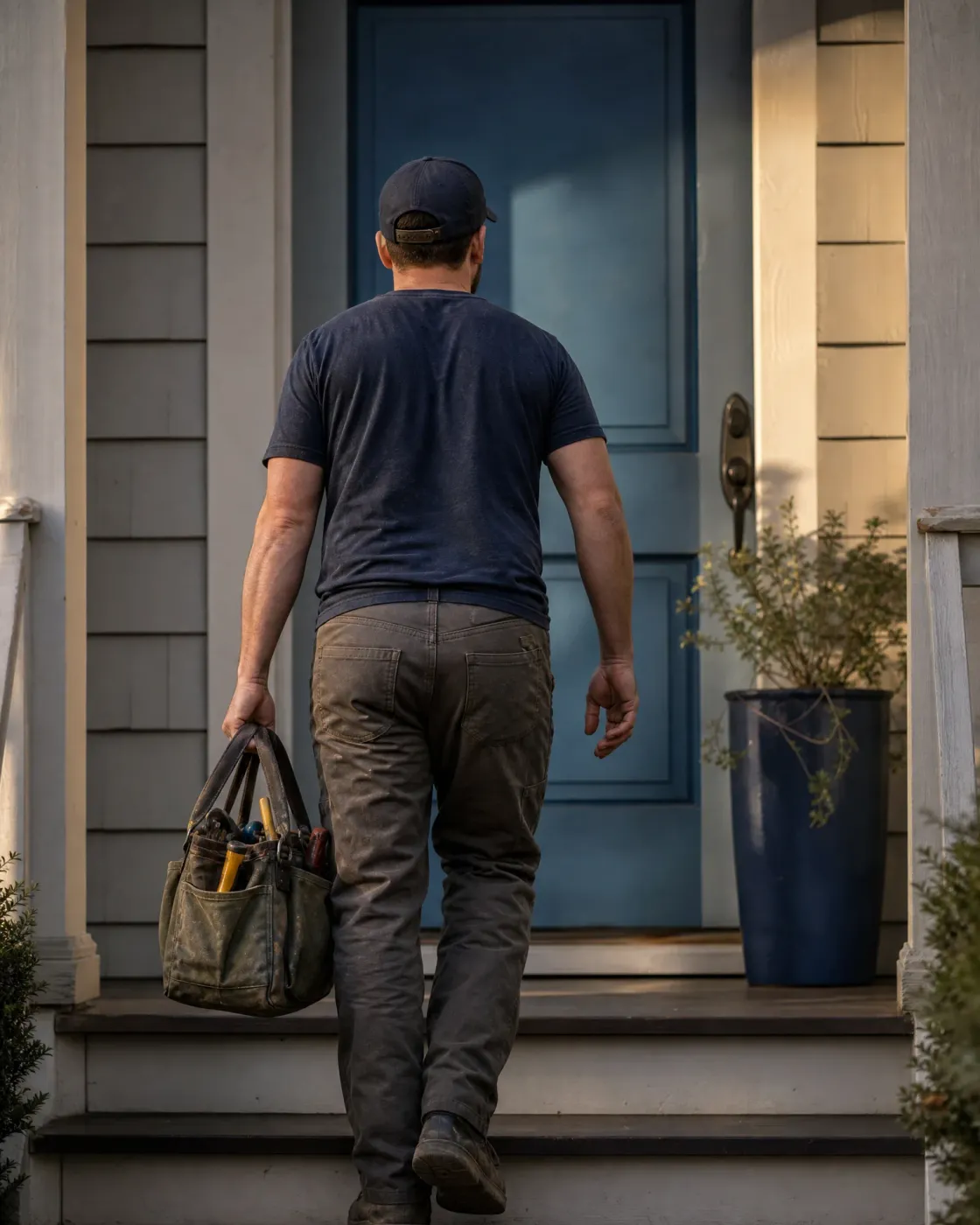
A man in a cap, dark t-shirt and work trousers carries a canvas tool bag up porch steps toward a blue front door, with a tall planter and shrub beside the entry.
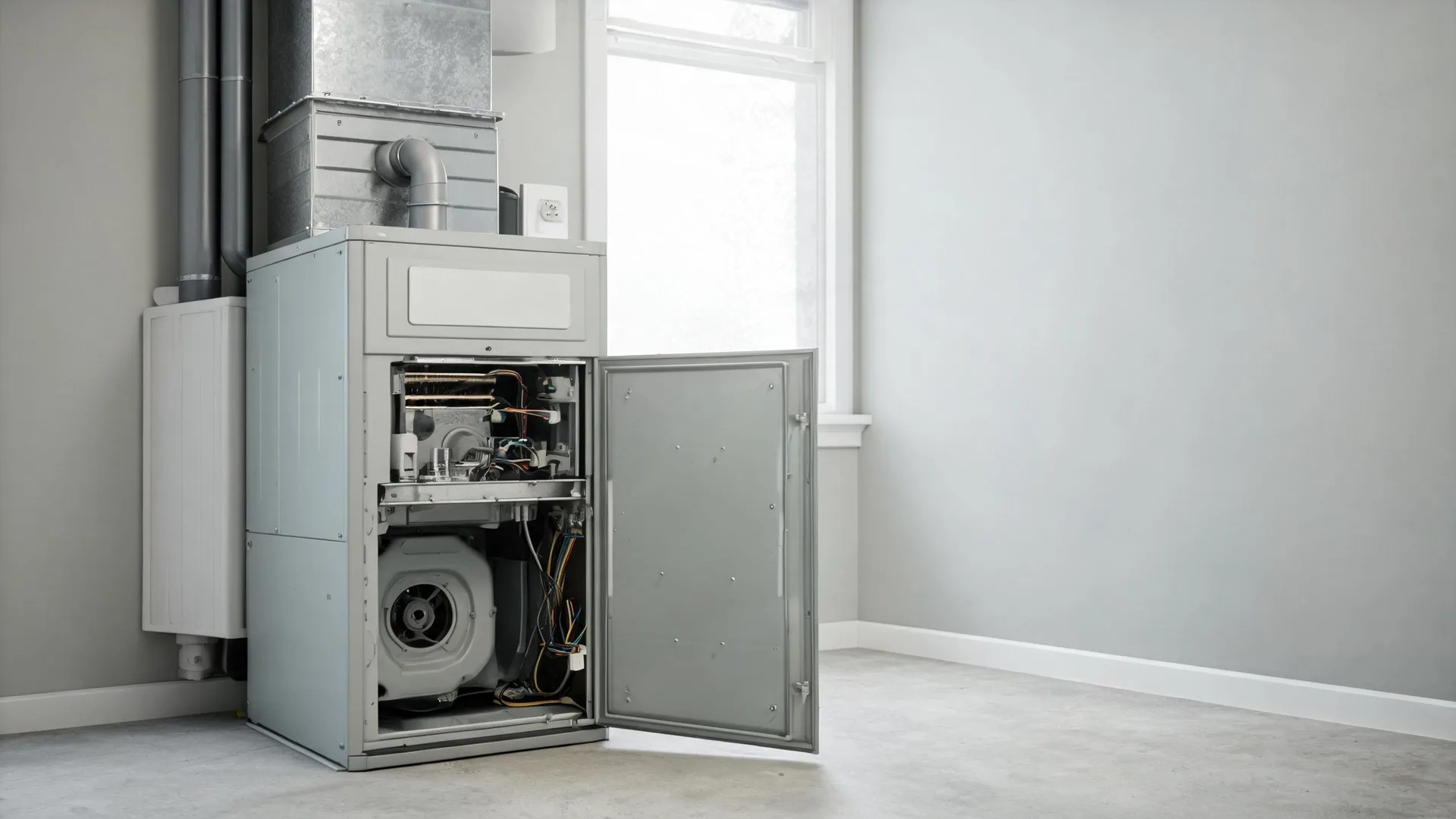
A gray high-efficiency gas furnace installed in an unfinished basement, surrounded by gas lines, a condensate drain, and sheet-metal ductwork.

Some furnace problems don't stay small if you let them run

A furnace with a bad igniter or a failing flame sensor usually just shuts itself down. The ones that keep running are the ones to worry about. A cracked heat exchanger can leak exhaust into the air a furnace is supposed to be heating, and that doesn't stop it from running, it just keeps running wrong. A blower motor losing strength will keep turning until it seizes, and the furnace will keep calling for heat the whole time, overworking what's left of it. A clogged burner or a dirty flame sensor can make a furnace short cycle, shutting off and restarting over and over, and every one of those cycles stresses the igniter and the heat exchanger a little more. None of this gets better by waiting. A part that's already failing takes the rest of the furnace down with it the longer it's left to run.

Check the simple things first

Make sure the thermostat is set to heat and the setting is above room temperature. Check that the furnace switch, it looks like a light switch near the unit, is on, and check the breaker too. If the furnace has a standing pilot, see if it's lit. All of this is worth a look before anyone comes out.

Check the filter and the vents

Pull the filter and hold it up to a light. If you can't see light through it, that's choking the airflow and making the furnace work harder than it should. Walk the house and check that no vents are closed or blocked by furniture or rugs. A furnace starved for air can short cycle or blow cooler air than it should, and this is the one thing in its path you can fix yourself.

A furnace that's starting to fail usually tells you before it quits outright. It may take a few tries to light, or you'll hear it click without catching. The flame through the burner window should burn steady and blue. If it's flickering yellow or orange, that's worth a call on its own. Listen for a bang when it starts up, that's gas building up before it lights instead of catching right away. Air coming out the vents that's warm but not hot, or a house that never quite reaches the set temperature, points to a burner or blower problem rather than anything you can fix by adjusting the thermostat. A burning or musty smell in the first minutes of a cycle is usually just dust on the heat exchanger and clears on its own, but a smell that lingers or comes back every cycle doesn't.

A diagnostic visit starts with questions. When does it act up, how often, and what does it sound or smell like when it does. That history points a tech toward a part before the panels even come off. From there it's a sequence. Check for power and gas reaching the furnace, pull the panel, watch it run through a full cycle start to finish. A tech will check the flame sensor and igniter, test the pressure switch, and look at the heat exchanger for cracks or scorch marks. Airflow gets checked too, since a weak return or a blocked vent can look like a failing part when it isn't one. By the end you should have a straight answer. What's wrong, what it takes to fix it, and whether it's a part or the whole furnace you're dealing with.