A white picket fence runs along a mowed grass lawn in front of a row of gray clapboard houses with dark shingled roofs, framed by overhanging tree branches under an overcast sky.

Furnace Repair in Lewiston, ME

Tell us about the job

Takes about a minute. No obligation.

RepairFurnace or heatingAndroscoggin County, ME
Step 1 of 2

What ZIP code is the job in?

The tech checks before touching anything

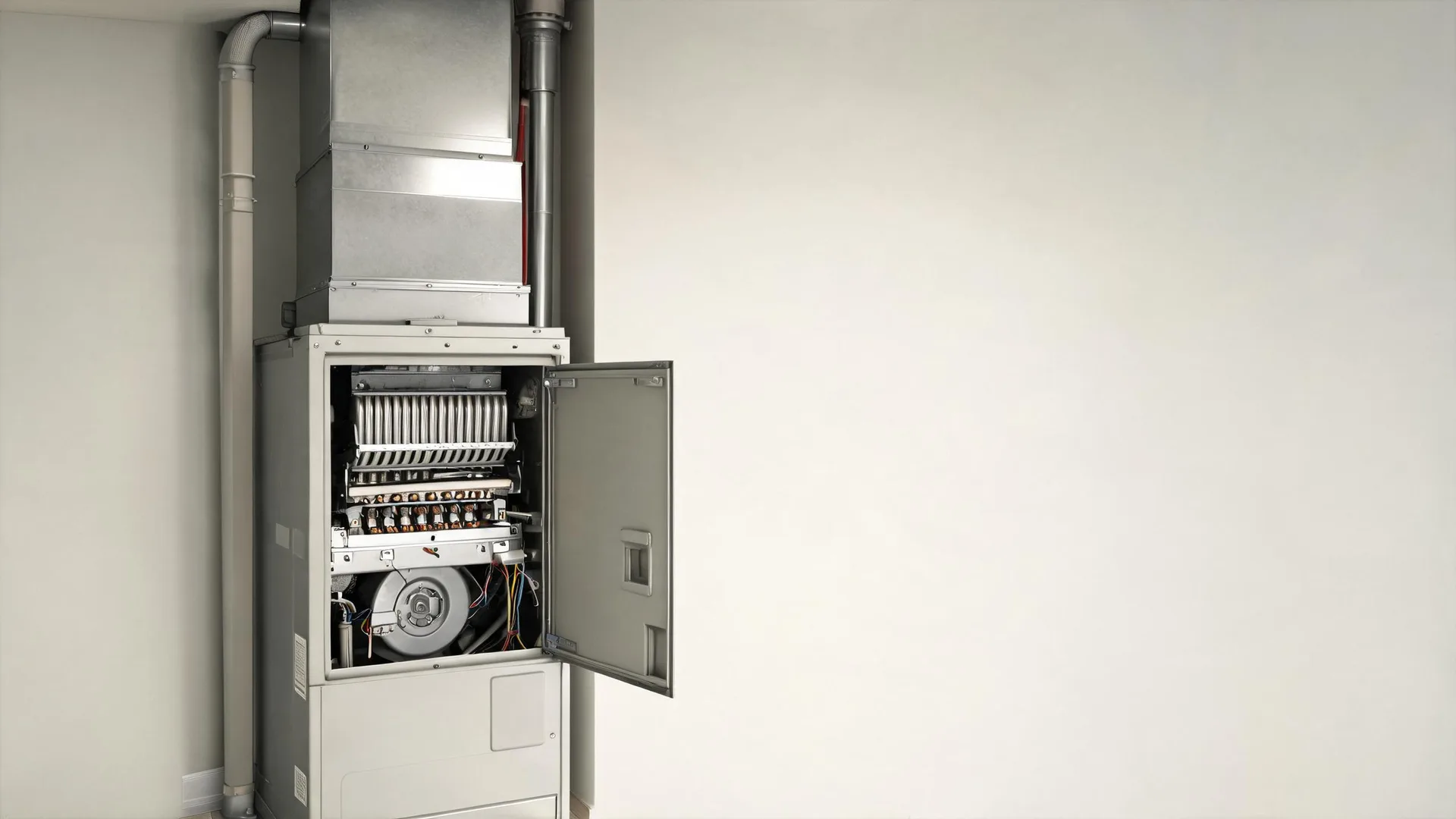
A diagnostic starts with questions. What was the furnace doing before it quit. Does the thermostat call for heat and does the furnace answer. Any odd sounds or smells before it stopped. Then the panel comes off and the tech looks at the igniter, the flame sensor, the pressure switch and the inducer motor, checking each one against what it should read or do. The point is finding the part that actually failed, not guessing at one.

The diagnosis decides what happens next

Once the tech finds the failed part, they can tell you if it's a simple swap or a sign of something bigger. A cracked heat exchanger or a control board on its way out changes the job. What matters is not what's wrong with furnaces in general, it's what's wrong with this one, and whether fixing it makes sense next to what else the furnace might need soon.

9 months
September through May, your furnace is on duty
13°F
the average winter night it heats against
45 winter storms
in ten years, the nights a failure hurts most
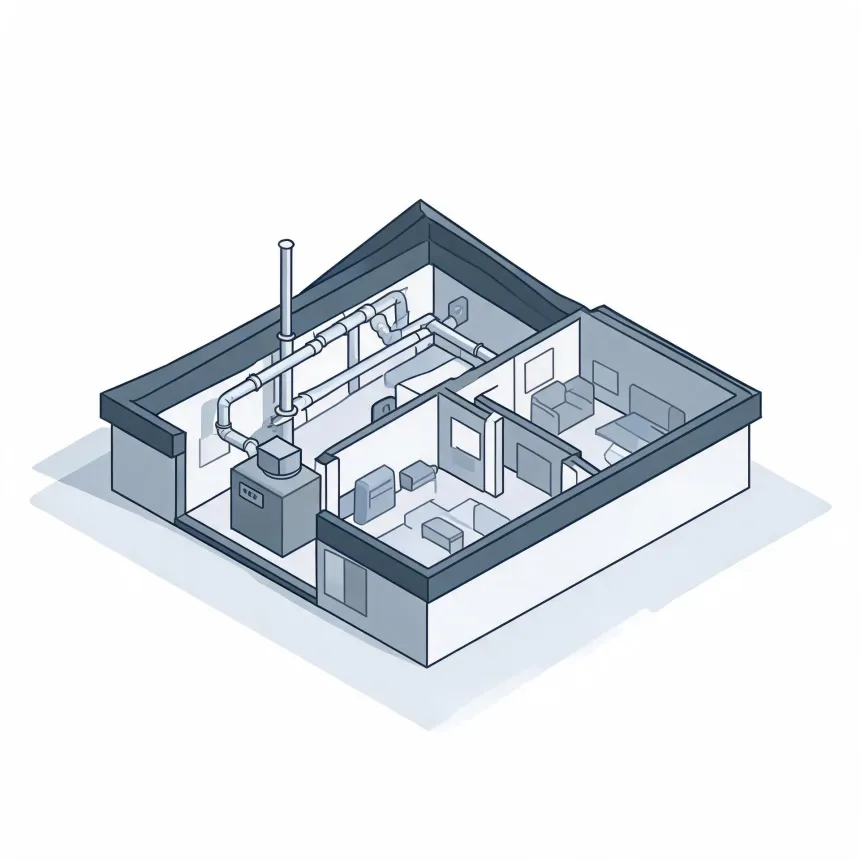
Isometric line illustration of a cutaway building interior showing a furnace unit with a flue pipe and ductwork running along the ceiling, plus adjacent rooms with simplified furniture.
Your furnace works hardest from November through March.

NOAA nClimDiv, 1991–2020 normals

Furnaces in Androscoggin County start their first cold run in September.

August is when a weak igniter or a bad pressure switch should get caught, before the first cold night finds it.

Heat runs September through May here, so a furnace that's struggling costs you every one of those months

Heat runs September through May
Winter nights average 13°F
45 winter storms from 2015 to 2024
Nine months of heat, down to 13 belowAndroscoggin County averages 13°F on winter nights, and furnaces here run September through May.

Half the homes in Androscoggin County were built in 1969 or earlier. If your furnace came with the house, it's worth finding out how old the unit itself is, since furnaces don't always get replaced when a house changes hands. An old furnace can still run fine for a while. But it's also closer to the point where a repair isn't worth doing, because the next failure is never far behind the last one. Ask the tech how much life is likely left in it before deciding on a repair.

Get it looked at early

Problems tend to show up in the first weeks of the season, when the load hits a part that was already weak.

Find a contractor
A gray residential gas furnace installed in an unfinished basement, connected to sheet-metal ductwork and PVC pipes.

Worth fixing, or near the end

Ask the tech straight out how many more winters this furnace has in it before you pay for the repair. That answer should decide whether the repair makes sense, not the other way around. A tech who's had the panel off and seen the wear on the heat exchanger and the board can give you a real answer, not a guess.

It's usually one of a few parts

An igniter wears out from doing its job, heating up and cooling down until it cracks. A flame sensor collects a coating of residue and stops sensing the flame, so the furnace shuts itself off as a safety measure. A pressure switch fails when the inducer motor behind it starts to weaken. Each one causes a different kind of no-heat call, but all of them are routine to replace.

Some failures mean more than a part swap

A cracked heat exchanger is not something to patch. It's the part that keeps combustion gases separate from the air moving through the house, and once it's cracked the furnace needs to come out of service, not get repaired. A control board that's failing often shows smaller symptoms first, like a furnace that starts and stops on its own. Those point to the furnace nearing the end of its life rather than one bad part.

There are a few things worth checking before anyone comes out. Start at the thermostat. Make sure it's set to heat, not just fan, and that the setting is actually above room temperature. Next check the breaker and any switch near the furnace that looks like a light switch, since that's usually the power cutoff and it's easy to bump. Look at the filter. A filter packed with dust chokes off airflow and can cause the furnace to shut down on its own as a safety response. If the furnace has a standing pilot, see whether the pilot light is actually lit. None of this takes tools or know-how, and if the furnace still won't run after checking all of it, that's the point to call someone.

A repair is worth doing when it fixes the one part that failed and leaves the rest of the furnace alone. That's true for an igniter, a flame sensor, a pressure switch, almost anything that fails on its own while the rest of the furnace is sound. It stops being worth doing when the part that failed is a sign the whole furnace is wearing out together, not just that one piece. A heat exchanger with a crack in it is the clearest case, since the furnace can't run safely with it and patching it isn't a real option. Short of that, age by itself doesn't rule out a repair. A furnace that's been maintained and hasn't needed much can still be worth fixing even after a lot of winters. The harder case is a furnace that's had a few different repairs in a short stretch, because that pattern usually means more parts are close to failing, not that this one repair will hold.