Weather here is rough on equipment
Aroostook County logged 400 severe weather events between 2015 and 2024, including winter storms, damaging wind and hail. A vent or outdoor component exposed to that year after year takes a beating.
Takes about a minute. No obligation.
Aroostook County logged 400 severe weather events between 2015 and 2024, including winter storms, damaging wind and hail. A vent or outdoor component exposed to that year after year takes a beating.
More than half of Maine households went at least 24 hours without power in 2024. A furnace that depends on electricity for ignition or blower operation stays off the whole time the power is out, storm or no storm.
NOAA nClimDiv, 1991–2020 normals
Half the homes in Aroostook County were built in 1972 or earlier.
A furnace that came with a house that old is probably not the original, but if it is, it's closer to the end of its life than the middle.




Furnaces here run about ten months a year, September through June. That's most of the year on duty, not just the cold snap in January. Overnight lows average 4°F across December, January and February, so when it's running, it's working against a real gap between inside and outside. On top of that, this county gets hit with heavy snow, ice and blizzards most winters. A furnace that runs that long under that kind of cold doesn't fail at random. Worn parts and strain show up as real symptoms, and a tech who knows what to check can usually trace the problem back to exactly that.
If your system came with an older house, it may be near the end of its life. Ask how much life it has left before paying for a big repair.
Find a contractor
A furnace that's starting to fail usually gives some warning before it quits outright. It short cycles, running for a few minutes and shutting off before the house warms up, because a limit switch or flame sensor is tripping early. It blows air that isn't as warm as it used to be, because the burner isn't firing clean or the heat exchanger isn't transferring heat the way it should. It gets louder. A bang or rumble at startup means gas is building up before it lights. A screech points to the blower motor or inducer bearings. A clicking that doesn't end in ignition means the igniter is trying and failing. Some of these show up for a cycle and seem to stop, and it's easy to write them off. They don't stay occasional. A furnace running on worn parts keeps running on worn parts until one of them gives out, usually on the night it's working hardest.
A cracked heat exchanger gets worked on by heat and vibration every time the burner fires. A limit switch that trips once under strain is weaker the next time it trips. Running the furnace through that instead of shutting it down for a look just repeats the stress that caused the crack or the trip in the first place.
A dirty filter makes the blower motor pull more current to move the same air, and a motor running hot that way wears faster than it should. A cracked heat exchanger can let combustion gas mix into the air the blower is pushing through the house. Both get worse the longer the furnace keeps running without a tech looking at them.
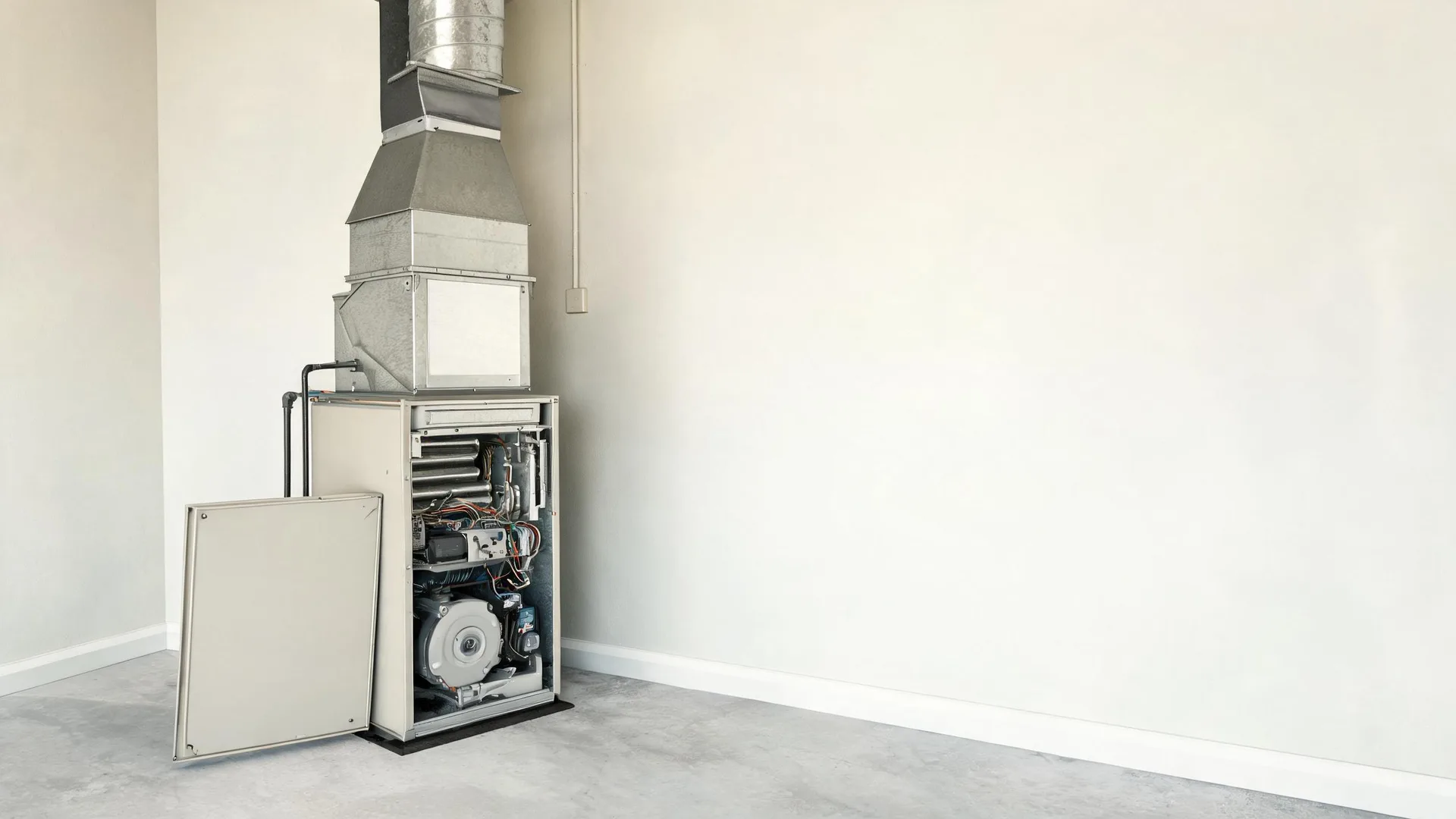
Most furnace failures trace back to a handful of parts. The igniter wears out from repeated heating and cooling every time it fires, and eventually it stops glowing hot enough to light the gas. A flame sensor coated in a thin layer of residue stops detecting the flame and shuts the burner down as a safety measure, even though everything else is working fine. The draft inducer motor runs every single cycle to clear exhaust before the burner lights, so its bearings take steady wear over the years. A blower motor can fail outright or just get weaker, moving less air than the furnace was built to push. Pressure switches and limit switches are built to trip and protect the furnace, but a switch that trips often is usually telling you something upstream is already wrong, not failing on its own.
A repair decision usually comes down to what broke and what it sits next to. A new igniter or flame sensor is a small, contained fix on a furnace that's otherwise sound, and there's no reason to think past it. A cracked heat exchanger is a different kind of problem, because it means the core of the furnace is failing, not just a part bolted to it. The question worth asking isn't just what this fix costs but what else is close to the same age and the same wear. A furnace that keeps coming back for different repairs is usually telling you the whole unit is tired, not that it keeps having bad luck. One that's run clean for years and just tripped a switch or lost an igniter is usually worth fixing and leaving alone.