







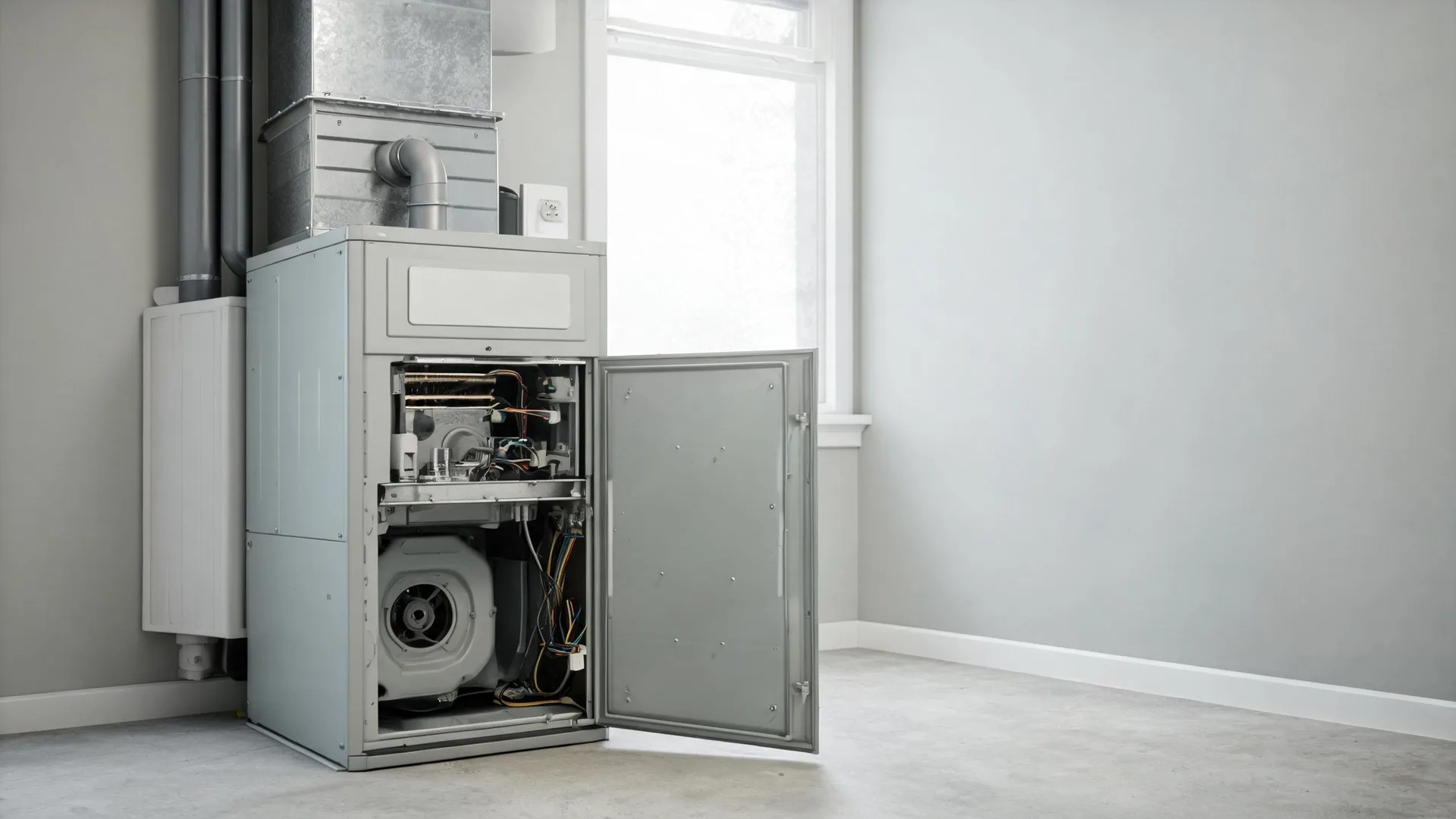
A gas furnace and sheet-metal air handler unit installed in an unfinished concrete basement.

Furnace Repair in Rumford, ME

Tell us about the job

Takes about a minute. No obligation.

RepairFurnace or heatingOxford County, ME
Step 1 of 2

What ZIP code is the job in?

Oxford County saw 100 winter storms between 2015 and 2024, along with dozens of damaging wind events and a run of hail storms too. That's weather a furnace has to run through, not just sit out. Wind and ice reach the vent pipe and the intake, the parts that let your furnace breathe. None of that tells you what hit your house, but it tells you the odds here aren't small. If your outdoor vent took debris or ice this past winter, it's worth having someone look even if the furnace still fires up fine.

9 months
September through May, your furnace is on duty
10°F
the average winter night it heats against
100 winter storms
in ten years, the nights a failure hurts most
Isometric cutaway illustration of a small gabled house showing a furnace with flue pipe and ductwork connecting to interior rooms containing a sofa, bed, and cabinets.
Your furnace works hardest from November through March.

NOAA nClimDiv, 1991–2020 normals

Furnace season starts in September here, and runs through May.

September is when a weak igniter or a cracked heat exchanger finally gets found out.

Oil runs $23.73 per million Btu in Maine, and a furnace running September through May on a bad igniter or a weak blower burns through more of it every week it's ignored

Heat runs September through May
Winter nights average 10°F
100 winter storms from 2015 to 2024
An even split, old and newHalf the homes in Oxford County were built in 1977 or earlier, half in 1977 or later. Age alone doesn't decide what's wrong with your furnace.

Your furnace in Rumford runs about nine months a year, longer than almost anywhere else in the country. Overnight lows in Oxford County average 10°F through December, January and February, so once it starts in September it doesn't get much of a break before the deep cold hits. That's a lot of cycles on the igniter, the blower motor, the heat exchanger. Parts built to last years of normal use wear down faster when the furnace is firing for nine months straight. A problem that would stay small somewhere milder tends to show up sooner here. Worth having someone trace it back to the actual part before it gets worse.

If the vent took damage this winter, get it checked before the cold sets in again

A furnace vent that took ice or wind damage this winter won't always show it by failing to start. Have the vent pipe and intake checked if either took a hit, even with the furnace running fine right now.

Find a contractor
A man in a cap, gray long-sleeve shirt and tan work pants carries a canvas tool bag up gray porch steps toward a dark blue front door, with a blue ceramic planter and shrub beside it.
A gray high-efficiency gas furnace installed in an unfinished basement, surrounded by gas lines, a condensate drain, and sheet-metal ductwork.

Nine months of runtime, not much time to spare

A furnace that runs nine months a year doesn't get much downtime to show you a problem before it becomes a bigger one. If yours is short cycling, slow to ignite, or blowing cooler air than it used to, that's worth a diagnosis now rather than in January. Someone who traces the symptom back to the actual part, whether that's the igniter, the blower motor, or the heat exchanger, can fix what's actually wrong instead of guessing. A repair done that way holds up for the rest of the season instead of calling someone back out in February.

Check the simple things first

Look at the thermostat before anything else. Make sure it's set to heat and the setting is above room temperature, and change the batteries if it uses them. Check the air filter. A filter clogged with dust chokes off airflow and can cause the furnace to shut itself off partway through a cycle. Check that the furnace switch, the one that looks like a light switch near the unit, is flipped on, and make sure the breaker for the furnace hasn't tripped.
Know what you shouldn't touch

If the furnace won't light at all, check the gas valve is open, but leave anything past that to someone who knows the system. A furnace that shuts off on its own, trips its breaker repeatedly, or gives off a burning smell needs a trained eye, not a guess. Taking a panel off to look at the igniter or the flame sensor risks a burn or a damaged part for no real benefit, since a dirty flame sensor and a cracked heat exchanger can look the same from the outside.

A furnace usually tells you something is wrong before it quits outright. It might take longer to light than it used to, or start up and shut back down after a short run, which is short cycling. The air coming out of the vents might run lukewarm instead of hot, or the blower runs and no heat follows it at all. Listen for sounds that weren't there before too. A bang at startup usually means gas built up before the igniter caught. A screech points to the blower motor. A rattle can mean something's worked loose. A burning smell that doesn't fade once the cycle gets going isn't normal, and neither is soot around the vents or a furnace that keeps tripping its breaker. Any of these is worth a call before the furnace stops working altogether.

Age isn't what decides this, wear is. A furnace with a cracked heat exchanger is done, full stop, because that part isn't safely repairable and it's the one letting combustion gas mix with the air in your house. A furnace with a bad igniter or a failed control board is a repair, because those parts are made to be swapped and doing so brings the unit back to normal. The harder calls sit in between. A blower motor going out on an older furnace is worth weighing against what else is likely to go next, since motors and heat exchangers often near the end around the same time. If a repair is only patching one symptom while the rest of the unit is the same age and has seen the same wear, it's fair to ask the tech what else is close to failing before paying for the fix.