A long white picket fence curves along a mown grass strip in front of a row of gray-sided houses shaded by large deciduous trees.

Furnace Repair in Skowhegan, ME

Tell us about the job

Takes about a minute. No obligation.

RepairFurnace or heatingSomerset County, ME
Step 1 of 2

What ZIP code is the job in?

The tech watches it run before touching anything

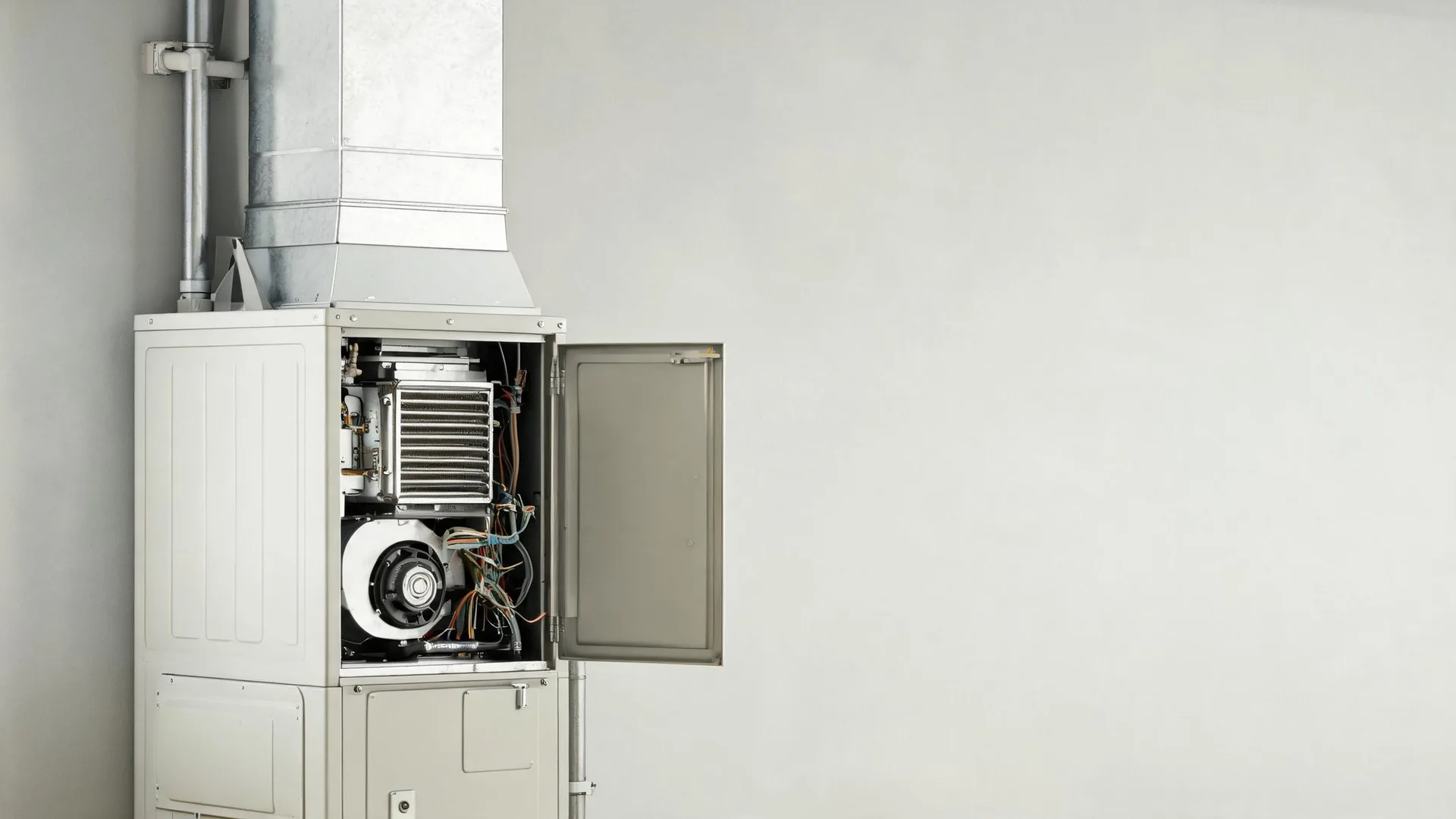
A good diagnostic starts with questions. When did the trouble start, what does the furnace do or not do, has anyone smelled gas or heard a bang at startup. Then the tech watches it fire and run a full cycle, because some faults only show up once the igniter has lit and the blower has kicked on. Replacing a part before seeing it fail is a guess, not a diagnosis.

Finding the fault means testing each part, not eyeing it

The flame sensor, the igniter, the gas valve, the control board all get checked with a meter. A cracked igniter can still glow. A weak flame sensor can still spark a flame that won't hold. The tech is figuring out which part is lying about its job, and that only shows up when you test it against what it should read.

10 months
September through June, your furnace is on duty
7°F
the average winter night it heats against
137 winter storms
in ten years, the nights a failure hurts most
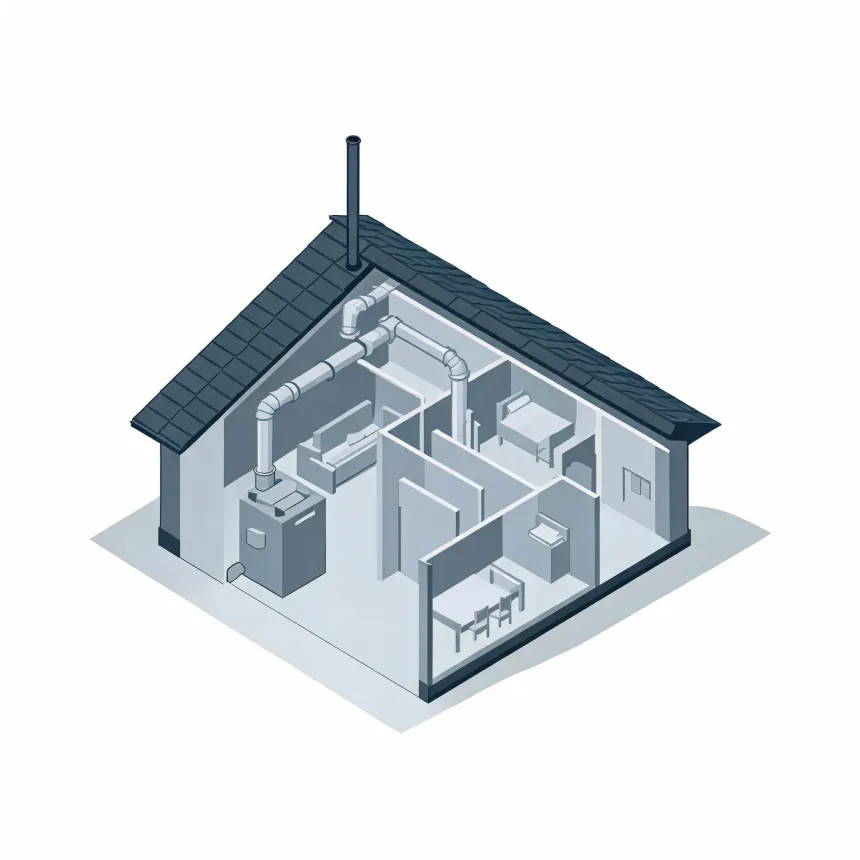
Isometric cutaway illustration of a small single-story house showing interior rooms with furniture, a furnace unit with attached ductwork running to a roof flue, and a dark shingled roof.
Your furnace works hardest from November through April.

NOAA nClimDiv, 1991–2020 normals

Half the homes in Somerset County were built in 1978 or earlier.

A furnace acting up in a house this age is usually just a worn part, not a sign of something built into the house.

Furnace trouble here tends to start in September, the first cold week of the year

Heat runs September through June
Winter nights average 7°F
137 winter storms from 2015 to 2024

Oil in Maine ran $23.73 per million Btu in 2024, and it doesn't get cheaper if the furnace is running wrong. A bad igniter or a flame sensor that won't hold means more cycling, more fuel burned to get the same heat out of the house. That cost shows up on the bill before it shows up as a breakdown. A furnace that's struggling but still running is easy to leave alone, since it still works. But the longer a worn part stays in, the more it costs you to let it limp along.

Get the usual fix

Nothing about this area is especially hard on it. It's most likely the usual problem with the usual fix.

Find a contractor
A man in a gray T-shirt and tan work pants, seen from behind, carries a worn canvas tool bag up concrete steps toward a blue front door of a house with gray siding and a potted shrub.
A gray residential gas furnace installed in an unfinished basement, surrounded by ductwork, a metal flue pipe, and a gas supply line.

Running it while it's failing doesn't buy you time

A furnace that's struggling still lights, still blows warm air, so it's tempting to let it ride. But a cracked heat exchanger gets worse under heat, not better. Every cycle flexes the metal a little more, and a hairline crack can open into one that leaks exhaust into the air the blower pushes through the house. A flame sensor that's lost its coating has to work harder to prove a flame is there, and the longer it takes, the more the gas valve opens and closes trying to catch. That's more wear on the valve itself. An inducer motor running on a failing bearing will keep spinning right up until it seizes, and it usually picks the coldest night to do it. None of these get better because the furnace is still technically working. They get worse because the part is already failing, and failing parts fail faster under load.

A short list of parts does most of the failing

An igniter, a flame sensor, an inducer motor, a gas valve, a control board. These wear out. Ductwork and the cabinet around them don't. When a furnace won't start or won't stay lit, it's almost always one of these parts, not something rare or hard to find.

Each one fails in its own particular way

An igniter cracks with age and stops glowing hot enough to light the gas. A flame sensor builds up a coating until it can't tell a flame is there. A blower motor wears out its bearings and gets loud before it quits. The pattern is well known, and that's what makes the fix fast once the bad part is found.

Most people notice a furnace problem before they can name it. The air coming out feels cooler than it should, or the furnace runs longer than it used to for the same warmth. Short cycling is another one, where it fires up, shuts off, fires up again, a few minutes apart. Sometimes it's a smell, a burnt dust smell at the start of a cycle, or something sharper that means call before you do anything else. A bang or a thud at startup means gas is building before it lights instead of catching right away. A furnace that hums but doesn't fire usually has a blower running with no flame behind it. Any of these is worth a look, because none of them fix themselves by waiting.

A furnace is worth fixing more often than it's worth replacing, because most of what fails is one part, not the whole machine. An igniter or a flame sensor gets swapped and the furnace runs like new, since the heat exchanger and blower housing underneath rarely wear out at the same pace. What changes the math is a cracked heat exchanger, because that's not a part you replace on its own, it's most of the cost of a new furnace to fix properly. How long the furnace has been in service matters less than what's actually failed. An old furnace with a bad control board is still a repair. A furnace of any age with exhaust leaking into the airflow is a different conversation. The tech can tell you which one you've got once the part is found, not before.