




A single-story house with light siding, dark shutters and a gray shingled roof, seen across a mown lawn from a low angle with blurred grass and shrubs in the foreground and large deciduous trees behind.

Boiler Repair in Bangor, ME

Tell us about the job

Takes about a minute. No obligation.

RepairBoilerPenobscot County, ME
Step 1 of 2

What ZIP code is the job in?

The question is never just the boiler's age. It's whether this is the first real repair or the third one this year. One cracked seal or a bad valve is worth fixing on almost any boiler. But if the heat exchanger is cracked, that's usually the end of the line, because that part isn't meant to be replaced on its own, and the cost of trying rarely makes sense next to a new unit. Pay attention to what the repairs are for. A string of small failures, a circulator here, a control board there, often means the boiler is wearing out all over, not just in one spot. A tech who's looked at the whole system, not just today's symptom, is the one who can tell you honestly which side of that line you're on.

Boilers in Bangor run from September through May, with overnight lows averaging 10°F in January.

Nine months of steady firing is usually why a part finally gives out.

Boiler trouble shows up first in September, when the heat goes on and a weak part finally gets tested

Heat runs September through May
Winter nights average 10°F
134 winter storms from 2015 to 2024
Running a bad boiler here costs moreFuel oil ran $23.73 per million Btu in Maine in 2024, and a boiler that's struggling burns through more of it.

Half the homes in Penobscot County were built in 1977 or earlier, and half in 1977 or later. That split doesn't point to one kind of boiler problem over another. A boiler in a newer home fails the same way as one in an older house. A worn circulator, a failed igniter, a valve that won't seal anymore. Nothing about the house around it changes that. What matters more is the boiler's own history, how many times it's needed a repair and what those repairs were for.

Get it diagnosed properly

Your boiler works hard here, and that's usually what's behind the problem. Have it diagnosed properly so the fix lasts.

Find a contractor

What you can check safely

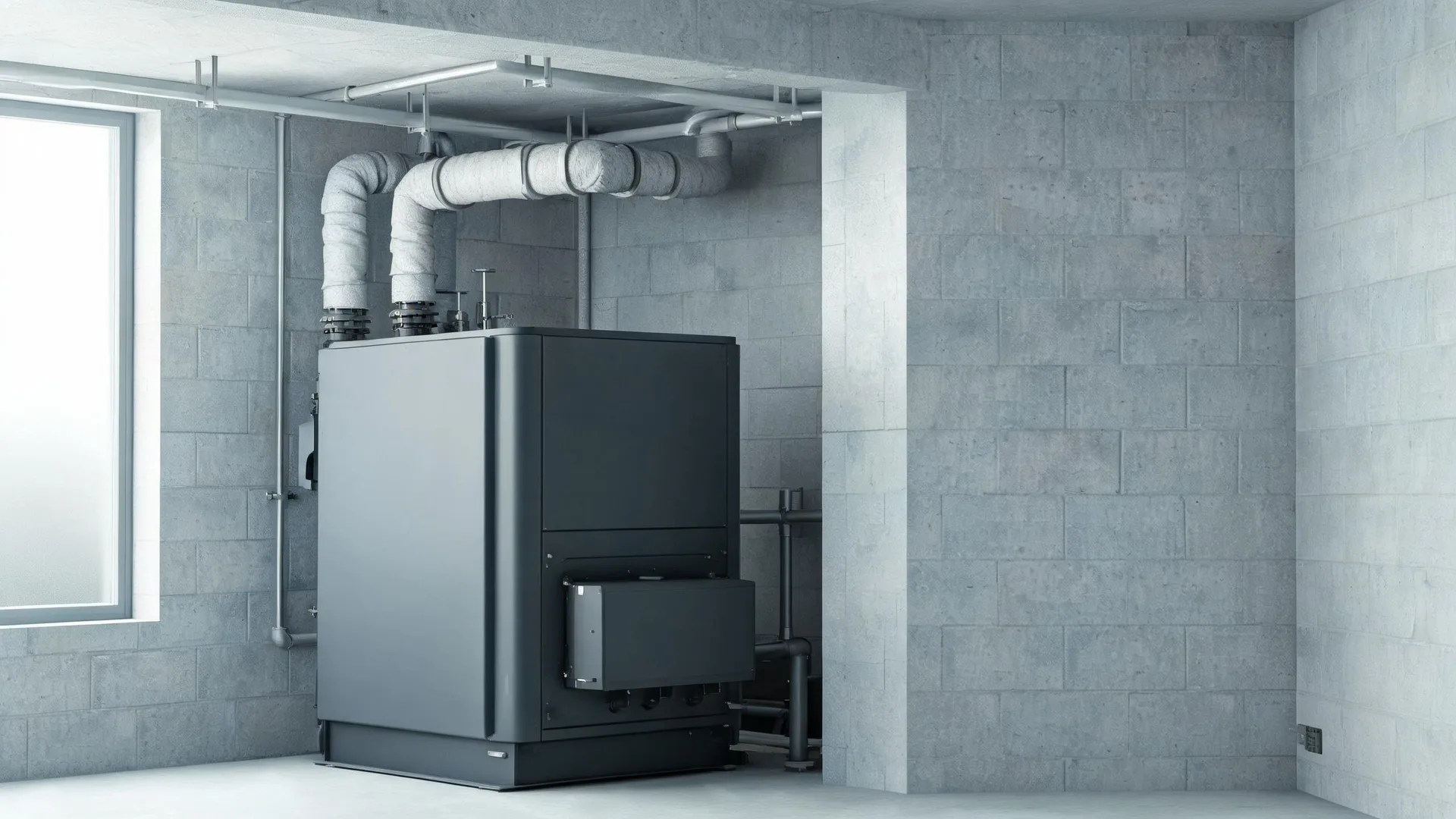
Look at the pressure gauge on the front of the boiler. A needle sitting low or at zero usually means it needs water or has a leak somewhere in the system. Check that the thermostat has power and is actually calling for heat. Look for a reset button near the burner compartment and press it once, but if it trips again, leave it alone. Check the room where the boiler sits for a sour or metallic smell, which can mean a leak that isn't visible yet.
What to leave for the tech

Don't open the burner compartment or touch the gas valve. Don't keep pressing the reset button, since that can flood the chamber or mask a lockout that's trying to tell you something. If you smell gas, don't flip any switches. Leave the house and call the gas company from outside. A boiler that's leaking water, making a new noise, or tripping its reset repeatedly needs a tech's eyes before anyone touches it again.

A boiler that's short-cycling or kettling will keep doing it until something fails outright. Kettling, that rumbling or popping sound, means scale or sludge is coating the heat exchanger and water is flashing to steam against it. Keep firing the burner against that buildup and the metal is working harder than it should every single cycle. A circulator pump that's starting to fail will draw more current trying to turn, and that heat has nowhere to go but into the motor windings. Low pressure left alone can let a pump run dry, and a pump that runs dry doesn't recover, it seizes. None of these get better because the thermostat keeps calling. They get worse, and usually faster than people expect, until the part that was struggling is the part that's now gone.

A diagnostic starts before the burner compartment ever opens. The tech checks the pressure gauge, looks at the reset history, and asks what the boiler's been doing. Short-cycling, kettling, tripping out cold, each points somewhere different. Gauges come next. Flue temperature, pump current, flame signal, numbers that point at a specific failing part instead of a guess. Opening the jacket comes after that, once there's a reason to look at one part over another. A lockout code or a burner that won't hold flame narrows it further still. The whole visit is about ruling things out in order, so the part that gets replaced is the one that's actually failing, not just the one that's easiest to reach.