




White colonial-style houses with lit windows photographed at dusk along a tree-lined street.

Boiler Repair in Calais, ME

Tell us about the job

Takes about a minute. No obligation.

RepairBoilerWashington County, ME
Step 1 of 2

What ZIP code is the job in?

A boiler that's making noise or short cycling will keep doing the job, right up until it can't, and the damage it does along the way doesn't undo itself. A kettling sound means scale or sediment is building up on the heat exchanger, and running the boiler hot while that keeps building can crack it. A pressure that keeps dropping points to a leak somewhere in the system, small enough to ignore today, but it will find a weak joint eventually if nothing seals it. Even a bad ignition sequence, where the burner tries and fails a few times before it lights, puts wear on the electrodes or igniter each time it happens. None of these fix themselves by running longer. They just move the boiler closer to the failure that was already coming.

Half the homes in Washington County were built in 1975 or earlier, half in 1975 or later.

A boiler acting up in either one is almost always the ordinary stuff. Scale, a leak, a bad ignition sequence.

Oil here runs $23.73 per million Btu, through winter nights that average 14 degrees

Heat runs September through May
Winter nights average 14°F
128 winter storms from 2015 to 2024

August is worth paying attention to here. Heat starts running in September and keeps running through May, nine months in all, and whatever was already weak in the boiler tends to get found in those first cold weeks. A kettling sound or a pressure that won't hold is easier to deal with before the burner is firing every night. Once the season settles in, the boiler doesn't get much of a break between cycles, and a small problem caught in August is still a small problem. The same thing left alone into September is running hot, night after night, on a system nobody has looked at.

Nine months of heat a year don't leave much room to put this off

Nine months of heat a year and winter nights averaging 14 degrees mean this boiler runs long hours with little break between cycles. Whatever is behind the noise or the pressure drop now will still be there when the cold settles in. Have it looked at while it's still the easier job.

Find a contractor
A man in a dark jacket, cap and tan work pants climbs steps toward a blue front door, carrying a canvas tool bag with tools in its side pockets, beside a shrub in a blue planter.

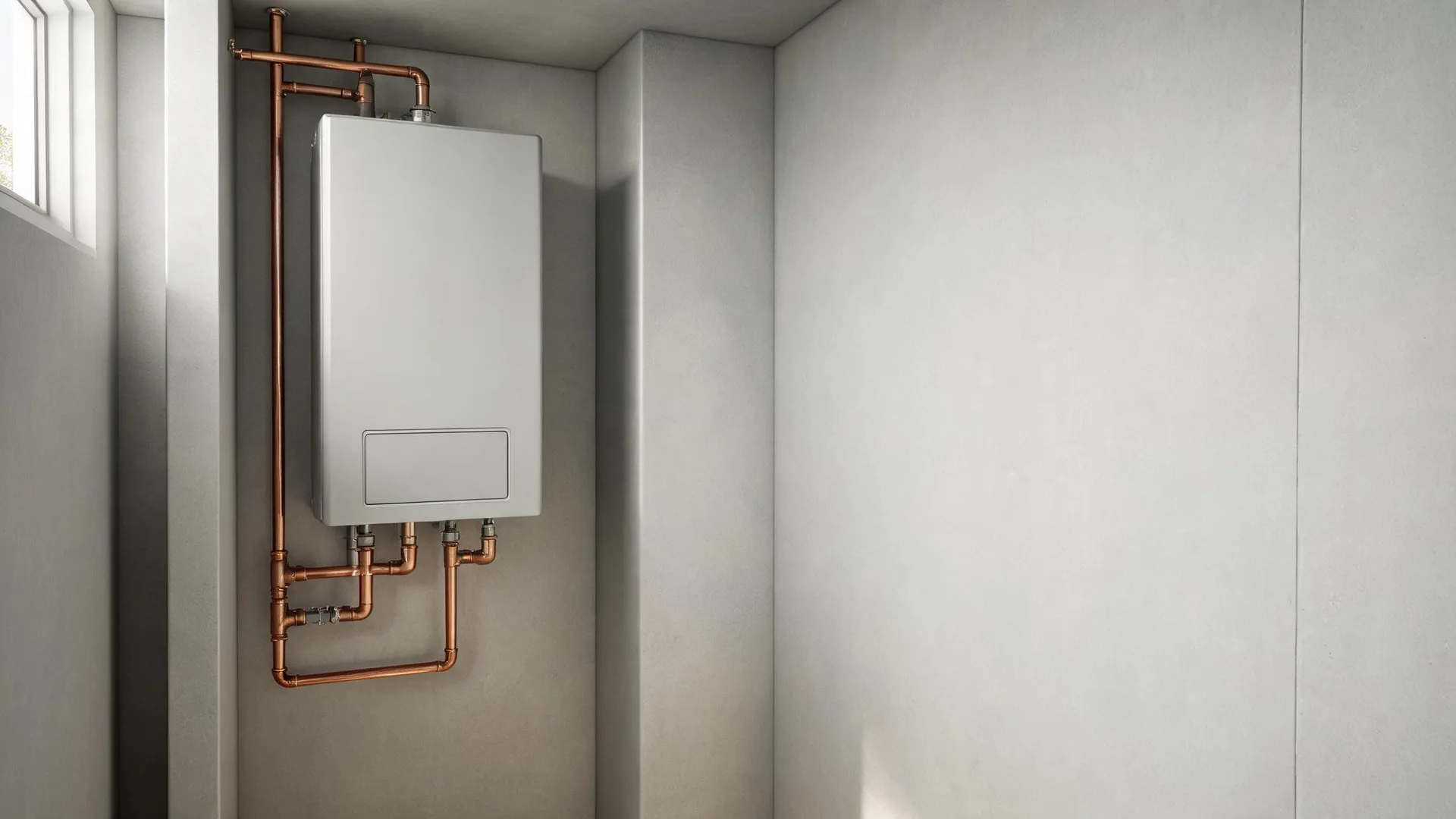
The heat exchanger takes the long-term damage

Sediment and scale build up inside the heat exchanger over years, and once it's coated, heat can't move through it the way it should. The boiler works harder to make up for it, running hotter than it needs to, and that extra heat is what eventually cracks a cast iron exchanger or warps a steel one. By the time it's cracked, the fix isn't a repair anymore.
Most failures start small and stay quiet

A circulator pump wears out gradually, a zone valve starts sticking before it fails outright, an expansion tank loses its air charge slowly enough that nobody notices the pressure creeping down. None of these announce themselves with a bang. They show up first as a noise, a pilot that won't hold, a radiator that's warm at the bottom and cold at the top, small signs that something's already on its way out.

Before anyone comes out, there's a few things worth checking yourself. Look at the pressure gauge on the front of the boiler. It should sit within the marked range on the dial when the system is cold, and if the needle's sitting at zero or past the red line, that's worth noting down. Check whether the pilot light or ignition display is actually lit. If the boiler's gone out completely, look for a reset button and try it once, but if it won't hold or it trips again right away, stop there and don't keep resetting it. Look along the bottom of the boiler and the pipework nearby for any staining or wet patches, since that tells a tech where to start looking. And pay attention to where a noise is actually coming from, the burner, the pump, or somewhere inside the casing, because that's useful to mention even if there's nothing you can do about it yourself.

A diagnostic visit starts before any panel comes off. A tech will ask what the boiler's doing, when it started, and whether it's constant or only sometimes, because that narrows things down fast. Then comes the pressure gauge, a look at the ignition sequence, and a listen to whatever noise was reported. Most will pull the cover and look at the heat exchanger and burner assembly directly, checking for scale, soot or staining that points to a leak. A combustion analyzer might come out to check the flue gases. That tells a tech how clean the burn is and whether the exchanger is moving heat the way it should. By the end there's usually a clear answer, what's failing, why, and whether it's a repair or something bigger.