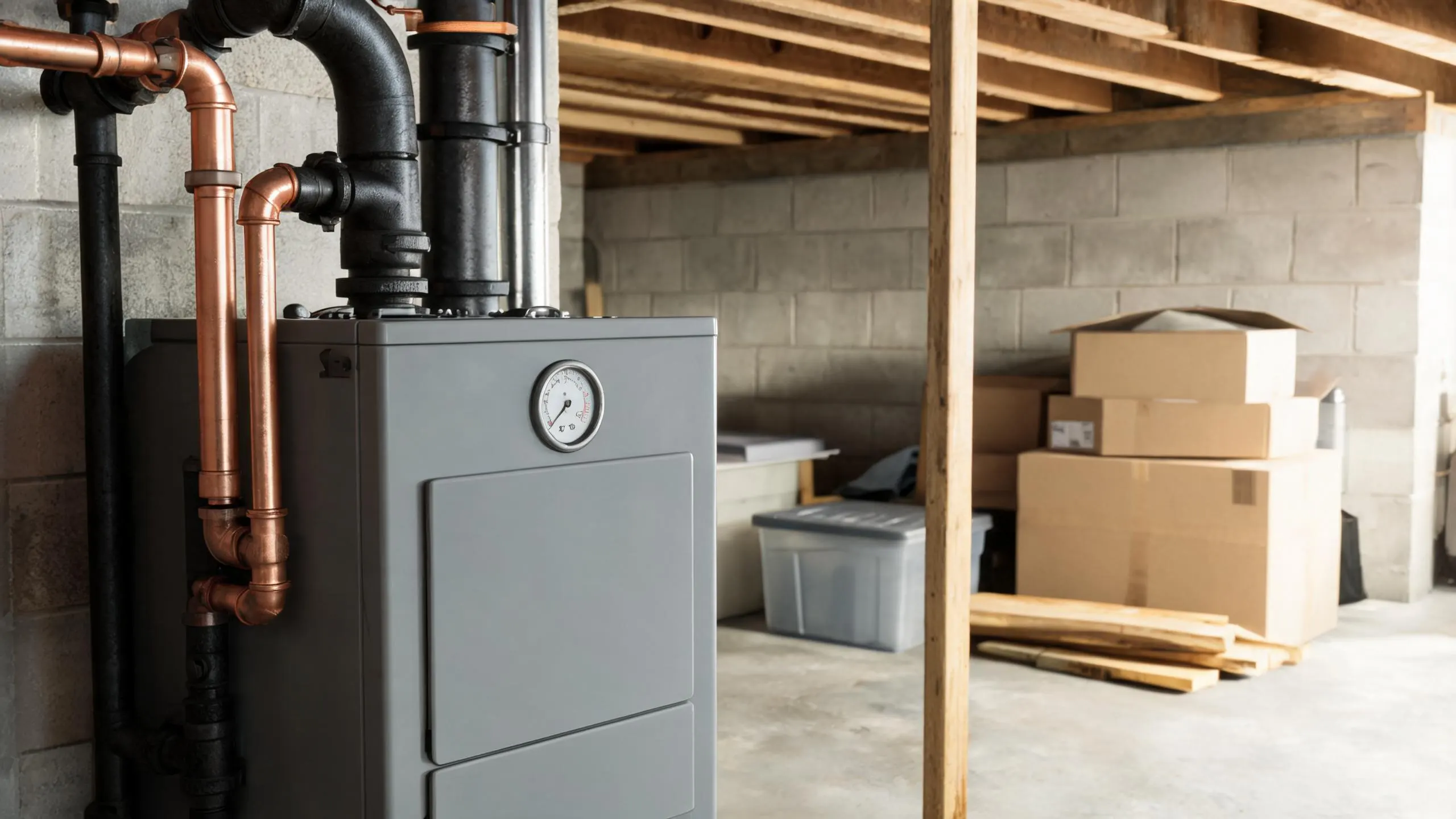





A gray boiler with copper and black piping mounted against a concrete block wall in an unfinished basement.

Boiler Repair in Presque Isle, ME

Tell us about the job

Takes about a minute. No obligation.

RepairBoilerAroostook County, ME
Step 1 of 2

What ZIP code is the job in?

A boiler in Presque Isle runs from September through June most years, close to ten months of firing and cycling to keep up. Overnight lows average 4°F through December, January and February, so it's not just running, it's working against real cold most of the winter. Winter storms pile on top of that, heavy snow and ice that keep the system under load for days at a stretch. That kind of schedule wears on a pump, a valve, an igniter faster than it would somewhere milder. When something starts acting up here, it's usually not bad luck. It's a part that's earned its trouble and needs a real look, not a quick patch.

August is the last quiet month before boilers here fire back up in September.

Whatever got ignored all summer, a slow leak, a worn igniter, shows up fast once the system starts working again.

A boiler that runs on oil here costs more to run badly than to fix

Heat runs September through June
Winter nights average 4°F
179 winter storms from 2015 to 2024
Oil doesn't forgive a boiler that's slippingFuel oil ran $23.73 per million Btu in Maine last year

Half the homes in Aroostook County were built in 1972 or earlier. A boiler that came with a house that age has likely already had at least one owner before you, maybe two. If nobody's replaced it since, it's been doing the same hard winter work for decades on the same pump, the same valve. That doesn't mean it's done. But it's worth asking a contractor how much life is actually left in it before putting a repair into it.

Get the real problem found before you pay to fix it

A part that has run ten months a year through winters this cold does not fail for no reason. Have a contractor look at what is actually worn before paying for a repair that does not hold.

Find a contractor
A man in a dark cap, dark shirt and tan pants, seen from behind, carries a canvas tool bag up concrete steps toward a blue front door, with a potted green plant in a blue planter beside the entry.

Clanking or banging from the boiler means trapped air or scale buildup

Air pockets in the system or mineral scale built up on the heat exchanger make the water bang and knock as it heats. Left alone, scale keeps the heat exchanger working harder than it should, and that stress is what leads to a crack.
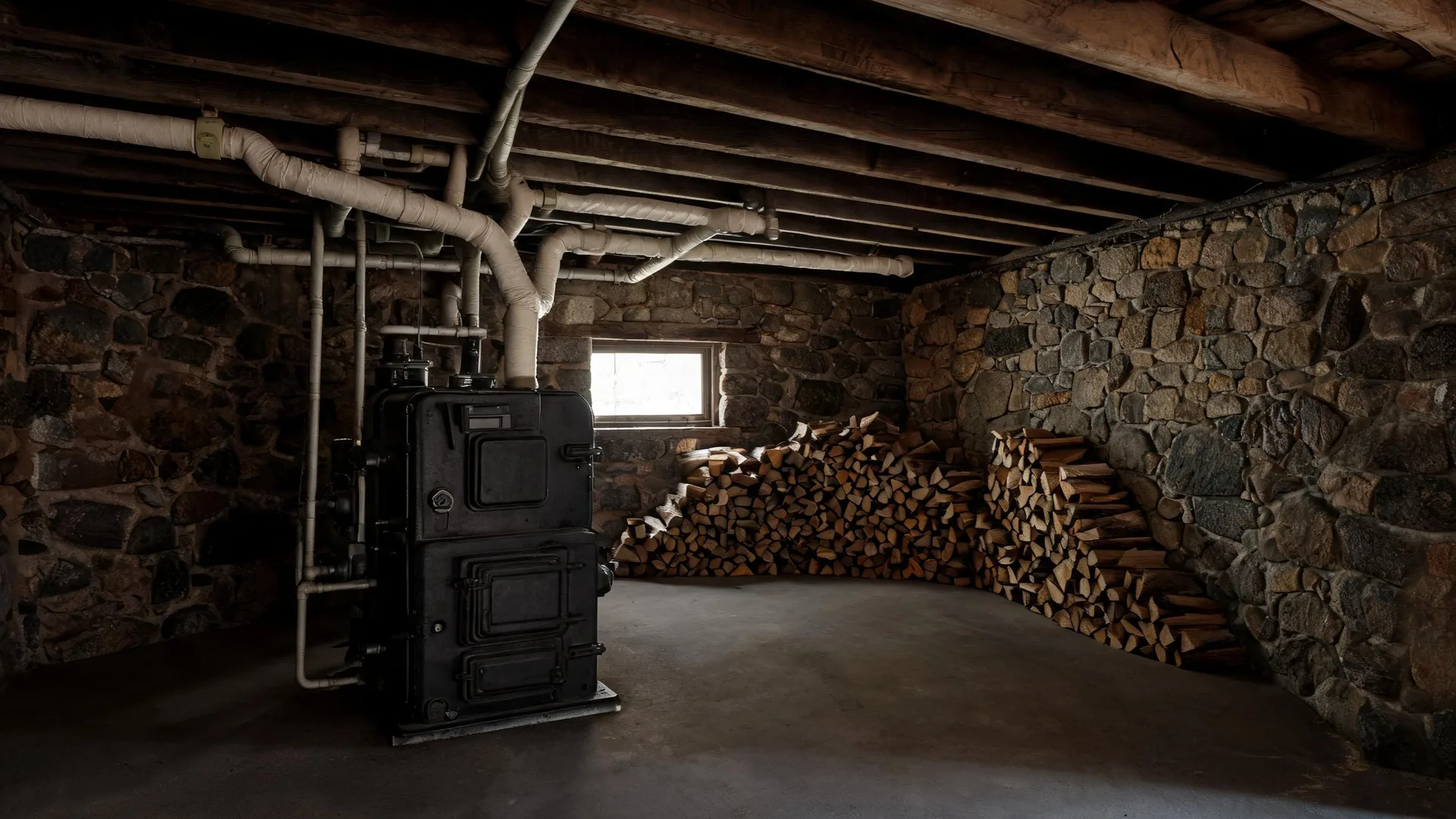
A boiler that won't hold pressure needs a look before it shuts down cold

Pressure that drifts down on its own points to a leak somewhere in the system, at a valve, a fitting, or the expansion tank. A boiler that keeps losing pressure will eventually trip its safety switch and stop firing altogether, usually in the middle of a cold stretch.

Most boiler failures trace back to a handful of parts, not the whole machine giving out. An igniter or pilot assembly wears down from being cycled on and off thousands of times and eventually stops lighting the burner reliably. A circulator pump runs for years and then the bearings go, or the seal starts to weep, and that shows up as a puddle underneath it. Valves stick after sitting in the same position between calls for heat, especially a zone valve that's been open or closed too long. Scale builds up inside the heat exchanger wherever the water is hard, and that buildup insulates the metal from the water it's supposed to be heating, so the exchanger overheats and stresses at the welds. None of these fail because the boiler is old on paper. They fail because that specific part finally wore past what it could do.

A repair makes sense when the failure is one part, a pump, a valve, an igniter, and the rest of the boiler is still sound. That's most calls. A contractor replaces the worn piece, checks the system holds pressure and fires clean, and the boiler goes back to work for years. Replacement starts to make more sense when the failures stack up, one part fixed this year and another next year, because that pattern means the whole system is wearing out at once, not just the piece that happened to go first. The heat exchanger matters most in that decision. A cracked heat exchanger usually means replacing the boiler rather than the part, since the exchanger is most of what the boiler is. Everything else on a boiler can be swapped out on its own.