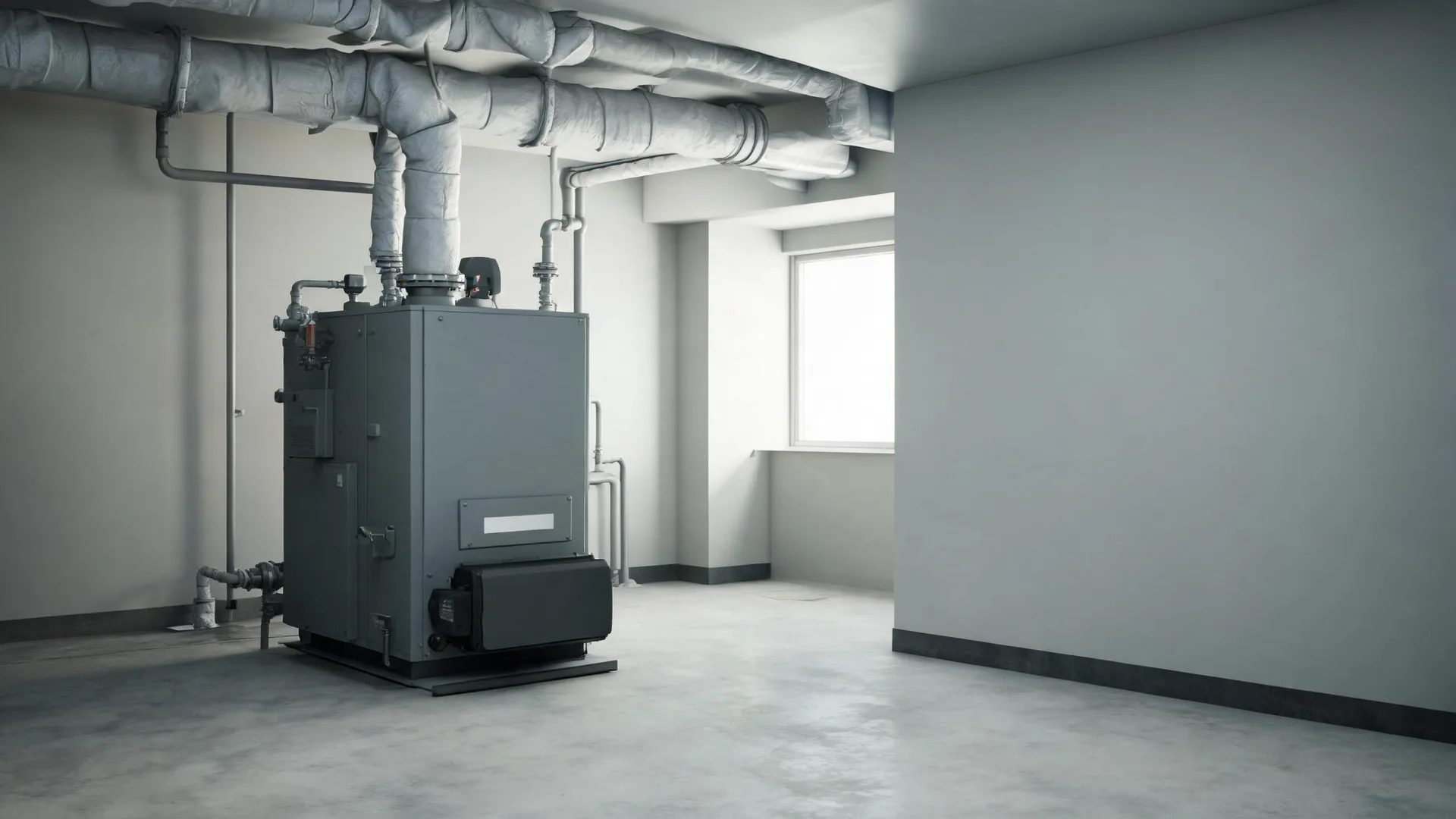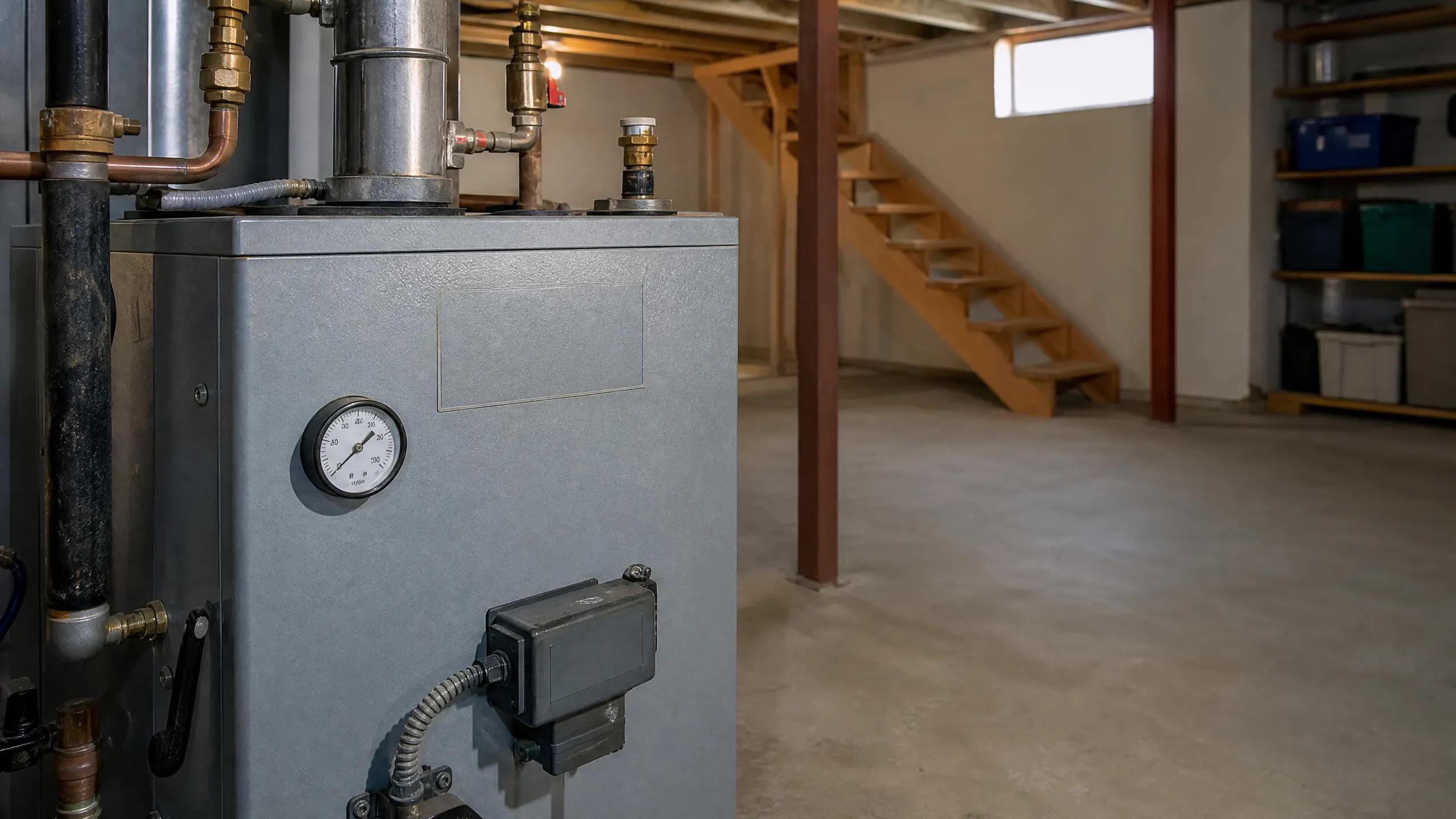
A gray boiler with copper pipes and a pressure gauge stands in an unfinished basement with wooden stairs and concrete floors.

Boiler Repair in Rockland, ME

Tell us about the job

Takes about a minute. No obligation.

RepairBoilerKnox County, ME
Step 1 of 2

What ZIP code is the job in?

Nine months of runtime

A boiler in Rockland works from September through May, with overnight lows averaging 16°F in December, January and February. That boiler is rarely off long enough to rest. Parts that would last years of light use wear down faster under that kind of schedule.


Get the cause, not a patch

A boiler that's been running hard all winter can fail in more than one way at once. A quick fix on the symptom you noticed might leave the real problem underneath. Have it checked properly so whatever gets fixed actually holds.

Half the homes in Knox County were built in 1974 or earlier, half later.

A boiler's age comes from when it was installed, not when the house was built, so check the nameplate before guessing at the problem.

Oil runs $23.73 per million Btu here, so a boiler running this hard isn't cheap to ignore

Heat runs September through May
Winter nights average 16°F
45 winter storms from 2015 to 2024

A boiler that's been acting up for weeks is worth a call before it quits outright. Knox County saw 45 winter storms between 2015 and 2024, and a boiler that fails during one of them is a harder problem than one that fails on a mild day. Tell the technician everything it's been doing, not just whatever is loudest today. A strange noise, a pilot that won't hold, a room that stays cold. A boiler worked this hard can develop more than one fault before any single one is bad enough to notice on its own.

September is when a weak boiler shows itself

Heat goes back on in September here, and that first real load after months off is when a borderline part gives out. By the time boilers run through to May, whatever was already weak has had nine months to get worse. Getting it looked at now, while it's just acting up, is easier than waiting for it to quit.

Find a contractor

What a bad noise means

A boiler that bangs or kettles is making steam pockets inside a scaled or sludged heat exchanger. A low hum or a whine from the circulator usually means the bearing is going. Either way, the noise shows up before the breakdown does, so it's worth acting on while the boiler is still running.

Short cycling wears out the rest

A boiler that fires, shuts off, then fires again within a few minutes isn't resting between cycles. That's usually a failing thermocouple, a bad aquastat, or low water pressure tricking the system into thinking it's satisfied too soon. Left alone, the constant restarting puts wear on the ignition system and the circulator that a steady burn never would.

Most boiler failures start with water, not fire. Minerals in the system settle out as scale inside the heat exchanger, and that scale insulates metal from water the way a crust insulates a pot. The burner has to work harder to push heat through, and the metal underneath runs hotter than it should. Sludge does similar damage lower down, clogging the low water cutoff until it stops doing its job. Pumps and circulators fail on their own schedule too, usually the bearing or the seal, and a dying one will run slower and quieter before it quits outright. None of this happens overnight. It builds for years until the day the boiler can't compensate anymore.

A diagnostic call starts with the technician asking what the boiler's been doing, not just looking at it cold. Then they'll check water pressure on the gauge and look at the condition of the water itself when they bleed a radiator or check the low water cutoff. A pressure that won't hold, or water that comes out rusty or thick, tells them something before they ever open a panel. They'll pull the cover off the burner to look at the flame, since a flame that's yellow or lazy instead of a clean blue points at a combustion problem rather than a control problem. Electrical checks come next, testing the aquastat, the thermocouple or igniter, and the limit switch, since any one of those can shut a boiler down or make it cycle wrong. The circulator gets a hand on it too, feeling for heat or vibration that shouldn't be there. By the end, the goal is to know which of these is the actual cause and which are just symptoms riding along with it.