





An unfinished basement featuring exposed ceiling joists, a metal HVAC unit with round ductwork, a hanging light bulb, and scattered boxes and debris along the left wall.

Furnace Repair in Belfast, ME

Tell us about the job

Takes about a minute. No obligation.

RepairFurnace or heatingWaldo County, ME
Step 1 of 2

What ZIP code is the job in?

A furnace that's about to need a repair usually tells you first. It might start blowing cool air before it ever gets warm, or take longer than usual to kick on. Short cycling is another one, where it fires up, runs for a minute, and shuts off before the house warms at all. A clicking igniter that won't catch, or a burner flame that looks yellow and uneven instead of steady blue, both point to something that needs a technician's attention. Odd smells are worth paying attention to as well. A burning dust smell when it first kicks on for the season is normal and fades fast. A smell that lingers, or anything sharp and chemical, is not. Banging or rattling from the cabinet usually means a part has worked loose or the blower is struggling against something it shouldn't have to.

9 months
September through May, your furnace is on duty
14°F
the average winter night it heats against
79 winter storms
in ten years, the nights a failure hurts most
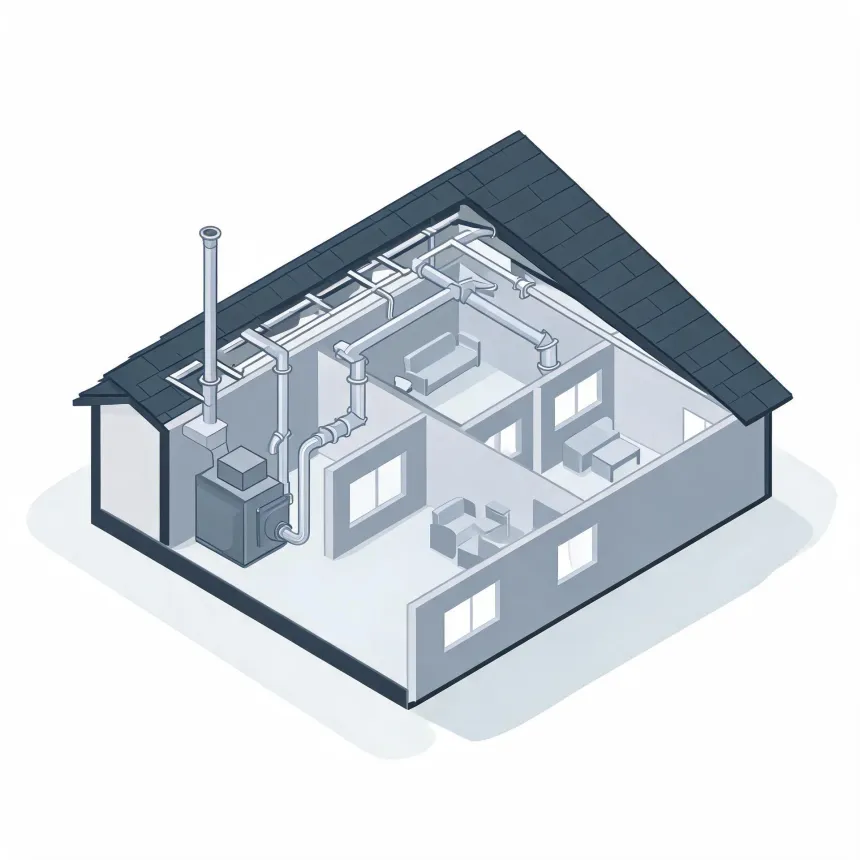
Isometric cutaway illustration of a single-story house showing interior rooms, a furnace unit with flue pipe, and branching ductwork running through the ceiling space under a dark shingled roof.
Your furnace works hardest from November through March.

NOAA nClimDiv, 1991–2020 normals

A furnace in Belfast runs nine months a year, September through May, with overnight lows averaging 14°F in the coldest stretch.

Nine months of winter cold wears a furnace's parts down faster, and that's usually what's behind the problem.

Heat oil here runs $23.73 per million Btu, and a furnace that's struggling burns through more of it every month it goes unfixed

Heat runs September through May
Winter nights average 14°F
79 winter storms from 2015 to 2024
Most furnaces here haven't reached old age yetHalf the homes in Waldo County were built in 1982 or later.

August is a good month to get a furnace looked at here, before it has to work. Heat usually goes on in September, and whatever was already weak tends to show itself in those first cold weeks, not in the quiet months before. A part that was barely getting by in May can fail outright the first time the furnace has to run for hours instead of minutes. Getting it checked before that first startup means finding the weak part on your schedule instead of on the coldest night so far.

Get it diagnosed properly

Your furnace works hard here, and that's usually what's behind the problem. Have it diagnosed properly so the fix lasts.

Find a contractor
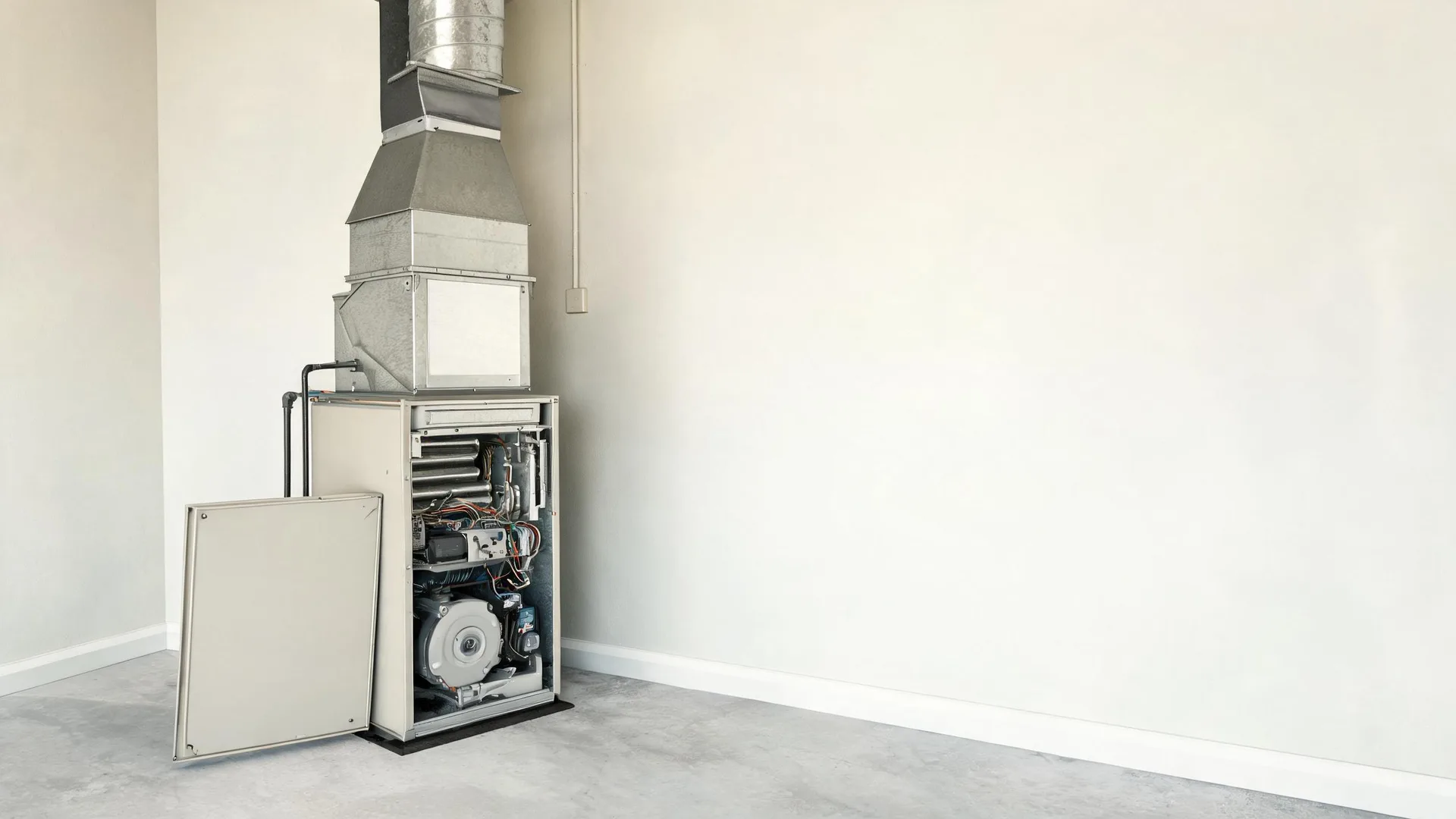
A gray residential gas furnace installed in an unfinished basement, connected to sheet-metal ductwork and PVC pipes.

What a technician checks, and in what order

A technician starts by asking what the furnace was doing right before it quit. A furnace that won't start at all tells a different story than one that starts and then shuts off partway through. If the furnace can still run, they pull the cover and watch an actual cycle. They watch whether the igniter glows and catches, whether the flame stays steady, whether the blower comes on when it should. A meter checks the igniter's resistance and confirms the control board is sending power where it needs to go, because a part can look fine and still have failed inside. Static pressure gets checked too. A blower straining against a dirty filter or blocked ductwork can look like a failing motor when the motor itself is fine. Each test rules something out, so the part that gets replaced is the part that's actually bad.

The igniter is usually first

A hot surface igniter is a thin strip that heats up and cools down every cycle it runs. That repeated heating is what eventually cracks it. It's the part most likely to fail on any gas furnace, and when it goes, the furnace won't light at all.
The heat exchanger is the one that matters most

The heat exchanger cracks from that same cycle of heating and cooling, just over a longer stretch of years. A cracked exchanger can let combustion gas get into the air the blower pushes through the house. That's why a technician checks it before touching anything else.

Before anyone comes out, check the thermostat is set to heat and the setting is a few degrees above room temperature, not just sitting at the current one. Go look at the furnace itself. If it's electronic, check the breaker it runs on, and the one for the air handler if they're separate. A furnace that won't start at all is sometimes just a tripped switch, including the light switch on the unit itself that looks like it belongs to nothing. Check the air filter while you're there. One that's packed with dust can choke the airflow enough to make the furnace shut itself off partway through a cycle. None of this fixes a cracked igniter or a failing blower motor, but it rules out the simple causes before paying someone to find the same thing.

A repair is worth making when the cabinet and the ductwork around it are still sound and only one part has failed. Furnaces are built to have their igniters, blower motors and control boards replaced over the years, so needing one of those swapped out isn't a sign the unit is done. What changes the math is a cracked heat exchanger, since that's the part that isn't meant to be opened up and swapped, and a furnace with one is usually at the end of its line anyway. Age matters too, not because a number on a tag means anything by itself, but because the parts failing on an older furnace tend to come one after another instead of one and done. If a technician is finding a second or third thing wrong within a year of the last repair, that pattern is worth more than any single part's cost.