




A long white picket fence runs along a grassy lawn in front of a row of gray clapboard houses with pitched roofs, framed by large leafy trees.

Furnace Repair in Farmington, ME

Tell us about the job

Takes about a minute. No obligation.

RepairFurnace or heatingFranklin County, ME
Step 1 of 2

What ZIP code is the job in?

Furnaces in Farmington run from September through June. That's ten months of the year, with overnight lows averaging 8°F in December, January and February. A furnace working that many cold nights puts a lot of hours on its igniter, its blower motor, its heat exchanger. Parts that might last longer somewhere milder wear down sooner here. If yours is acting up, it's worth finding out exactly what's going on before it gets worse.

10 months
September through June, your furnace is on duty
8°F
the average winter night it heats against
97 winter storms
in ten years, the nights a failure hurts most
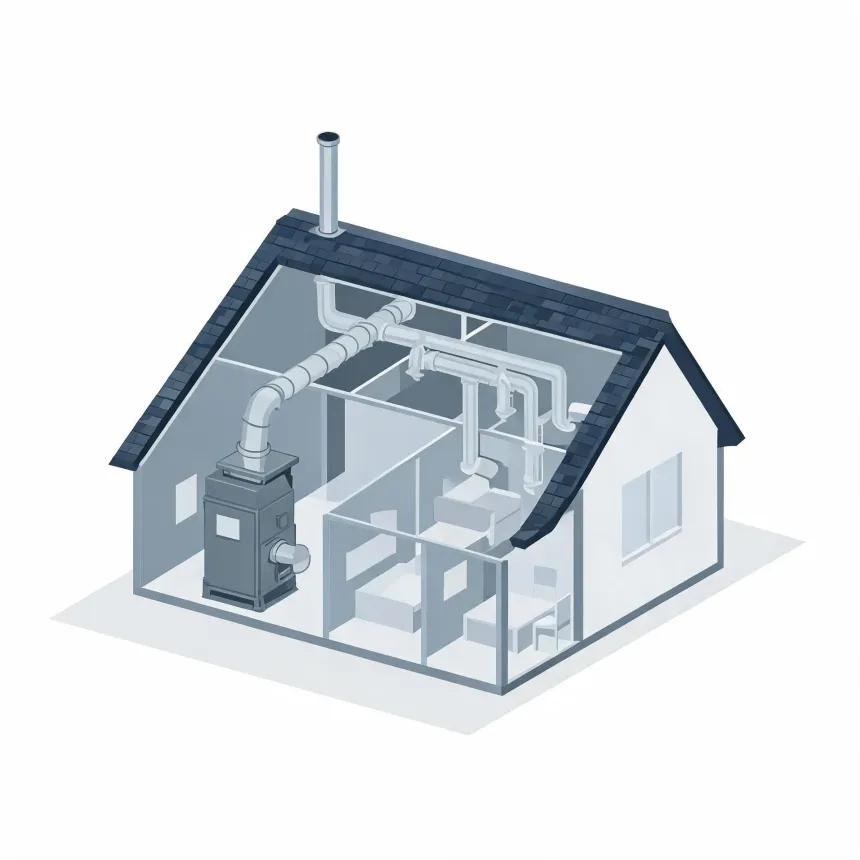
Isometric cutaway illustration of a small house showing a gray furnace unit with a flue pipe through the roof and branching ductwork running to rooms with simple furniture.
Your furnace works hardest from November through April.

NOAA nClimDiv, 1991–2020 normals

A diagnostic starts by watching the furnace run through a full cycle, not just checking if it turns on.

A furnace can light, run, and shut off normally and still be hiding the fault that brought you out there.

An old house doesn't explain a bad furnace

Half the homes here were built by 1978
Heat runs September through June
Winter nights average 8°F

August is worth paying attention to here. Heat comes on in September and runs through June, so whatever's wrong with your furnace now is about to get asked to work for ten straight months straight through. A furnace that's been short-cycling or struggling to stay lit in August usually gets worse once it's running every night, not better. The first cold stretch of the season tends to be when a weak igniter or a tired blower motor finally gives out, because that's when the furnace gets leaned on hardest after sitting idle all summer. Getting it looked at before September means finding the problem on your own schedule instead of on the furnace's.

A furnace burning fuel badly costs you here, not just somewhere milder

Oil ran $23.73 per million Btu in Maine last year. A furnace that's short-cycling or struggling to light is burning that fuel to do less heating, and it does it on every cycle until someone looks at it. Worth getting done now.

Find a contractor
A man in a cap, dark shirt and cargo pants, seen from behind, carries a canvas tool bag up wooden porch steps toward a blue front door.
A gray high-efficiency gas furnace installed in an unfinished basement, surrounded by gas lines, a condensate drain, and sheet-metal ductwork.

Ten months on, not much time off

Ten months of heat means this furnace barely gets a break before the next season starts. That kind of schedule doesn't leave much room for a bad part to sit unnoticed. Have someone check it properly rather than just resetting it and hoping it holds through December.

What you can check yourself

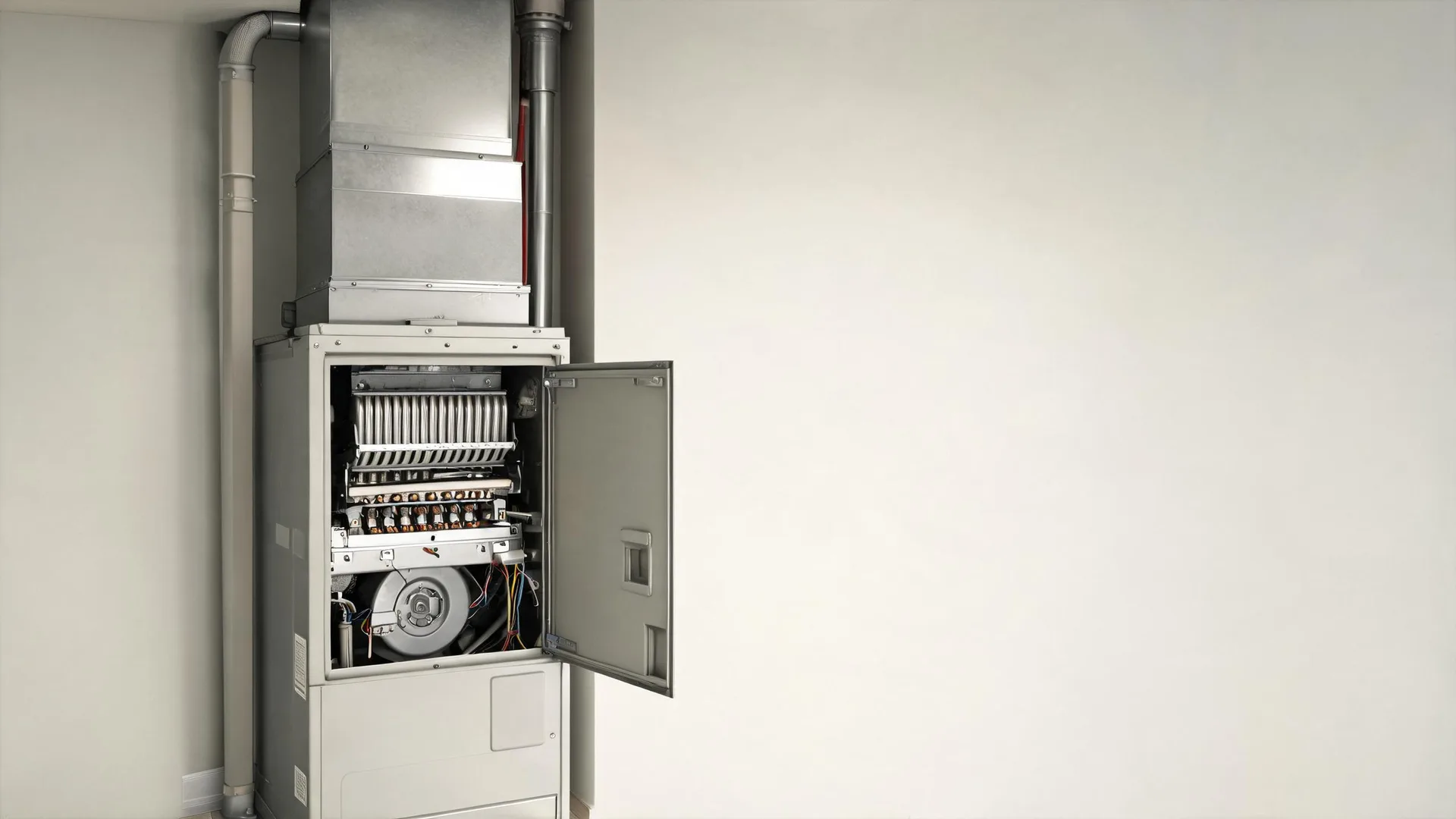
Look at the filter first and change it if it's gray or clogged. Check that the thermostat is set to heat and the temperature is actually above room temperature. Make sure the switch on the furnace itself, the one that looks like a light switch, hasn't been bumped off. If you have a gas furnace, check that the gas valve is open and that nothing near the unit is blocking its air intake or exhaust vent.
What those checks rule out

A clogged filter can starve the furnace of airflow and cause it to overheat and shut off on its own safety switch. A thermostat set wrong or a power switch left off can look exactly like a dead furnace when nothing is actually broken. Clearing these first means that if the furnace still won't run, the problem is something inside it, like the igniter or the flame sensor, and worth having looked at directly.

A furnace that's struggling doesn't fix itself by running more. A cracked heat exchanger gets worse with every cycle of heating and cooling, and the crack can widen until it lets exhaust into the air moving through your ducts. A blower motor straining on worn bearings keeps drawing power to turn a wheel that wants to seize, and that strain only grows. An igniter that's cracking will keep failing to light on the first try, then the second, until it stops lighting at all. Even a dirty flame sensor, which just needs cleaning early on, can end with the furnace refusing to run altogether once soot builds up enough to block it from sensing the flame. None of these get better by waiting them out.

Age by itself doesn't tell you whether to fix a furnace or replace it. What matters is what's actually failing and whether that part can be swapped out on its own or signals the whole unit is wearing out together. A cracked heat exchanger is usually the end of the road, since it's not something anyone safely patches and it means the furnace is done. A bad igniter, a failed flame sensor, a blower motor with worn bearings are different. Those are individual parts that get replaced without touching anything else, and a furnace that's otherwise sound keeps running fine afterward. The question worth asking isn't how old the furnace is, it's whether this failure is a single part giving out or the whole system starting to go at once.