





A row of white Colonial-style houses with glowing windows photographed at dusk along a road bordered by a stone wall.

Furnace Repair in Portland, ME

Tell us about the job

Takes about a minute. No obligation.

RepairFurnace or heatingCumberland County, ME
Step 1 of 2

What ZIP code is the job in?

A tech starts by asking what the furnace is doing, or not doing, before touching anything. Short cycling, cold air out of the vents, a smell on startup, a sound that wasn't there before. All of that narrows things down before the panel ever comes off. Then it's a look at the igniter or pilot, the flame sensor, the pressure switch, and the inducer motor, checking each against what it should be doing rather than guessing. A furnace that won't light gets checked for power and gas first, since those rule things out fast. One that lights but won't stay lit usually points to the flame sensor or a draft problem. The tech should be able to tell you what's wrong and why before any repair starts, not after.

9 months
September through May, your furnace is on duty
15°F
the average winter night it heats against
115 winter storms
in ten years, the nights a failure hurts most
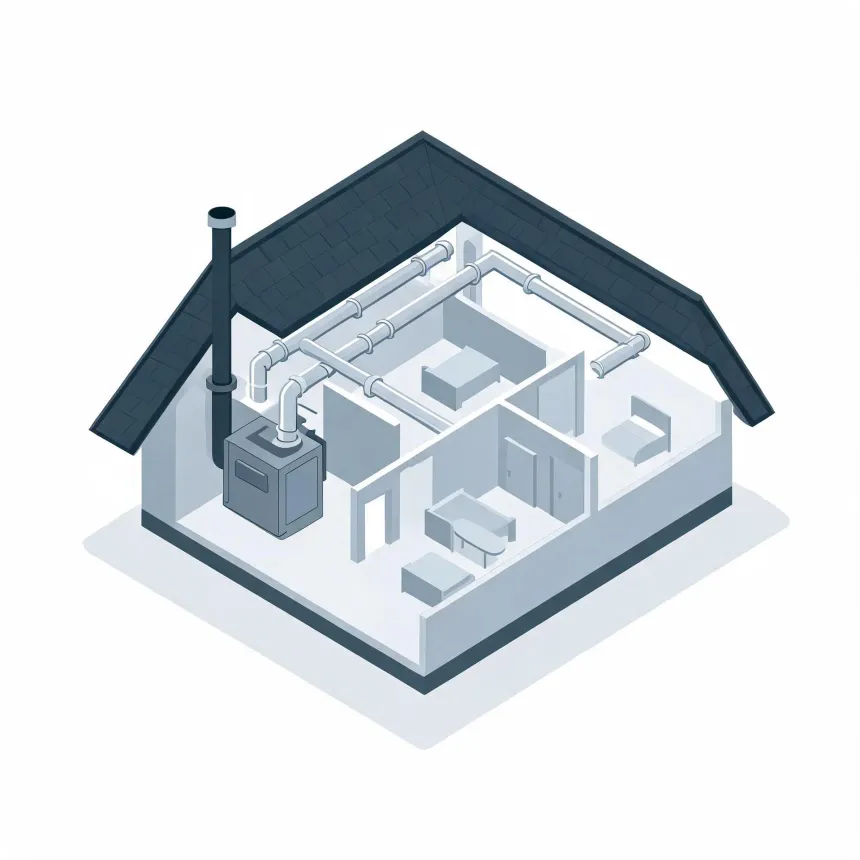
Isometric illustration of a cutaway house showing a dark furnace unit with a flue pipe and branching ductwork running through rooms with simple furniture under a dark gabled roof.
Your furnace works hardest from November through March.

NOAA nClimDiv, 1991–2020 normals

Furnaces in Cumberland County run from September through May, with overnight lows averaging 15°F in the dead of winter.

Nine months of hard use a year wears parts down early, so the same symptom can trace back to real strain on the machine.

September is when a weak furnace gets found

Heat runs September through May
Winter nights average 15°F
115 winter storms from 2015 to 2024

Fuel oil ran $23.73 per million Btu in Maine last year. A furnace that short cycles or runs longer than it should to heat the same rooms is burning more of it to do less. That cost shows up on the next bill whether or not anyone looks at the unit. A flame sensor that's fouled or a pressure switch that's failing won't always shut the furnace down outright, it can just make it work harder to do the same job. Worth having someone check it before another month goes by on a furnace that's burning more than it needs to.

The fix is usually a known one

Half the homes in Cumberland County were built in 1976 or earlier, half in 1976 or later. Neither age points to a stranger cause for a furnace acting up. It's the same parts that wear the same way in any house. The igniter, the flame sensor, the pressure switch. Worth getting the actual cause in front of you before winter asks more of the furnace than it can give.

Find a contractor
A man in a dark shirt and tan work pants, seen from behind, carries a canvas tool bag up wooden steps toward a blue front door of a gray clapboard house, with a shrub in a blue planter beside the door.
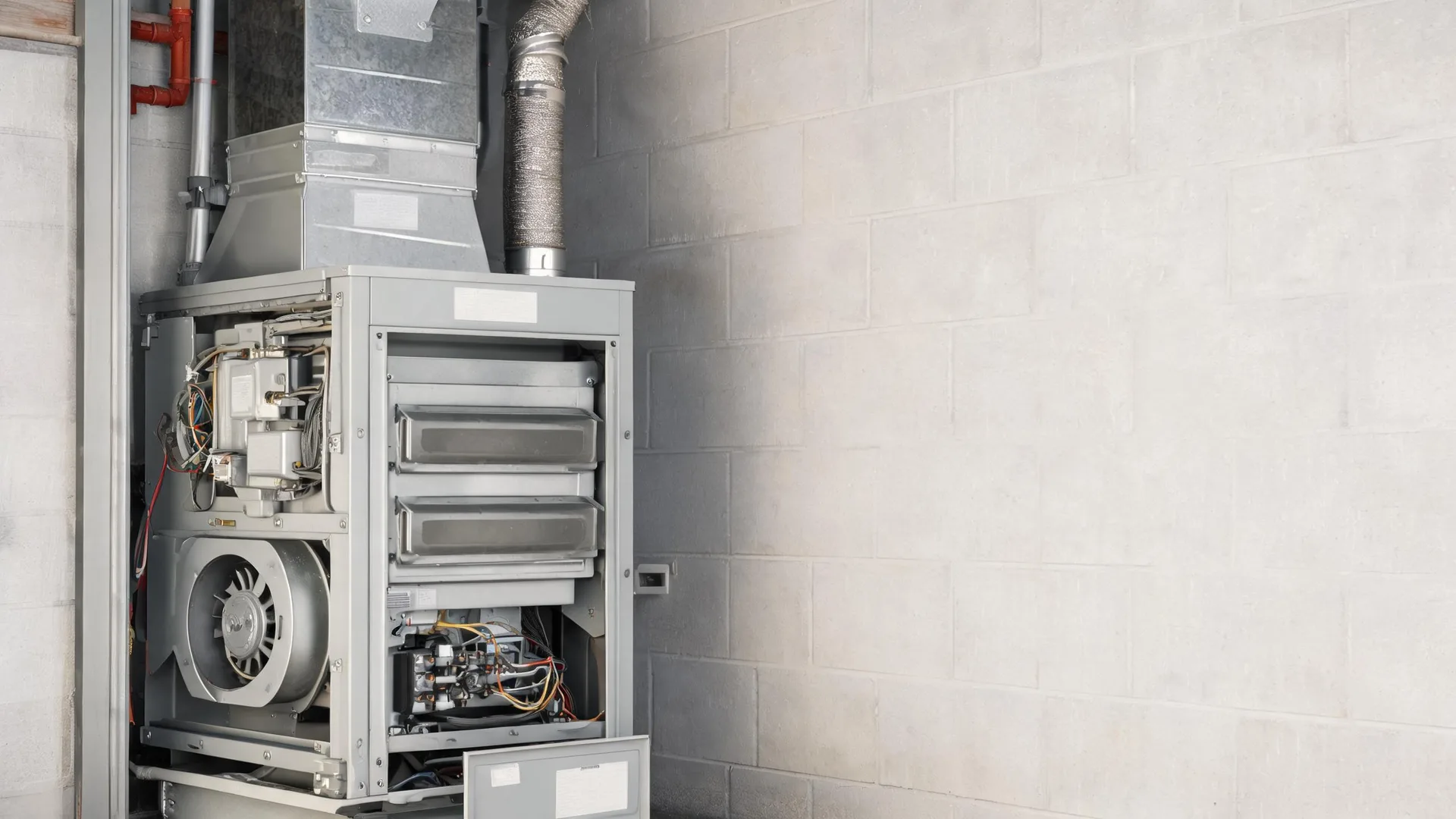
A gray gas furnace with attached ductwork and piping installed in an unfinished concrete basement.

Every cycle is wear, not just every year

A furnace doesn't fail all at once. Parts wear on a schedule, and the schedule is hours run, not years owned. An igniter heats up and cools down every single cycle, and that repeated stress is what eventually cracks it. A flame sensor sits in the flame itself, run after run, until the carbon coating on it gets thick enough that it can't sense the flame anymore. The inducer motor spins every time the furnace fires, and bearings in it wear the same way any motor bearing does with use. A pressure switch reads the exhaust draft each cycle, and the tubing feeding it can crack or clog over enough seasons. None of these fail because a furnace is old. They fail because they've been asked to do their job thousands of times, and a furnace running most months of the year racks up those cycles faster than one that only kicks on a few weeks a year.

A smell is never nothing

A burning dust smell for the first few minutes after startup is normal, especially after the furnace has sat all summer. If it lingers past the first run or comes with a sharper, metallic edge, that's different. A cracked heat exchanger can put a burning smell into the air that doesn't belong there, and it's not something to wait out.
Noise tells you where to look

A bang at startup usually means gas is building up before it lights, then catching all at once. A screech points to the inducer motor bearings. A rattle that comes and goes with the blower is often a loose panel, but it can also be a wheel out of balance. Each sound traces back to a different part, which is why describing it helps before anyone touches the furnace.

A furnace that's struggling rarely gets better on its own by running more. A cracked heat exchanger spreads that crack wider with every heat cycle, since the metal expands hot and contracts cold each time it fires. A flame sensor caked with carbon makes the furnace try to relight over and over, and each failed attempt puts more wear on the igniter too. Low draft from a weak inducer motor can let exhaust linger where it shouldn't, and the pressure switch meant to catch that is often the next thing to fail from the same strain. One worn part rarely stays the only problem for long, since the parts around it are the ones absorbing the strain it should have handled.

At some point the question isn't what's wrong but whether it's worth fixing at all. A cracked heat exchanger is usually that line. It's not a part that gets swapped on its own, since reaching it means taking the furnace apart around it, and a crack means the metal itself has fatigued from years of heating and cooling. That's a replace, not a repair. Most other failures aren't that. An igniter, a flame sensor, a pressure switch, an inducer motor, those get replaced on their own and the furnace runs like it did before. The question worth asking a tech isn't just what broke, it's whether this is the first part to go or the third one in a few years. A furnace that keeps sending different parts to failure is telling you something the next repair alone won't fix.