



An unfinished basement containing a forced-air furnace with metal ductwork, exposed wooden ceiling joists, a hanging Edison bulb, and bare concrete floors.

Furnace Repair in Rockland, ME

Tell us about the job

Takes about a minute. No obligation.

RepairFurnace or heatingKnox County, ME
Step 1 of 2

What ZIP code is the job in?

A furnace in Rockland runs about nine months of the year, September through May. That's most of the calendar spent cycling on and off to fight overnight lows that average 16°F in December, January and February. The igniter, the blower motor, the pressure switch, all of it logs more hours here than it would somewhere with a short winter. Winter storms hit this county often, and each one pushes the system to run longer right when the cold snaps worst. A furnace acting up now is doing what a heavily used machine does. The question worth answering isn't just what's wrong, but whether the real cause got found or just the symptom got patched.

9 months
September through May, your furnace is on duty
16°F
the average winter night it heats against
45 winter storms
in ten years, the nights a failure hurts most
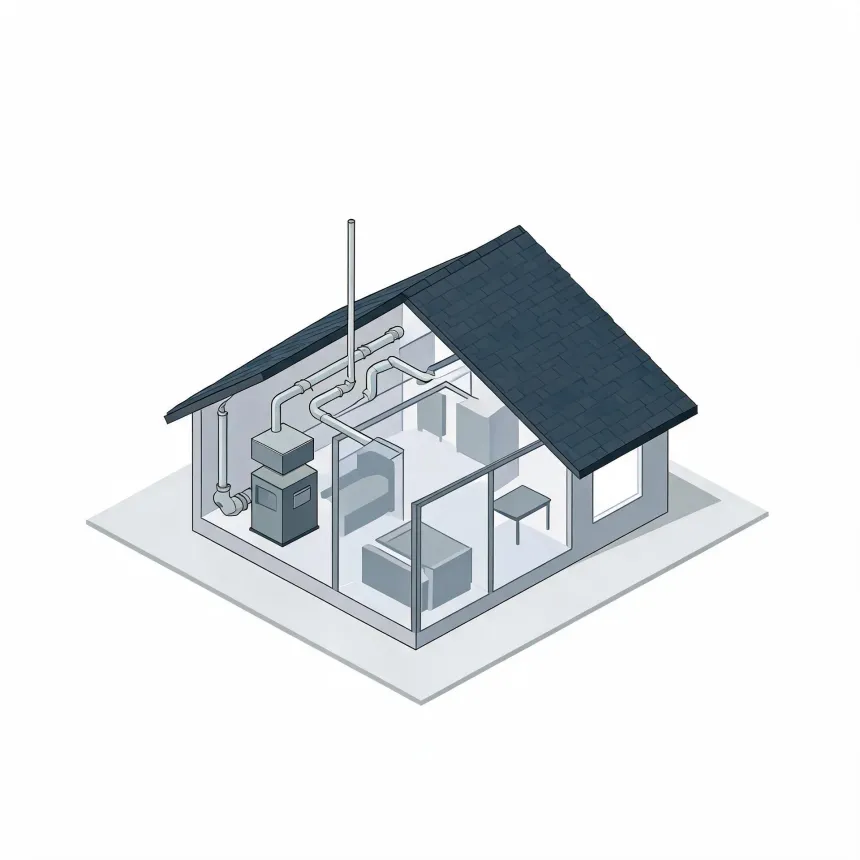
Isometric cutaway illustration of a small house with a dark shingled roof, showing an interior furnace unit, ductwork, and a flue pipe extending through the roof.
Your furnace works hardest from November through April.

NOAA nClimDiv, 1991–2020 normals

September is when furnaces in Rockland start their season.

A weak part that made it through last spring often fails in the first cold week.

Knox County sees 71 severe weather events a decade, and that includes the outdoor parts of a heating system

71 severe weather events from 2015 to 2024
54% of homes statewide lost power a day or more in 2024
18 damaging wind events from 2015 to 2024

Half the homes in Knox County were built in 1974 or earlier, half in 1974 or later. Neither age points to anything special going wrong inside a furnace. An older house doesn't mean an older furnace, and a newer one doesn't guarantee the unit was swapped out with it. What's running right now is whatever got installed whenever it got installed, in a house old or new. So the usual causes hold here the same as anywhere. A failed igniter. A dirty flame sensor. A clogged filter choking airflow. A pressure switch stuck from a blocked vent. Worth finding out which one it is before assuming the whole unit is done.

A furnace running this hard costs more here every month it's off

Maine runs on fuel oil more than most states, and oil here ran $23.73 per million Btu in 2024. A furnace that's short-cycling or struggling to hold heat is burning fuel at that price to do it. The longer the real problem sits, the more it shows up on the bill.

Find a contractor
A man in a cap, work jacket and tan trousers carries a canvas tool bag up wooden porch steps toward a blue front door of a house with lap siding.
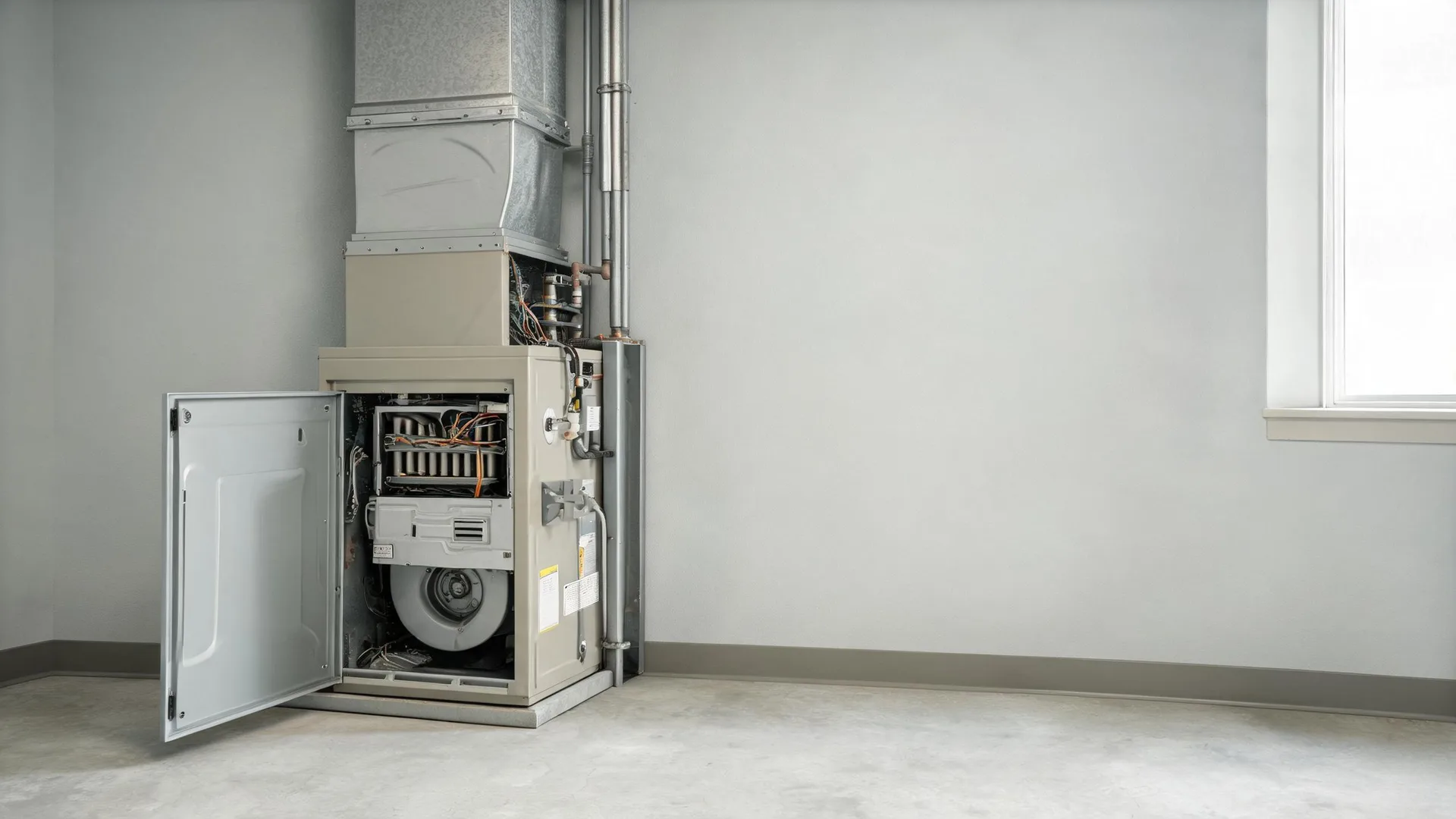
A gray gas furnace with attached ductwork and piping installed in an unfinished concrete basement.

Hours like these wear specific parts

Nine months a year of cycling on and off wears specific parts, not the unit as a whole. When a furnace starts acting up after a stretch like that, the cause is usually something that failed from use, not something wrong with the whole system. A technician checking the actual part, the igniter or the pressure switch or whatever it turns out to be, can tell you if that's the whole story or if something else is driving it. That's worth doing before paying for a bigger repair than the furnace needs.

A crack in a heat exchanger spreads under heat

A hairline crack in a furnace's heat exchanger gets bigger every time the metal heats up and cools back down. Left alone, that crack can open enough to push exhaust into the air a blower is pushing through the house. Shutting the furnace off instead of running it through the problem is what keeps that crack small.
A dirty flame sensor gets worse the more it fires

A flame sensor coated with a thin layer of carbon still reads the flame, but weakly. Every cycle adds another pass of exhaust across it, and the coating thickens. Eventually it can't sense the flame at all, and the furnace shuts itself down mid-cycle instead of heating. Catching it early is a quick cleaning. Catching it late is a sensor that won't hold a reading at all.

A furnace usually tells you something is wrong before it quits outright. It might take several tries to light instead of catching right away. The flame through the viewing window might burn yellow or flicker instead of holding a steady blue. You might notice it running longer than it used to, or shutting off before the house actually feels warm. A burning or metallic smell in the first few minutes of a cycle is worth paying attention to, especially if it doesn't fade. So is a knocking or screeching sound from the cabinet, or air coming out the vents that's barely warm at all. Any one of these on its own might not mean much. Together, or repeated cycle after cycle, they mean the furnace is already telling you where to look.

A diagnostic visit starts before any panel comes off. A technician asks what the furnace has been doing, when it started, and whether anything changes it, because that narrows down where to look first. Then the cover comes off and the burners get watched through a full cycle, since a flame that's lazy or yellow points one direction and a pressure switch that won't close points another. Static pressure gets checked at the return and supply, because airflow that's restricted puts a strain on parts that have nothing to do with airflow. Amp draw on the blower motor, resistance across the flame sensor, voltage at the igniter, each reading rules something in or out. The point isn't to replace parts until something works. It's to find the one thing actually causing what you're seeing, and tell you what it is before anything gets fixed.