




An unfinished concrete basement containing a gas furnace with sheet-metal ductwork, utility shelving, and exposed overhead joists.

Furnace Repair in Sanford, ME

Tell us about the job

Takes about a minute. No obligation.

RepairFurnace or heatingYork County, ME
Step 1 of 2

What ZIP code is the job in?

Before you call, check a few things yourself. Go to the thermostat and make sure it's set to heat and the temperature is set above room temperature. If it's a newer thermostat, check that it has power and the screen isn't blank or frozen. Next, go to the furnace and look at the filter. A filter clogged with dust can choke airflow and cause the furnace to shut itself off before it finishes a heating cycle. Check the switch on the furnace itself, and if it's gas, make sure the gas valve is open. If you have a window near the intake or exhaust pipe outside, take a look and clear away any snow or debris blocking it. If the furnace runs but the air coming out feels cool, that points to something past what you can check at home.

9 months
September through May, your furnace is on duty
16°F
the average winter night it heats against
95 winter storms
in ten years, the nights a failure hurts most
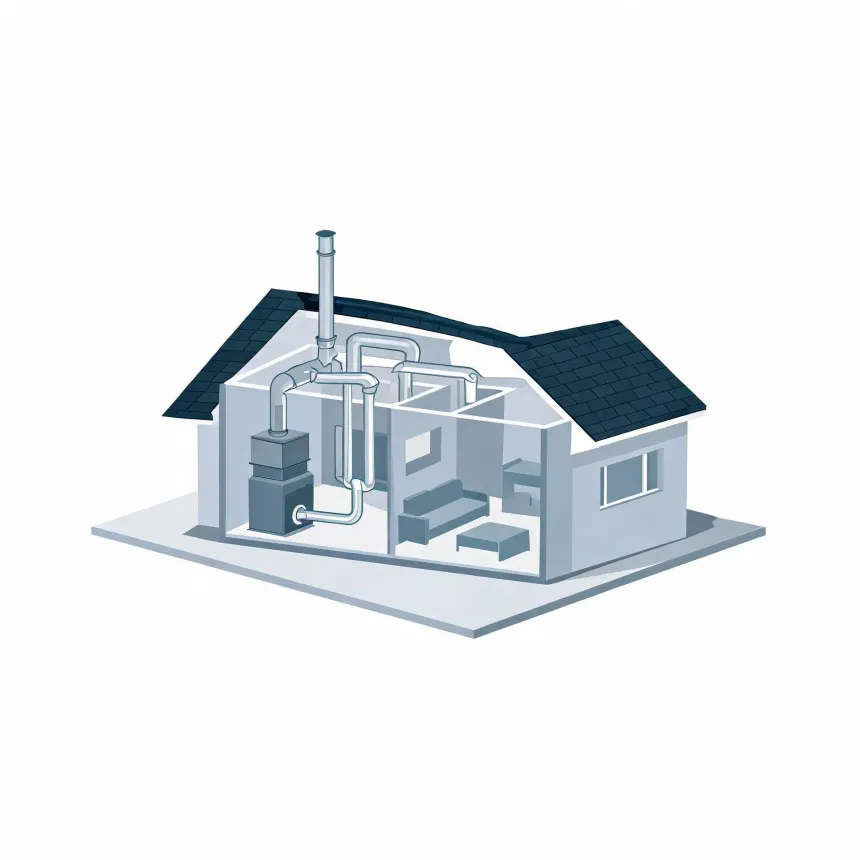
Isometric illustration of a cutaway single-story house showing a gray furnace unit, connected ductwork, and a vertical flue extending above the dark shingled roof.
Your furnace works hardest from November through March.

NOAA nClimDiv, 1991–2020 normals

A furnace that short cycles or trips its limit switch again and again is wearing out a part faster each time it happens.

If the repairs start stacking up year after year, that pattern matters more than any single breakdown.

Half the furnaces in Sanford are younger than you'd think

Half the homes here were built by 1980
Heat runs September through May
Winter nights average 16°F

A furnace burning fuel oil in Maine is burning expensive fuel. Oil ran $23.73 per million Btu here in 2024, and a furnace that's short cycling or struggling to heat isn't using that oil well. Every bad cycle burns fuel without finishing the job, then kicks on again to try. That adds up faster than people expect over a winter. A furnace running the way it should earns back the cost of fixing it.

The furnace gets tested the first cold week of September

Furnaces here start their season in September, after sitting idle since spring. A weak part that made it through last winter is the one most likely to give out in the first cold weeks, when the system is finally working hard again. Getting it looked at now, in August, means finding that out before you're relying on it.

Find a contractor
A man in a gray t-shirt and brown work pants carries a canvas tool bag up porch steps toward a blue front door of a house with gray siding.
A gray residential gas furnace installed in an unfinished basement, surrounded by ductwork, a metal flue pipe, and a gas supply line.

A newer furnace just needs the one part fixed

Half the houses in York County were built in 1980 or later, so a lot of furnaces here are running in homes that aren't old at all. If that's yours, age alone isn't a reason to think about replacing it. Get the actual part diagnosed and fixed. A furnace with years left in it doesn't need a second system, it needs whatever's broken right now looked at and repaired.

A cracked heat exchanger gets worse with every cycle

Heat makes metal expand, and a hairline crack opens a little more each time the furnace fires. Left alone, a crack that once just made noise can grow into one that lets exhaust mix with the air moving through your house.
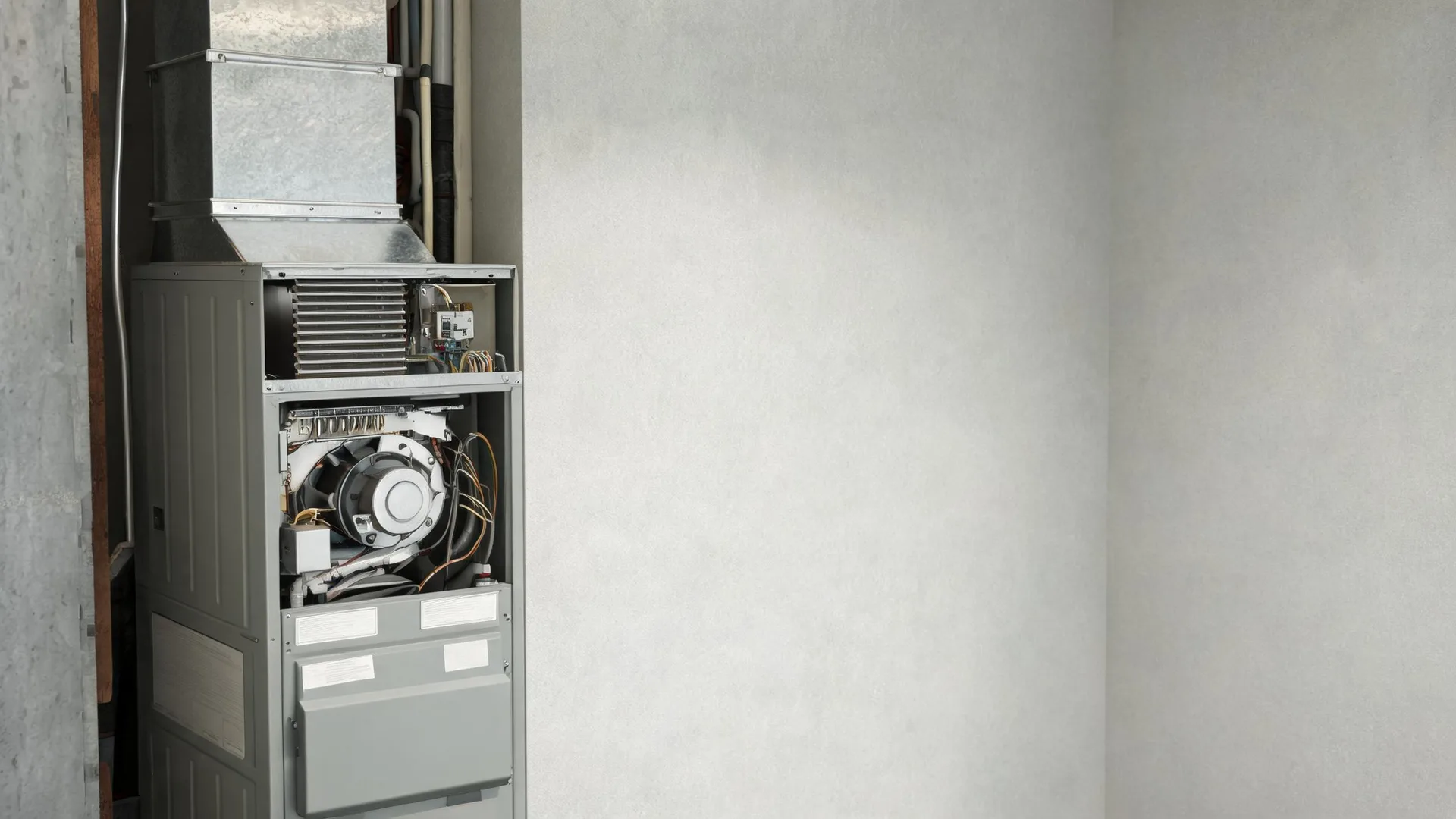
A failing igniter or flame sensor takes other parts with it

When the furnace can't light properly, it tries again and again, and each failed attempt is a jolt to the blower motor and control board. A problem that started in one small part can end up spreading to the parts around it.

Most furnace failures start small and get ignored. A flame sensor coated with a thin layer of residue stops telling the control board the flame is lit, so the furnace shuts off mid-cycle even though it's working fine. A capacitor that's weakening makes the blower motor strain to start, and every hard start wears it down a little more. Igniters are brittle and fail the way a light bulb does, working fine and then not at all. Dirty burners light unevenly and run hotter than they should on one side. None of these start as emergencies. They start as a furnace that hesitates, clicks a few times before catching, or runs a little louder than it used to.

A diagnostic visit starts before any panel comes off. The tech asks what the furnace is doing, when it started, and whether it happens every cycle or just sometimes. Then they run it through a cycle and watch, because a furnace that won't light tells a different story than one that lights and then shuts off early. Opening the cabinet comes next. They check the flame itself, its color and shape, and test the flame sensor and igniter with a meter instead of guessing by eye. Airflow gets checked too, since a furnace starved for air will trip its limit switch and look like a different problem than it is. By the end, the tech should be able to name the part that's failing and show you why, not just tell you something's wrong.