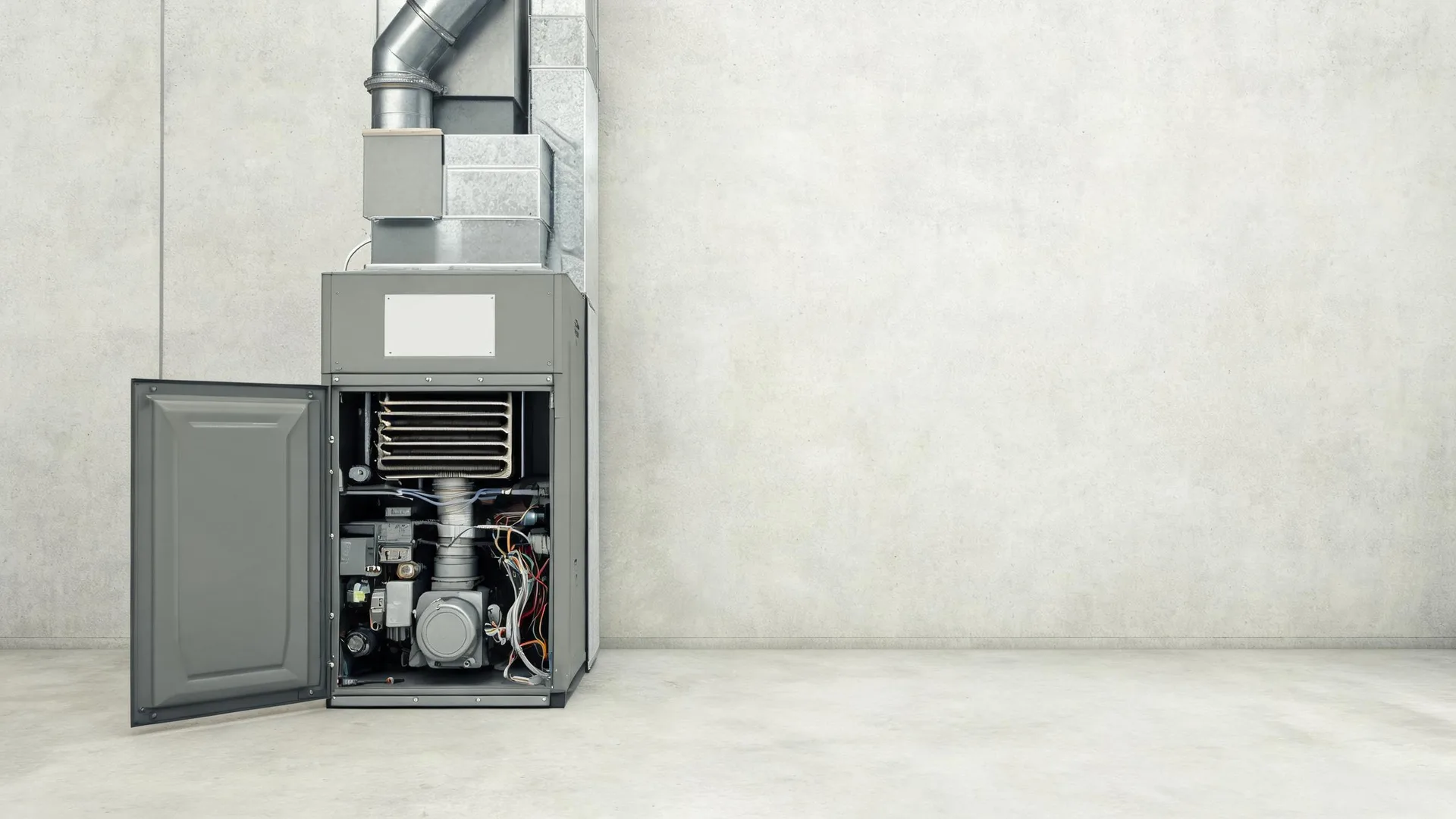
Nine months of heat, most winters
A furnace in Waldoboro runs from September through May. Overnight lows average 16°F through December, January and February, so the burner is firing for long stretches on the cold nights, not just cycling on and off.
Takes about a minute. No obligation.
A furnace in Waldoboro runs from September through May. Overnight lows average 16°F through December, January and February, so the burner is firing for long stretches on the cold nights, not just cycling on and off.
Nine months of heating a year puts more hours on an igniter, a blower motor and a heat exchanger than a few months would. When something's off after that kind of run, it's worth having it diagnosed properly rather than guessing, so the repair actually holds.

NOAA nClimDiv, 1991–2020 normals
Oil ran $23.73 per million Btu in Maine last year.
A furnace burning oil badly in Waldoboro wastes that fuel every night it runs.




Winter storms hit Lincoln County 43 times between 2015 and 2024, more than any other kind of severe weather here. Heavy snow and ice build up on an exposed vent or line without the furnace losing its flame right away. Wind is a factor too, knocking branches into a vent pipe or a flue cap. None of that always stops a furnace from running, but it can leave something bent or blocked that shows up as a bigger problem later. If a storm has come through recently, it's worth having the vent and lines looked at even if the furnace still fires.
A furnace that's run nine months a year since September is due for an honest look, not a guess. Get it diagnosed so whatever's worn gets fixed once.
Find a contractor
Before anyone comes out, check the simple things first. Look at the thermostat and make sure it's set to heat and set above room temperature, not just on. Go to the furnace and check the power switch, it looks like a light switch on or near the unit, and make sure it hasn't been bumped off. Check the filter. If it's gray and clogged, swap it, a blocked filter starves the burner of air and can shut the whole thing down on its own. Check the breaker it's on. A furnace that trips its breaker once might just need a reset, but one that trips again right after wants a tech, not a second reset. If you have an oil furnace, check the tank gauge, an empty tank looks exactly like a dead furnace. Last, look at the vent pipe outside. If anything is blocking it, snow, a branch, a bird's nest, clear it if you can safely reach it. If the furnace still won't run after that, stop there. Opening the cabinet past that point, or working on the burner or the heat exchanger, isn't a homeowner job.
An igniter or flame sensor takes the hit every cycle, heating up or sensing flame over and over. A flame sensor usually just needs cleaning, a film builds up on it and it stops reading the flame. An igniter is a straight swap once it cracks or goes weak.
A blower motor losing strength or a heat exchanger developing a crack usually shows up as something else first, short cycling, a burner that won't stay lit, a smell when the furnace kicks on. Chasing the symptom without checking the part behind it means the same call comes back later.
A furnace that's struggling doesn't fix itself by staying on. A cracked heat exchanger gets worse every time it heats up and cools back down, the metal flexing a little more along the crack with each cycle. A blower motor with worn bearings keeps drawing hard on itself until it seizes, instead of just wearing out gradually and giving you warning. Soot building up on a burner restricts airflow more each time it fires, so the furnace runs hotter and less efficiently than it did the cycle before. A furnace that short cycles, shutting off early and restarting again and again, puts more wear on the ignition parts with every extra start than it would running one long, steady cycle. None of these get better with time. They get worse, and usually faster than people expect, because the part causing the problem is still doing its job under the same strain that damaged it in the first place.
A repair is worth making when the part that failed is the only thing wrong. A cracked flame sensor, a bad igniter, a failed blower capacitor, these get swapped and the furnace runs like it did before. Replacement starts to make more sense once the heat exchanger is the problem, since that part isn't sold separately and isn't something a tech can patch. It also makes sense when the same failure keeps coming back after being fixed, because that usually means something else nearby is stressing the part that keeps dying. Age alone doesn't decide it. A furnace that's been maintained every year can outlast one that hasn't, so the real question is what's actually broken and what else is close behind it.